IJRC Genral Assembly 2025
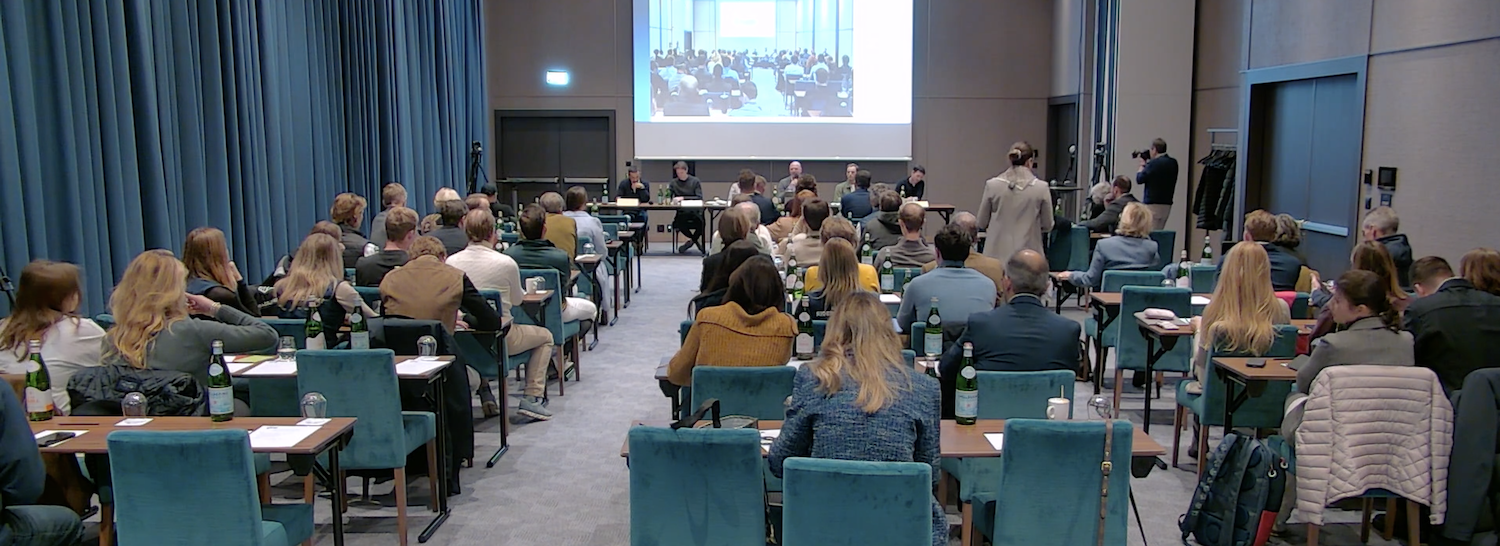
The International Jumping Riders Club (IJRC) General Assembly in Geneva once again brought together many of the sport’s leading voices to reflect on where showjumping stands today and where it is going next. While the agenda evolves each year, the conversations that shaped this year’s meeting were deeply rooted in topics raised previously, alongside developments that have been building across the sport. These include heightened public scrutiny, evolving welfare expectations, regulatory frameworks and the rising cost of international competition. The tone of the Assembly made clear that showjumping is navigating a decisive moment, one in which transparency, communication and shared responsibility matter more than ever.
Leadership Continuity and the Role of the IJRC
The Assembly opened with formal governance matters, including the re-election of IJRC President François Mathy Jr and confirmation of the IJRC Board. The vote was positioned as a clear signal of continuity at a time when rider representation and structured dialogue with governing bodies are increasingly critical.
Addressing members, Mathy emphasised that the IJRC exists to represent riders collectively and institutionally, rather than through individual voices. He explained that the Club’s role is to speak with one voice on complex and sensitive matters, particularly where public debate risks becoming personal or misinformed. This theme resurfaced repeatedly throughout the morning, especially in discussions around welfare regulation and communication strategy.
Mathy also noted that the rule changes currently under scrutiny have been under discussion for more than two years, with proposals circulated well in advance of formal votes. He expressed concern that some federations and commentators had only engaged with the changes after the FEI General Assembly, contributing to confusion that could have been avoided through earlier dialogue.
Welfare, Visibility and Public Trust
Welfare emerged as the central theme and a connecting thread throughout the General Assembly. Speakers acknowledged that public perception of equestrian sport is now shaped heavily by social media, where short clips and isolated images from warm-up arenas and competition rings circulate rapidly and often without context.
Mathy reminded riders that whether they like it or not, they are public figures, and that everything from warm-up practices to post-round behaviour can be recorded, shared and judged. He stressed that one image can undo years of good work, making awareness and professionalism essential elements of modern sport.
Riders and officials agreed that the horse-athlete relationship has never been more visible, and that maintaining public trust requires not only strong welfare standards, but unity in how those standards are communicated and applied.
Article 259, Article 264.4.1 and the Importance of Reading the Rules Together
This context led directly into detailed discussion of the revised FEI Jumping Rules, particularly Article 259. A recurring concern raised during the Assembly was that the rule had frequently been discussed in isolation, without reference to other provisions that remain fully in force, contributing to significant misunderstanding once the changes entered the public domain.
IJRC Director Eleonora Ottaviani explained that Article 259 addresses a very narrow set of circumstances and has no connection to abuse related to excessive use of spurs or whip. She emphasised that such abuse remains grounds for elimination and potential disciplinary proceedings under separate rules. Áine Power, FEI Executive Director of Sport and Games, underlined that the revised framework strengthens welfare oversight by introducing mandatory veterinary assessment whenever blood is detected, ensuring that decisions on continued participation are based on the horse’s fitness rather than automatic procedural outcomes.
Power also highlighted that Jumping Rule Article 264.4.1 continues to mandate immediate elimination in cases of spur marks or evidence of excessive spur use. This point was raised explicitly to counter the widespread misconception that the revised framework permits spur-related injuries to go unpunished. The Assembly was clear that this is not the case and that strong sanctions for abuse remain unchanged.
François Mathy reinforced this position, stating clearly that the sport has not softened its stance on abuse. Mathy underlined that when the Jumping Rules are read in full, including the provisions that remain unchanged, welfare protections are not only clearer but stronger than before. He returned to this concern later in the discussion, reiterating that misinterpretation stemmed from fragmented reading of the rules rather than from any dilution of welfare standards.
The discussion also prompted reflection on how the rule change was communicated and subsequently received outside the sport. Addressing the Assembly from a federation perspective, Quentin Simonet, President of the European Equestrian Federation, spoke about the challenges exposed by the media reaction. He noted that while internal discussions around the rule had been thorough, the external environment in which the sport now operates requires greater anticipation of how regulations will be interpreted beyond the equestrian community. He cautioned that once rules are published, particularly on sensitive welfare issues, they must be robust not only in intent but also in language, as partial extracts or screenshots can easily be misrepresented.
From the IJRC perspective, both Mathy and Ottaviani emphasised that the rule development process had been ongoing for a considerable period, with proposals circulated to National Federations well in advance of formal votes. They highlighted the importance of early and active engagement during consultation phases, noting that federations play a key role in reviewing, contextualising and seeking clarification on proposed changes before they reach the public stage. The Assembly reflected that earlier dialogue and closer engagement across all stakeholders could help reduce the risk of misunderstanding once decisions are taken, particularly on sensitive welfare-related matters.
Taken together, these contributions reinforced a shared lesson from the experience: welfare-related regulation requires not only careful drafting, but informed participation and shared responsibility across all stakeholders. Federations, rider bodies and governing institutions were encouraged to engage collaboratively at earlier stages, ensuring that once decisions are taken, the sport can present a unified, resilient and credible position in the face of heightened public scrutiny.
Veterinary Oversight and Welfare-First Decision Making
One of the most significant welfare advancements discussed during the Assembly was the introduction of mandatory veterinary assessment whenever blood is detected. Under the previous system, a horse could be eliminated from a class yet still be permitted to compete later the same day or the following day without a formal fitness check.
Mathy explained that this inconsistency was one of the main drivers behind the rule change. Elimination alone, he noted, “could appear strict to the public while in reality offering limited practical protection for the horse”.
Under the revised approach, the official FEI veterinary delegate must examine the horse and determine whether it is fit to continue competing. Only if the horse is declared fit may it compete again. This decision cannot be overridden by officials. Speakers across the room described this as a clear step forward for horse welfare, ensuring that health decisions are based on veterinary judgement rather than procedural outcomes.
Ottaviani added that recorded warnings are now published, increasing transparency and accountability, while also providing context in rare cases that might otherwise be misrepresented externally.
Proportionality, Sanctions and Athlete Responsibility
The Assembly also addressed the concept of proportionality, both in terms of welfare enforcement and athlete wellbeing. Several contributors noted that the previous elimination-based system often produced inconsistent consequences. In some cases, elimination had little impact, while in others it resulted in highly visible and disproportionate outcomes that neither reflected intent nor improved welfare.
The revised framework introduces graduated consequences, including recorded warnings and escalating sanctions for repeat cases, such as fines and suspension. Mathy described this as a stronger deterrent than elimination alone, noting that no rider wants a suspension and that the new system creates real consequences for recurrence.
Participants stressed that this approach does not reduce standards, but rather aligns enforcement with fairness, education and prevention.
There was also discussion around language. Multiple speakers agreed that terms such as “blood rule” are misleading and damaging, particularly in a public environment where nuance is lost. The Assembly supported more careful terminology and clearer explanations to avoid unnecessary escalation and misunderstanding. The Assembly noted that recent debates had highlighted the need to protect riders from personalisation of regulatory issues, reinforcing the IJRC’s role in representing athletes collectively rather than exposing individuals to public scrutiny. Stewarding consistency was also identified as essential to the credibility of any welfare framework, and the FEI confirmed that additional education initiatives, including webinars and updated protocols for officials, are being rolled out to ensure uniform application of the rules across events.
Overview of Horse Welfare Enhancements Under the Revised FEI Jumping Rule (Article 259)
| AREA | PROVISION | STATUS |
|---|---|---|
| Fitness to Compete Assessment | Mandatory fitness-to-compete check by the Ground Jury in consultation with the FEI Veterinary Delegate in all cases of blood | NEW |
| Continued Participation | Horse may only continue competing if it passes the fitness-to-compete assessment | NEW |
| Clarity for Officials | Removal of the term “minor” and clearer guidance for FEI Officials to ensure greater consistency | NEW |
| Transparency and Monitoring | All Jumping Recorded Warnings related to blood cases will be published by the FEI, increasing transparency and accountability | NEW |
| Excessive Use of Spurs | Mandatory disqualification for excessive use of spurs | No change to existing rule |
| Abuse of Horse | Abuse provisions remain fully in force | No change to existing rule |
| Disciplinary Proceedings | Possibility to open separate disciplinary proceedings to impose additional sanctions | No change to existing rule |
| Suspension and Recidive | Introduction of suspension and recidive (repeat offence within a defined period) | NEW |
Nation Cup Points and the Rising Cost of Participation
The Assembly also addressed structural aspects of international competition, including Nation Cup ranking points and the broader economic pressures facing riders. Updates were shared on adjustments to the Nation Cup points structure, with speakers noting that the revised framework has been developed through close collaboration between the IJRC and the FEI. Discussion centred on fairness, competitive balance and the need to ensure that team competitions remain meaningful within an increasingly crowded international calendar. Members acknowledged that ranking systems and incentives play a significant role in shaping rider and organiser behaviour, and that these mechanisms must support the long-term sustainability of the sport rather than encourage volume-driven participation.
Alongside this, the rising cost of competing internationally emerged as a recurring concern. IJRC Director Eleonora Ottaviani reminded the Assembly that escalating entry fees, organiser charges and associated participation costs are not new issues, noting that this is a challenge the IJRC has been actively raising and working to address for nearly two decades. She emphasised that while the sport has evolved significantly, the financial burden placed on riders has increased disproportionately, particularly at lower and mid-level international competitions.
The discussion acknowledged that without continued attention to cost control and fair fee structures, access to international sport risks becoming increasingly restricted. Contributions from riders in the audience, alongside comments from Jessica Kürten, Chair of the FEI Athletes’ Committee, highlighted the important role National Federations can play in developing strong national circuits. These pathways were described as essential not only for improving accessibility at a reduced cost compared to international competition, but also as a foundation for horse and rider education and long-term development.
The IJRC reaffirmed its commitment to ongoing dialogue with the FEI and organisers to address these pressures, recognising that financial sustainability is closely linked to welfare, rider development and the future health of the sport.
A Sport at a Defining Moment
As the morning concluded, it was clear that showjumping is operating at a defining moment. Welfare expectations, regulatory reform, financial pressures and a rapidly evolving media landscape are reshaping how the sport is governed and perceived.
While discussions reflected varied perspectives, they also demonstrated a shared willingness to engage constructively. Key takeaways included the need for welfare rules that are robust, proportionate and consistently applied, stronger education for officials, athletes and audiences alike, with a more proactive and unified approach to communication.
Ultimately, the IJRC General Assembly reinforced that safeguarding the future of showjumping depends on collective responsibility. Protecting the horse, supporting athlete wellbeing and maintaining public trust require riders, federations, officials and organisers to act with clarity, consistency and shared purpose, both inside and outside the arena.