Jumping Amsterdam 2026
The anniversary edition of Jumping Amsterdam delivered elite indoor competition across the Longines FEI Jumping World Cup™ and FEI Dressage World Cup™, staged inside a packed RAI Arena that once again lived up to its reputation as one of Europe’s most knowledgeable and engaged venues. Marking more than six decades on the international calendar, Amsterdam combined World Cup intensity with a full programme of international sport. From jump-off showdowns to expressive freestyle performances, the 2026 edition reflected both the event’s heritage and its continued relevance at the highest level.
Epaillard Controls the Longines FEI Jumping World Cup™ of Amsterdam
The Longines FEI Jumping World Cup™ of Amsterdam produced a fast, selective jump-off that rewarded commitment, precision and tactical bravery. In a 38-horse field over a 1.60m track with 13 fences and 16 jumping efforts, Julien Epaillard delivered a decisive performance aboard Donatello d’Auge, stopping the clock in 39.87 seconds without jumping faults. That time proved untouchable in a competitive jump-off, rewarding his ability to sustain balance and forward scope through the technical lines. Second place went to Alain Jufer with Dante MM, also clear but finishing in 41.58 seconds, illustrating how tenths of a second separated the placings at the sharp end. The result carried added significance for Jufer, who previously suffered fractures to two vertebrae following a fall in Amsterdam’s Grand Prix, making his return to the podium here a notable marker of recovery and competitive resilience. Rounding out the podium, Niels Bruynseels rode Delux van T&L to 42.71 seconds clear, continuing Belgium’s strong indoor presence in World Cup qualifiers.
The wider jumping programme added further sporting depth. In the CSI5*-W 1.60m Grand Prix on Saturday evening, a highlight on its own, Frank Schuttert guided Isis to victory, posting a double clear in 37.82 seconds to outpace Luke Dee and Gangster WW (38.78s) and Gilles Thomas with Chuck Marienshof Z (39.18s). Fourth place was only 0.04 seconds further back (39.22s), underscoring how narrow margins define elite indoor GP results.
Supporting CSI5* classes further showcased emerging as well as established talent. In the 1.50m Telegraaf Prize, Willem Greve and Grandorado TN N.O.P. were unbeaten over fences, while the 1.45m formats saw Skye Morssinkhof and Michael Greeve secure class wins against tightly contested fields, with results often hinging on one less stride or split-second differences at the final fence.
Across the jumping programme, faultless rounds were rare enough to be decisive, and straightforward time advantages could translate directly into podium positions, illustrating Amsterdam’s reputation as a venue where tactical execution carries as much weight as scope and stride.
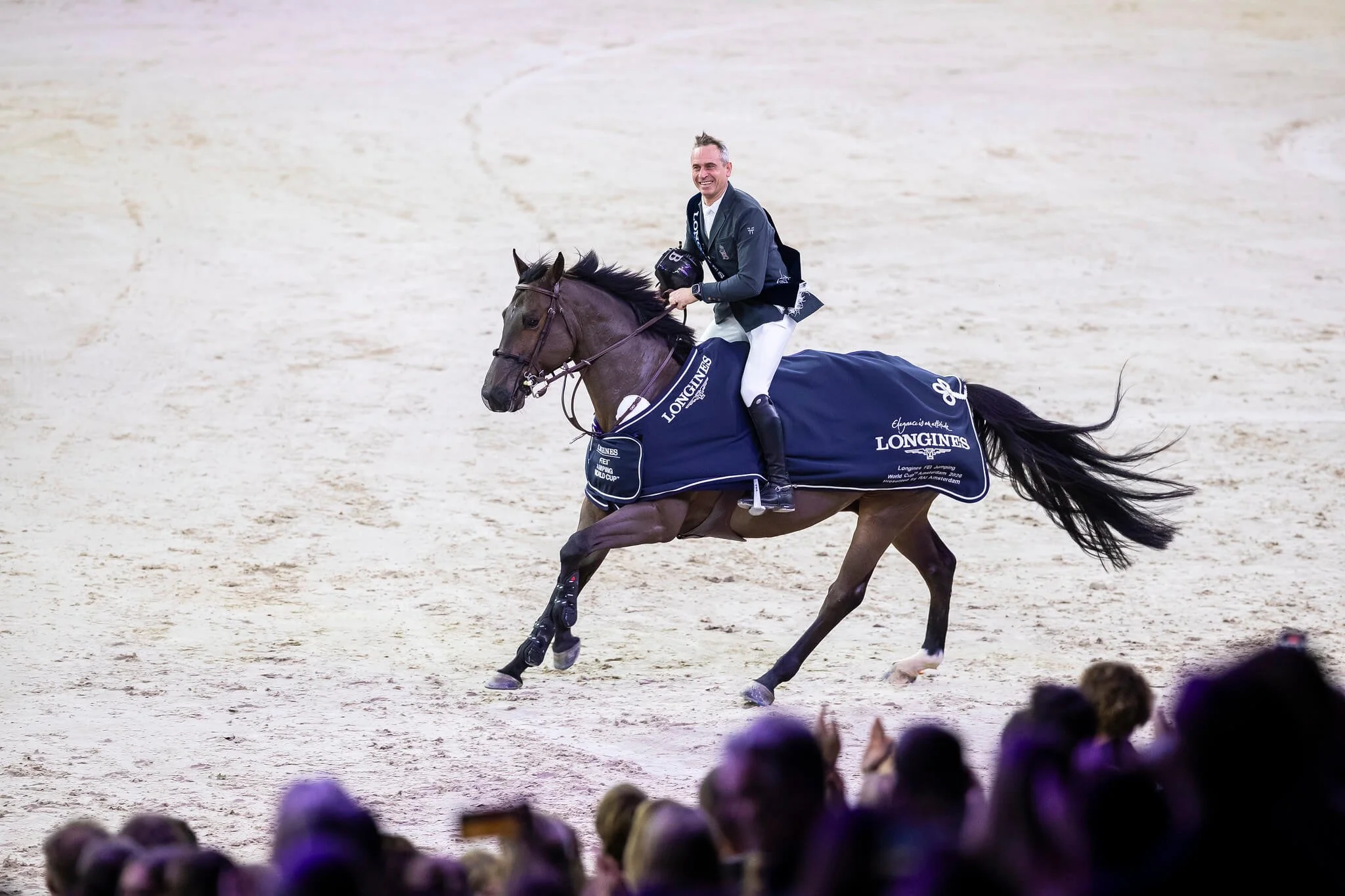
Julien Epaillard (FRA) and Donatello d’Auge. Image: ©FEI/Leanjo de Koster
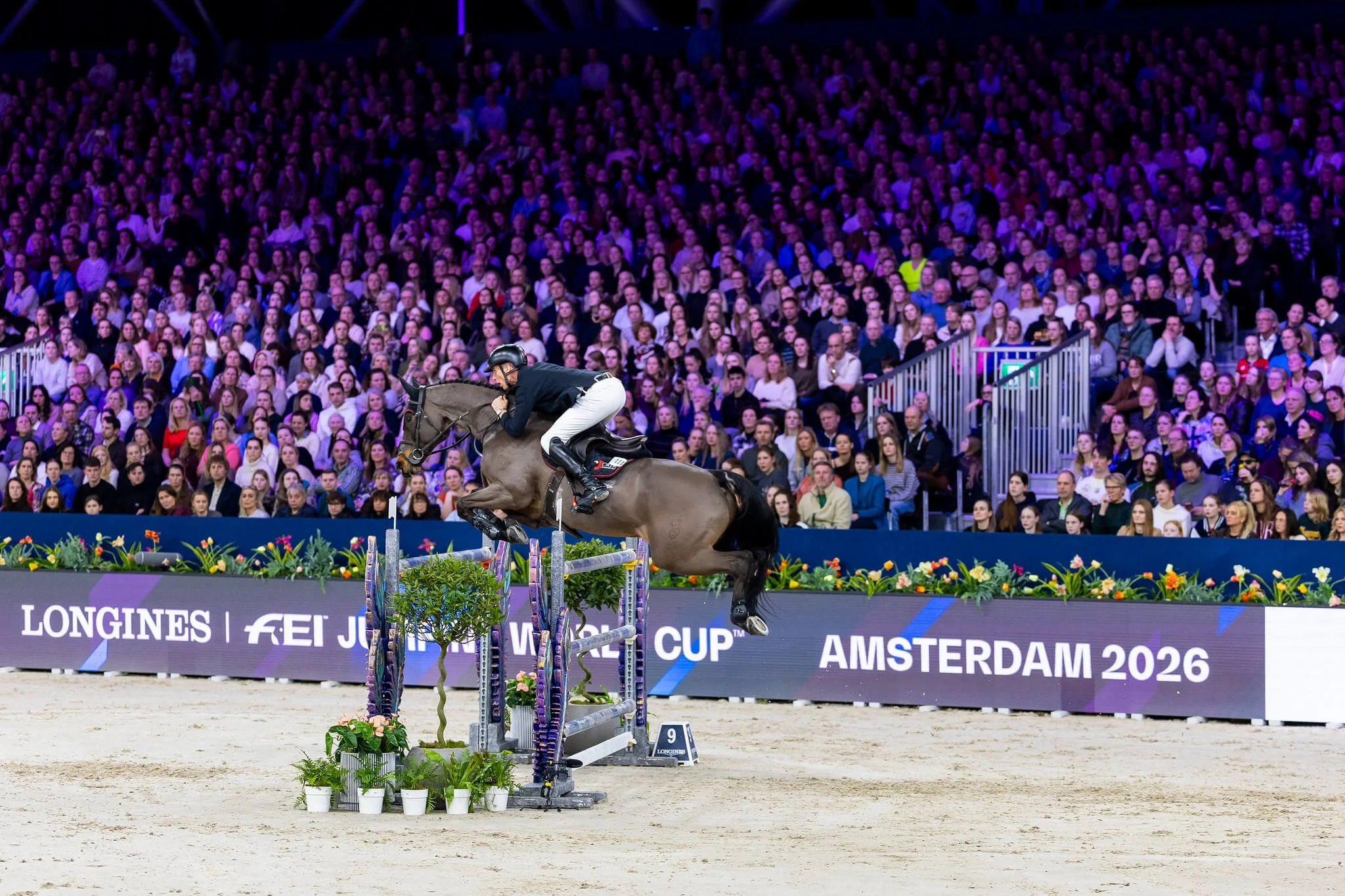
Alain Jufer (SUI) with Dante MM. Image: ©FEI/Leanjo de Koster
Fry and Glamourdale Command the FEI Dressage World Cup™ Freestyle and Grand Prix
Dressage at Amsterdam continued its rich tradition with a compelling FEI Dressage World Cup™ Freestyle, delivered in front of a highly engaged crowd. Charlotte Fry and Glamourdale topped the leaderboard with a score of 89.305%, combining athletic power with musical harmony to secure a clear winning margin. The performance included fluid transitions and explosive canter work, reflecting the pair’s continued position at the vanguard of the discipline.
Germany’s Isabell Werth, riding her Olympic mount Wendy de Fontaine, finished second on 87.580%, less than two percent behind the winner. Werth’s test was technically assured and expressive but was ultimately edged out by Fry’s sharper harmony in piaffe and extended movements. Third place went to Becky Moody aboard fan-favourite Jagerbomb, scoring 85.310%, completing a closely grouped podium. Moody and Jagerbomb also captured the Harmony & Fairness Award, recognising their outstanding partnership.
Earlier in the week, Fry had already topped the Grand Prix, further confirming her dominance across both qualifying and freestyle tests. Werth once again featured prominently, while Moody’s consistent scoring reinforced her growing stature within the Western European League. The percentage spreads, narrowly separated across the top three, highlighted the fine performance distinctions that separate victory from runner-up positions in elite dressage.
As the anniversary edition drew to a close, Jumping Amsterdam once again demonstrated its ability to bring together elite sport, emerging talent and a deeply engaged audience. Across jumping and dressage, performances reflected both competitive depth and technical refinement, reinforcing Amsterdam’s standing as a key indoor benchmark where World Cup narratives continue to take shape.
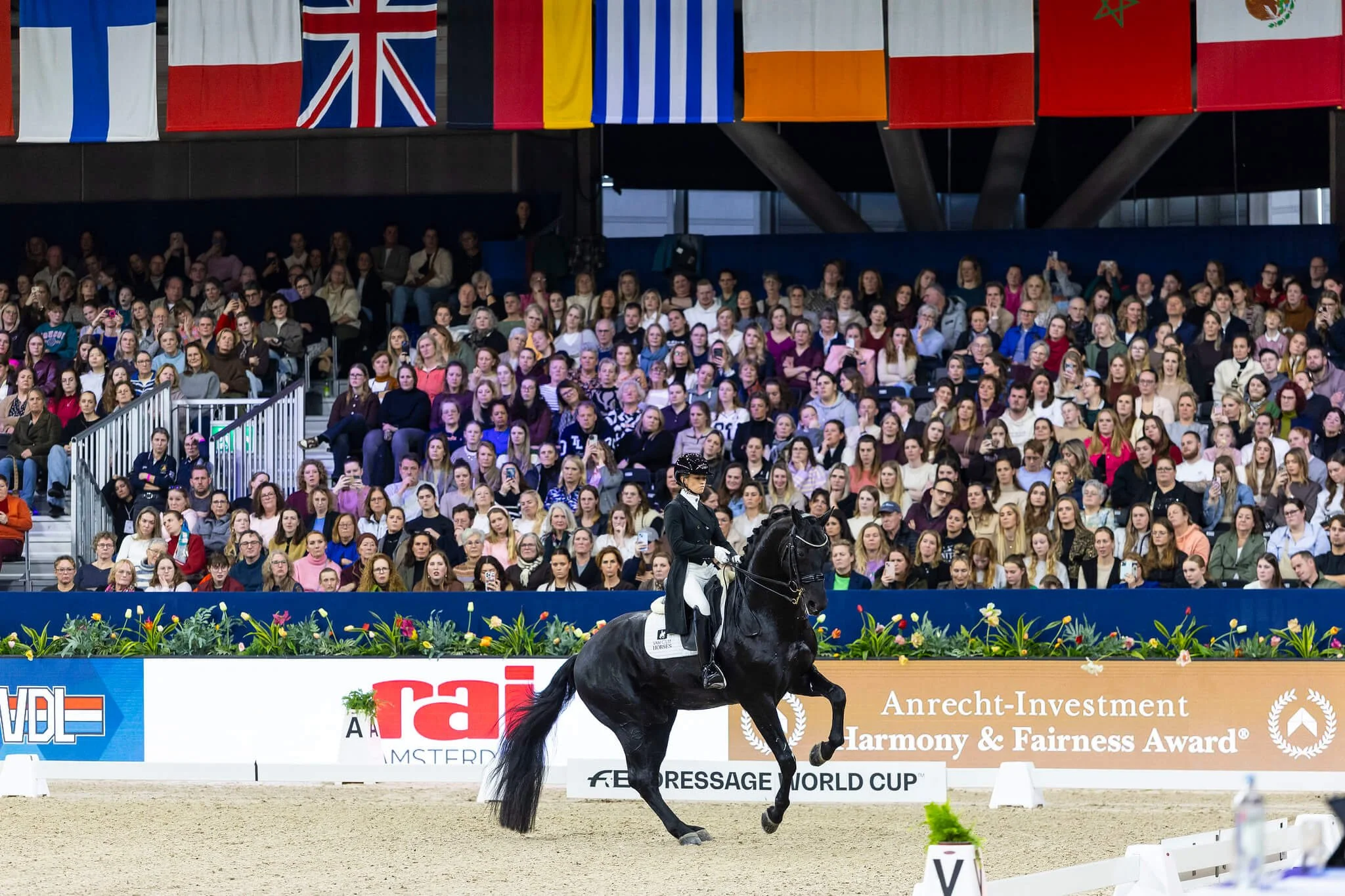
Charlotte Fry and Glamourdale. Image: ©FEI/Leanjo de Koster
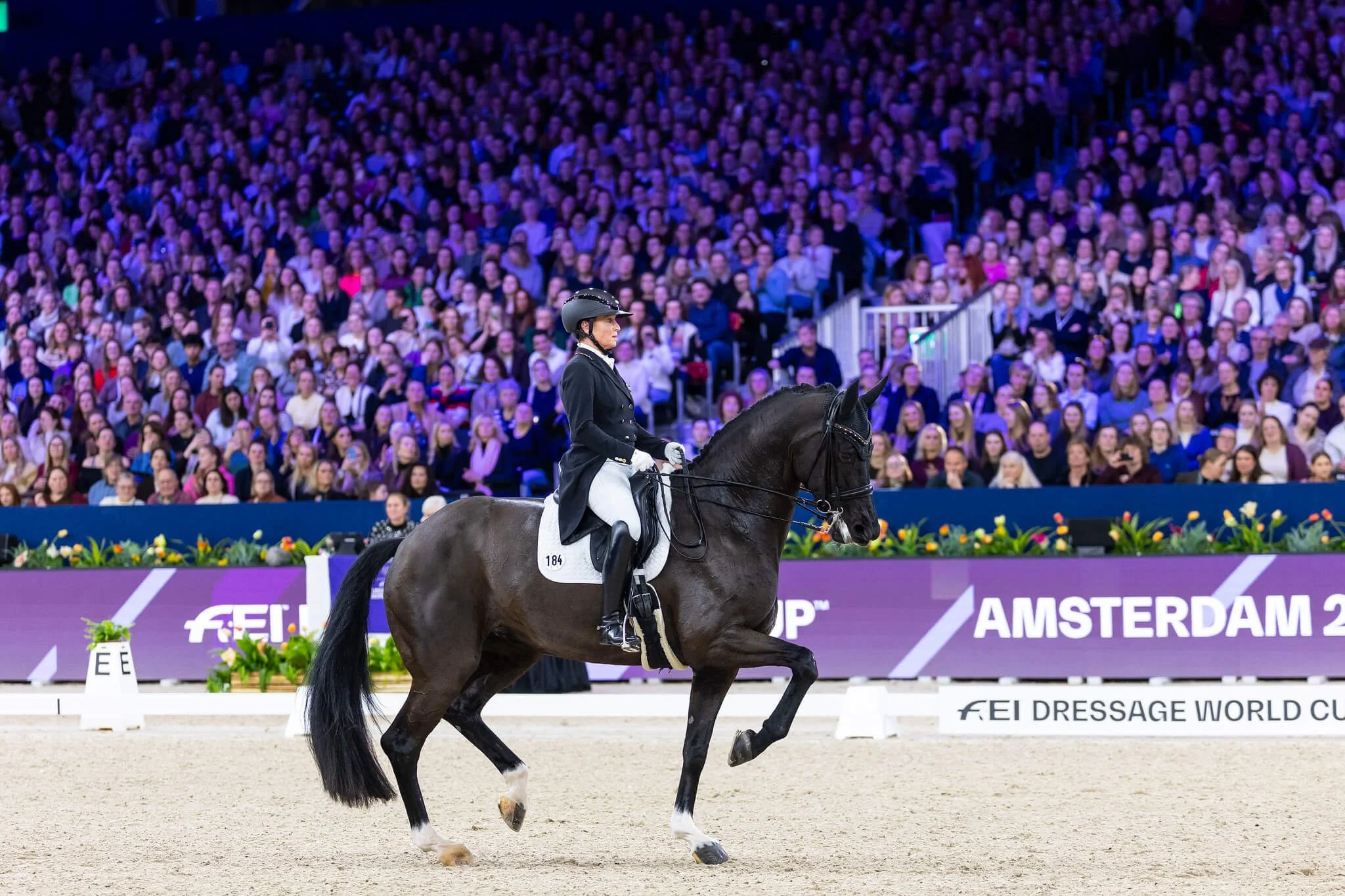
Isabell Werth and Wendy de Fontaine. Image: ©FEI/Leanjo de Koster
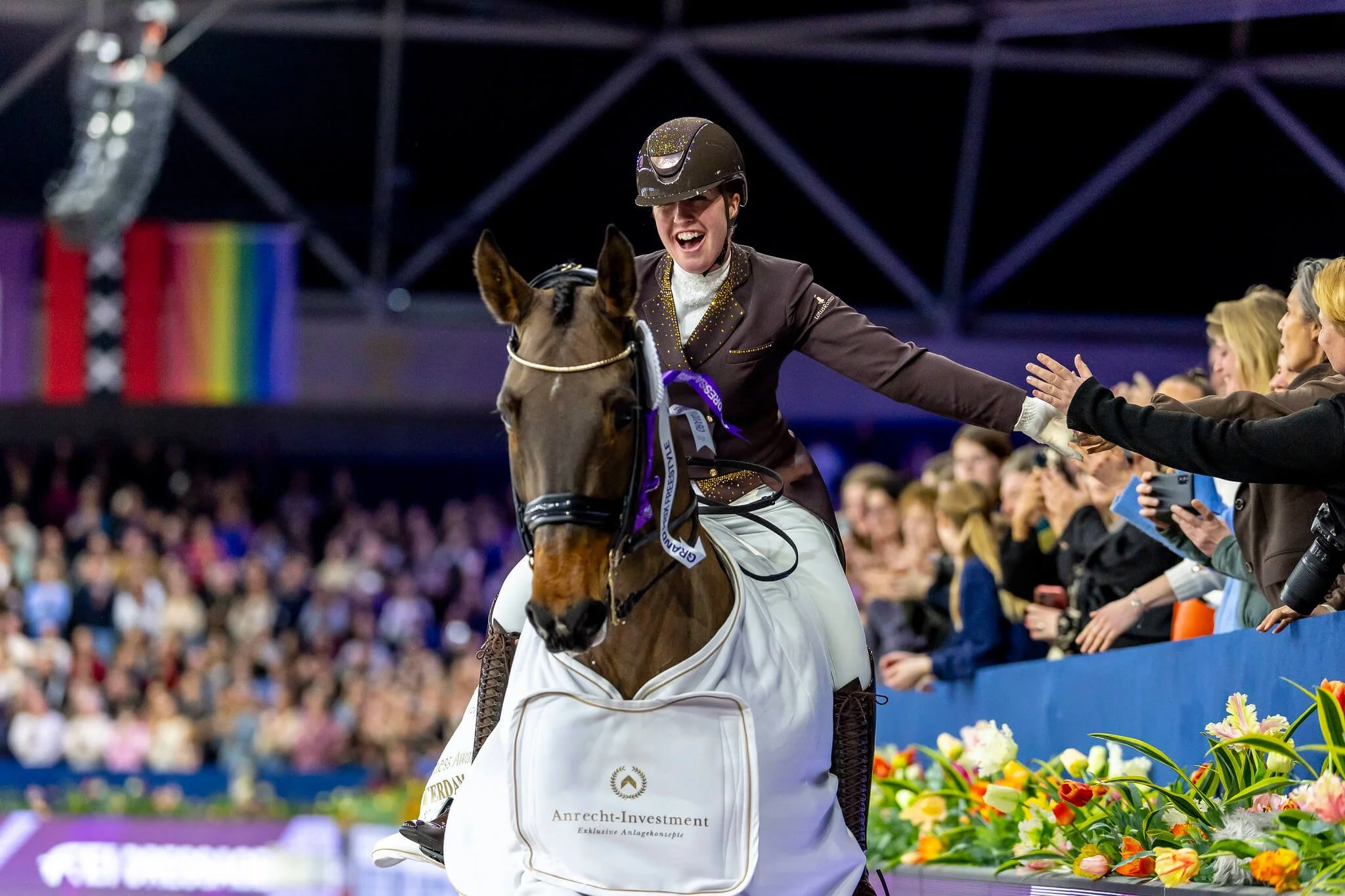
Becky Moody and Jagerbomb. Image: ©FEI/Leanjo de Koster