Longines CHI Classics Basel 2026
If you want a clean read on indoor form in January, Basel rarely disappoints. LONGINES CHI CLASSICS BASEL once again turned the St. Jakobshalle into a pressure chamber: tight turns, quick distances and an atmosphere that asks every combination to be accurate first time. Across four days, the show delivered top sport in jumping and dressage, supported by big, informed crowds and a programme built around World Cup points and prestige trophies.
Organisers reported 25,500 spectators on site and 104 riders from 21 nations across the two disciplines, a scale that underlines Basel’s position as one of Europe’s most significant indoor fixtures.
Jumping: Vogel Stamps Authority in the Longines FEI Jumping World Cup™ of Basel
Sunday’s Longines FEI Jumping World Cup™ of Basel, presented by Bank J. Safra Sarasin, was the centrepiece of the event and it delivered exactly what this arena demands: Speed that never sacrifices shape, and a jump-off where lines appear and disappear in a heartbeat. Richard Vogel and United Touch S produced the round that mattered, taking the win ahead of Kim Emmen (NL) with Imagine N.O.P. in second and Johan-Sebastian Gulliksen (NOR) with Equine America Harwich VDL in third.
It was also an important league moment: Basel was leg eight of the Longines FEI Jumping World Cup™ Western European League 2025 to 2026 season, and Vogel’s result reinforced the sense that this is no longer a campaign of promise but one of control. The course, built to be big and technical in a compact footprint, rewarded the riders who could keep their horses quick in the air without letting the rhythm flatten.
Basel’s jump-off theatre is unique because the crowd understands when the decision points arrive. They react to the split-second choices: whether a rider dares the inside turn, how early they land and go, whether the horse stays confident when the fences come up fast.
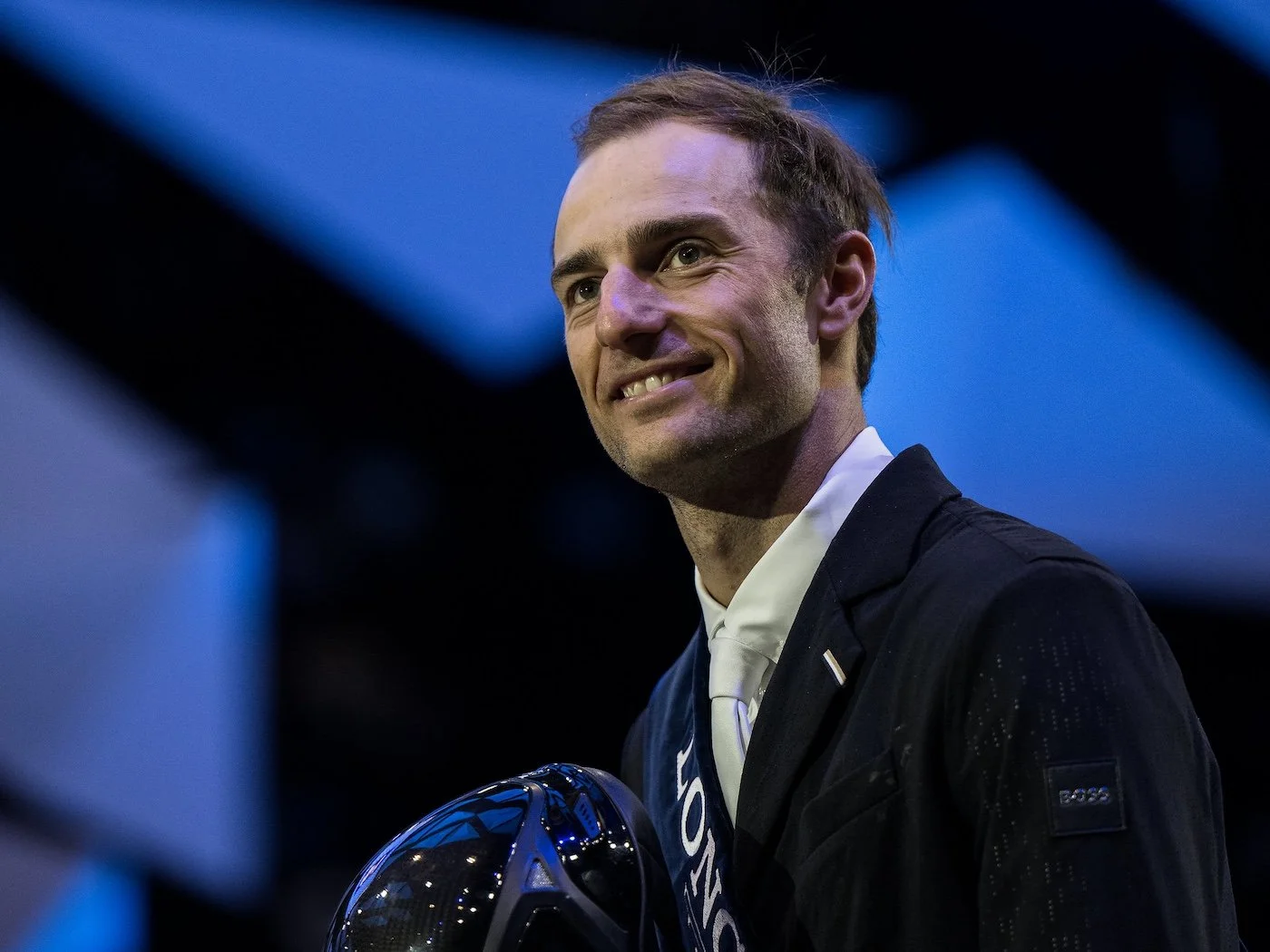
Richard Vogel (GER) and United Touch S. Image: © FEI/Martin Dokoupil
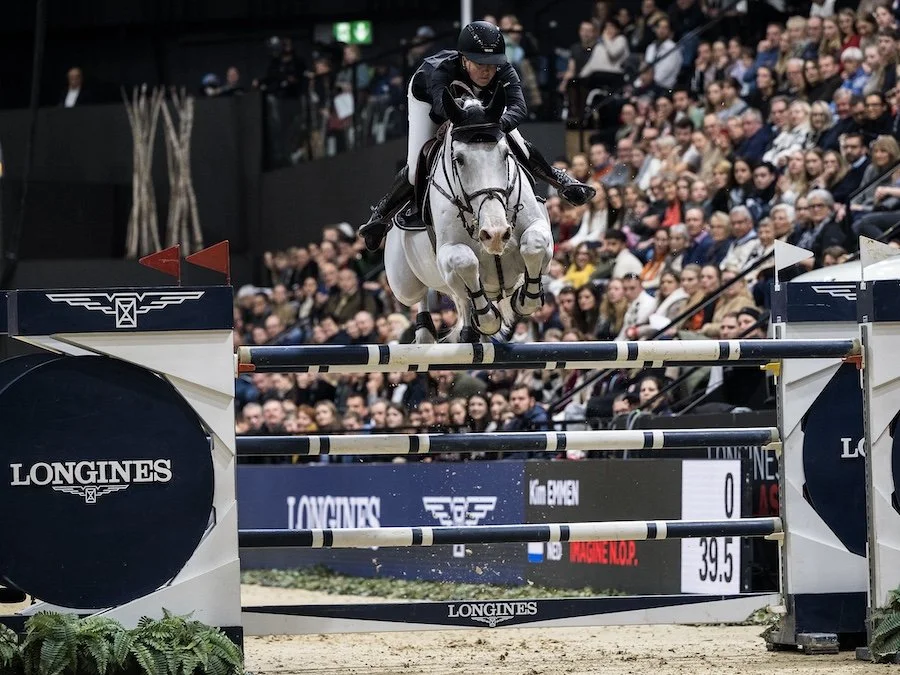
Kim Emmen (NL) with Imagine N.O.P. Image: © FEI/Martin Dokoupil
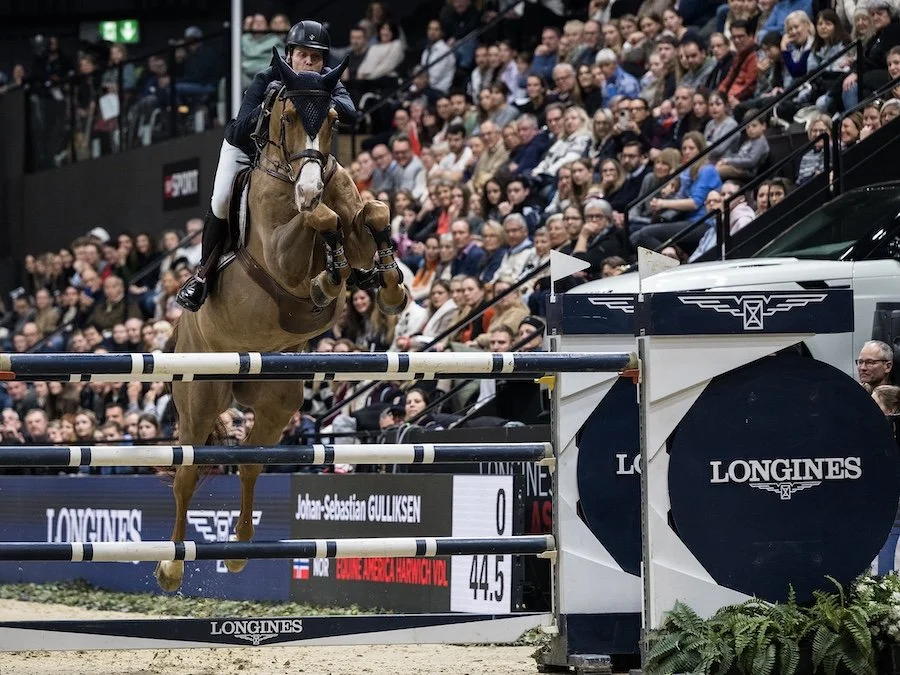
Johan-Sebastian Gulliksen (NOR) with Equine America Harwich VDL. © FEI/Martin Dokoupil
Longines Grand Prix: Emmen Takes a Milestone Win Under Basel Lights
The Longines Grand Prix of Basel added another layer to the weekend’s narrative. Emmen claimed the biggest victory of her career so far, delivering the only double-clear performance from a six-way jump-off to take the title.
Julien Epaillard and Donatello d’Auge stopped the clock quickest, but a fence down left them second, while Pieter Devos and Casual DV Z completed the podium in third.
In Basel, that outcome matters beyond the rosette. A Grand Prix win here is a statement about rideability and competitive resilience, because the arena does not allow you to drift into a plan. You commit to it, or you pay for it.
Key Supporting Classes: Depth, Precision and Indoor Form
Basel’s supporting programme plays a defined competitive role within the week, offering additional tests of indoor readiness rather than serving as secondary sport. These classes demand the same qualities required at World Cup level, with tight lines, short distances and an arena that exposes hesitation or imbalance immediately.
In the Prize of Gerüstbau Nordwest, the home nation delivered a clean sweep of the podium. Steve Guerdat and Is-Minka took the win, followed by Martin Fuchs with Love de Vie in second and Bryan Balsiger aboard Fais Toi Belle du Seigneur Pleville.Ch in third, completing a Swiss one-two-three at 1.50m. The result reflected both national depth and the ability of these combinations to operate efficiently in a confined indoor setting.
The CSI5*-W 1.55m Championat City of Basel delivered a track that tested both scope and balance. In a competitive field, Josch Löhden (GER) and EIC Shabernack produced the only clear round in a jump-off situation, finishing fastest among the leading contenders and securing the class win. Their victory underscored the pair’s ability to manage speed and accuracy simultaneously, particularly through the tighter turns and shortened lines that characterise indoor competition. The result reinforced Basel’s reputation for producing results that demand both tactical acumen and willingness to commit to forward, well-timed riding.
Taken together, these classes offered a clear measure of which horses are genuinely suited to indoor competition. Quick reactions, economy in the jump and mental focus under pressure proved as critical here as in the headline World Cup contests, reinforcing Basel’s reputation as a venue that rewards complete, adaptable combinations.
Dressage: Werth Wins the Freestyle as Rogerson Makes Swiss History
Basel’s dressage delivered both scoreboard authority and a national landmark moment, again amplified by a crowd that knows exactly when to reward risk and quality.
In the FEI Dressage World Cup™ Grand Prix, Isabell Werth (GER) and Wendy de Fontaine led the field, setting the tone for the weekend’s decisive freestyle.
In the FEI Dressage World Cup™ Grand Prix Freestyle, Werth and Wendy again took victory on 86.155%, defending their position at the top of the meeting. Charlotta Rogerson (SUI) and Bonheur de la Vie were second, a result that resonated far beyond the final centreline, while Raphael Netz (GER) and DSP Dieudonné finished third.
What made Rogerson’s performance a genuine headline was context. Basel’s organisers described it as record-setting for Swiss dressage, highlighting both her personal best trajectory across the weekend and the wider signal it sends for the discipline’s development at home.
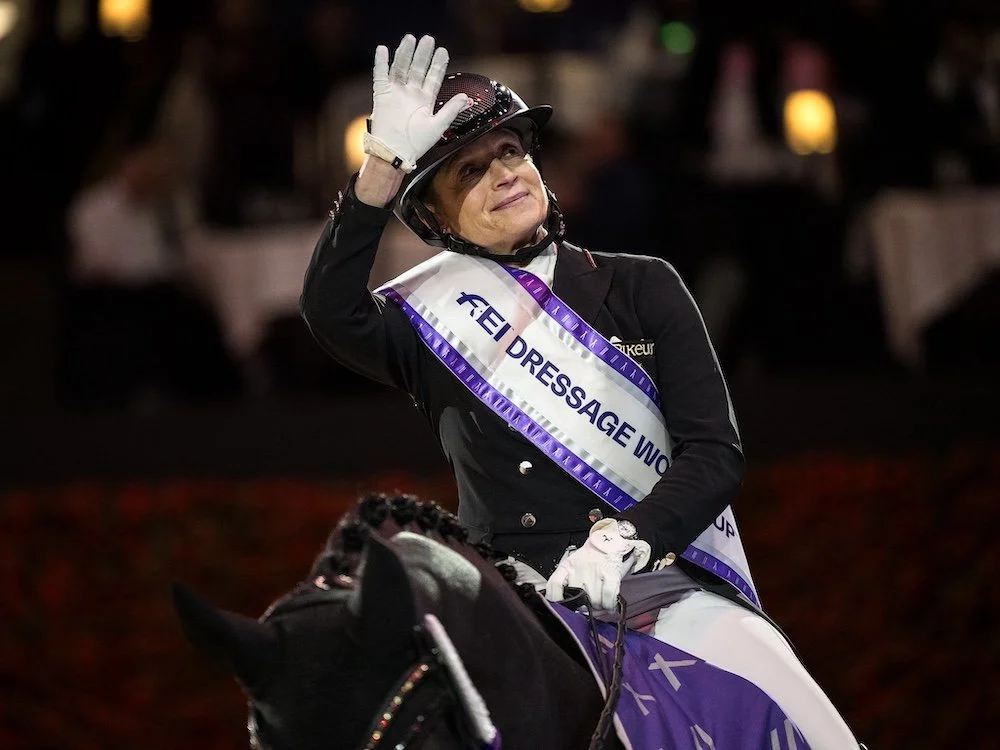
Isabell Werth (GER) and Wendy de Fontaine. Image: © FEI/Martin Dokoupil
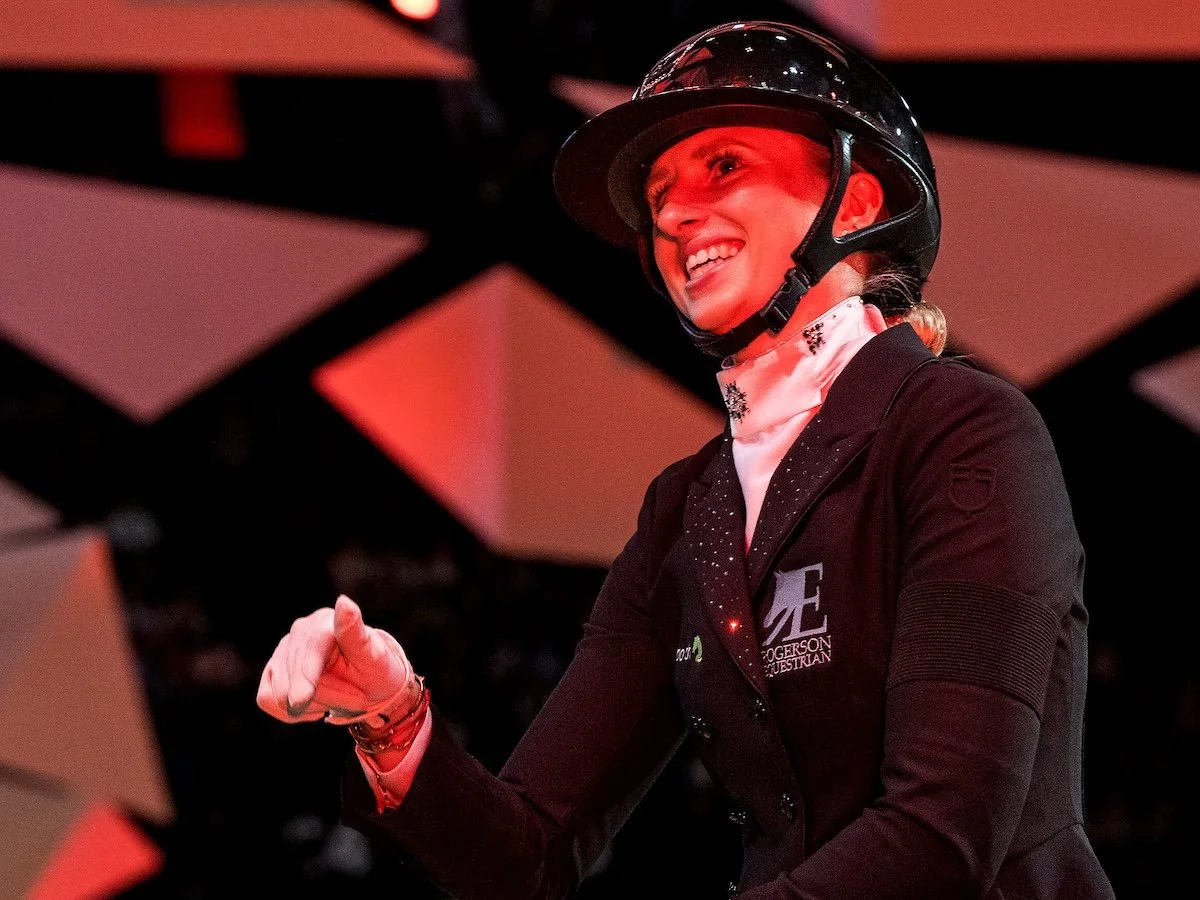
Charlotta Rogerson (SUI) and Bonheur de la Vie. Image: © FEI/Martin Dokoupil
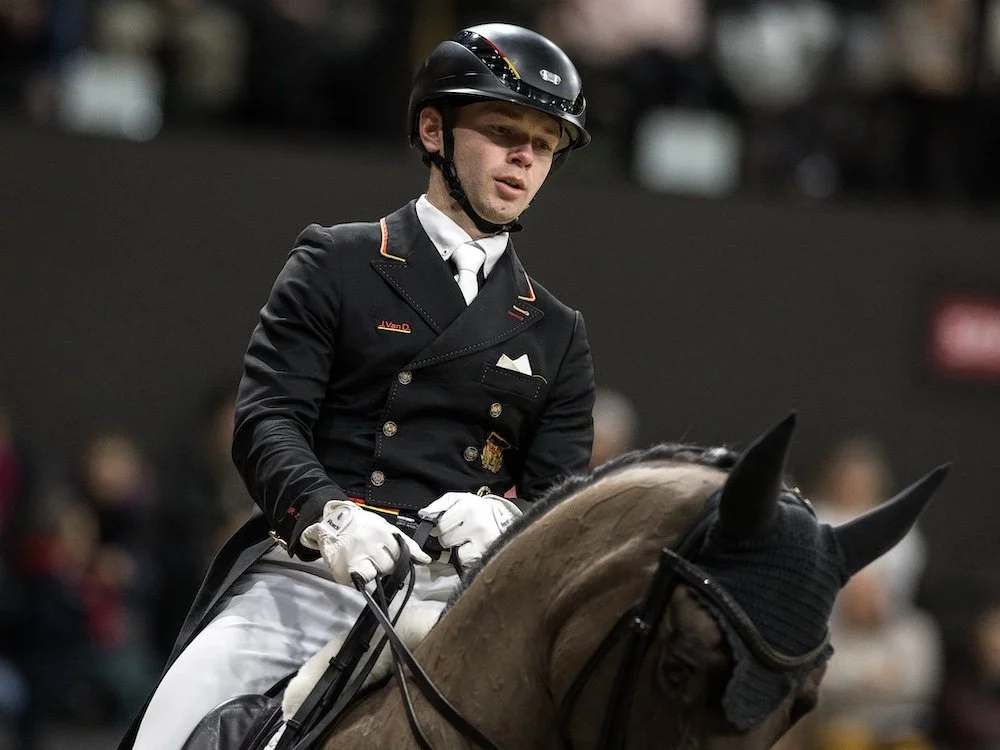
Raphael Netz (GER) and DSP Dieudonné. Image: © FEI/Martin Dokoupil
Swiss Equestrian Talents and Long-Term Development
Basel’s commitment to future performance was underscored through the Swiss Equestrian Talents Final, a class that sits deliberately within the main arena programme rather than on the margins of the event. The final, contested for the Junteressli-Bryys prize, placed young riders under genuine championship pressure, requiring the same precision, pace and composure demanded of the senior World Cup classes.
Philip Svitzer (SWE) claimed victory with Alida Nike after delivering a fast, faultless jump-off that rewarded accuracy and decisiveness through the shortened indoor lines. Dan Eschmann (FRA) followed closely in second with Fauve des Roches, while Matilda Larsson (SUI) secured third place aboard Dover 9, completing a podium that reflected both technical ability and competitive maturity.
The prominence of the U25 final within the Basel programme reflects a broader philosophy at the event, where elite sport and long-term development are treated as part of the same performance pathway. That emphasis was echoed elsewhere during the week, with recognition given to individuals whose work has shaped Swiss equestrian sport over time. Thomas Fuchs was honoured for his twelve-year tenure as national coach of the Swiss showjumping team, highlighting the continuity behind the country’s sustained presence at the top level. Basel also acknowledged the wider international ecosystem that supports elite competition, with Linda Southern-Heathcott receiving the Award of Honour for her longstanding contribution to the sport.