
Belgium won their home qualifier at the Stephex Arena on Friday 8 May without a single fault counting against them, and in doing so laid the first stone of the campaign that would end with the trophy at Avenches four months later.
They were the only team in a field of twelve to finish on zero. Great Britain took second as the quickest of the four-faulters, with the Czech Republic third.
How It Was Done
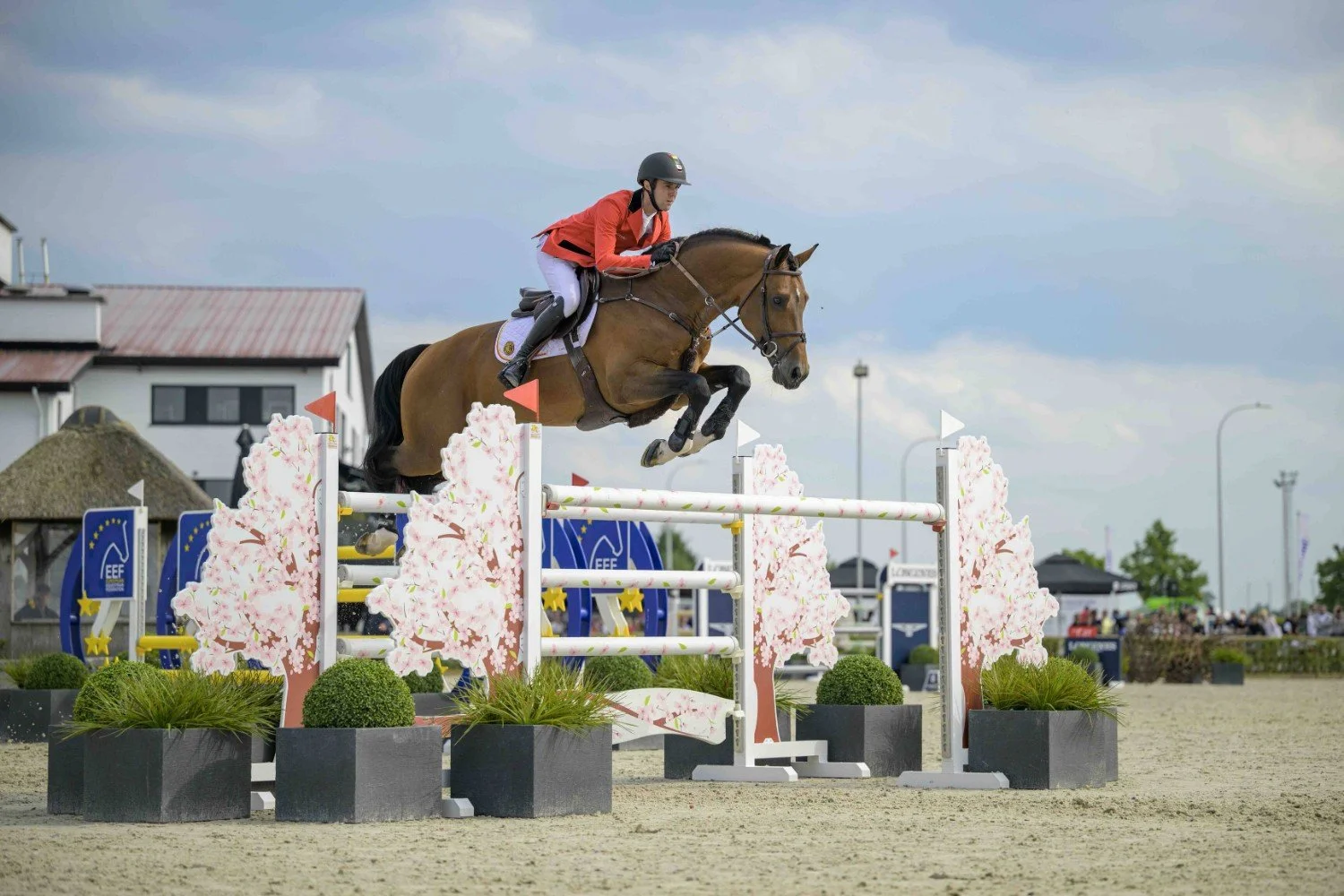
Gilles Thomas and Riesling Van T Roosakker during the Longines EEF Series in Lier, 2026. Image: © EEF.
The foundation was laid in the opening round, and it was laid quickly. Koen Vereecke set the pace with a faultless round on Quinoa de La Liniere. Frederic Vernaet followed with Orak d'Hamwyck T&L and did the same. Gilles Thomas and Riesling Van T Roosakker made it three. Jeroen Appelen's four penalties became the drop score, and Belgium went to the top of the leaderboard on nothing.
Chef d'équipe Filip Lacus was open about the strategy afterwards, saying Belgium had deliberately brought a highly competitive team in order to maximise their points.
That is a more interesting admission than it first appears. The EEF Series is nominally a development competition, and there is a running debate within European federations about whether nations should use it to blood young combinations or to bank points with established ones. Lacus chose the second and said so. Belgium then won the Peelbergen semi-final and the Final, which rather settles the argument on results if not on principle.
The Horses, Not the Riders
The more revealing comment came from Gilles Thomas, who described Riesling Van T Roosakker as a horse for the future and said competitions like these in the Series are crucial to the development of both horse and rider towards the highest level.
Thomas is not a developing rider. He won a five-star class at the Longines Global Champions Tour stage in Shanghai the same month. What he was describing is the Series' actual function for a top-level nation: not somewhere to learn to ride, but somewhere to put a good young horse into a team atmosphere, with a crowd and a flag and a score that counts, several years before it would ever see a CSIO5*.
It is also a lesson from Lier for Britain, which tends to bring few genuinely young horses to these fixtures.
A Bad Night for Ireland
Ireland were never in the contest and finished tenth, with one clear round to their name. Denmark came last of the twelve.
Both recovered immediately. Ireland won the next qualifier at Bedizzole seven days later, beating Italy in a jump-off for their first Nations Cup win of 2026. Denmark won the one after that, at home at Stutteri Ask, retaining their Region North title. In a Series where teams rotate horses and riders week to week, a bad Friday night means considerably less than it would at senior level, and reading too much into one result is the commonest mistake in covering this competition.
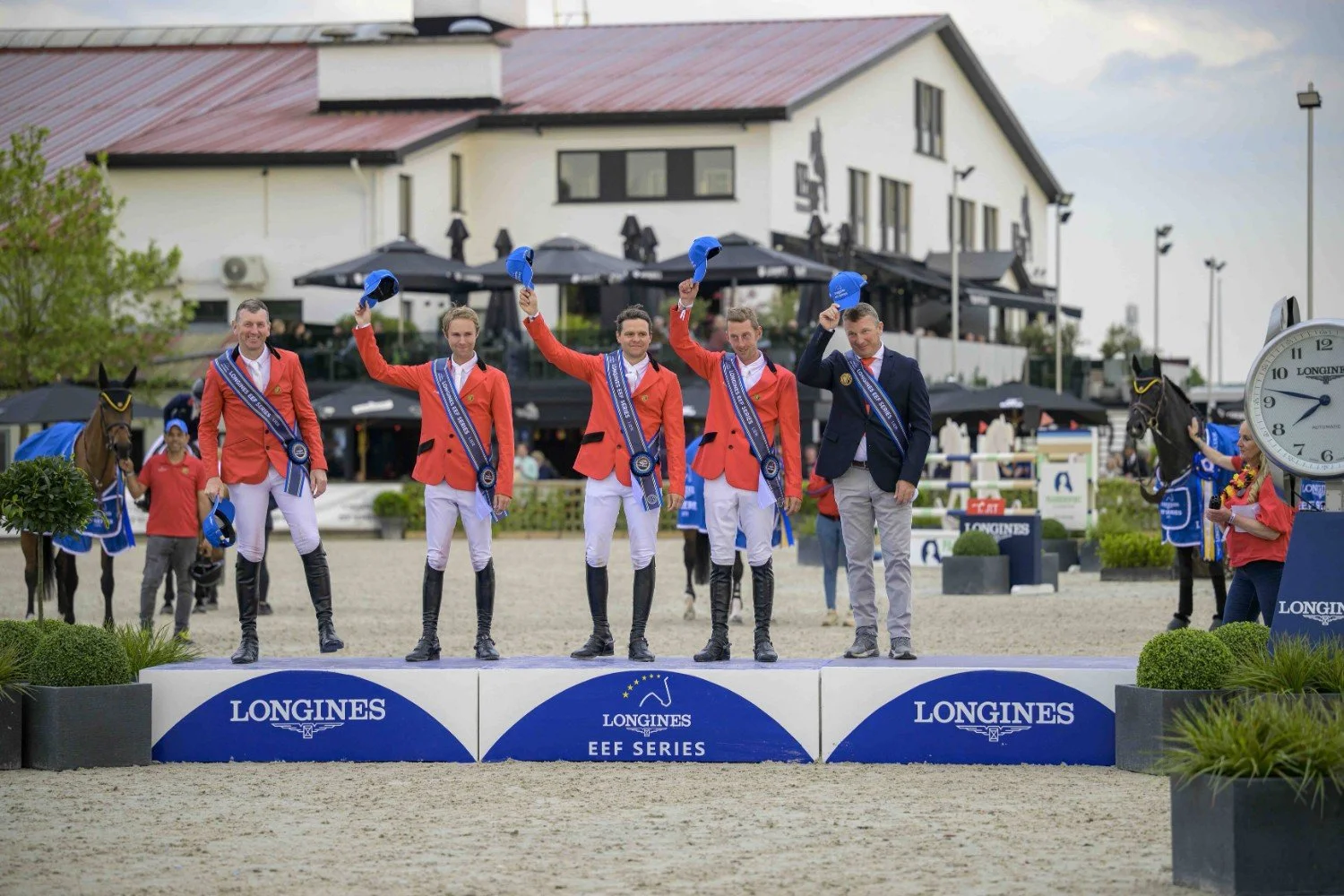
Team Belgium celebrate their victory in Lier. Photo © EEF.
Where It Left Region West
Belgium's maximum points at Lier, followed by second place behind Italy at Deauville in June, carried them comfortably into the Peelbergen semi-final, which they then won.
Great Britain's second place at Lier was their best qualifier result of the regional phase and was decisive in getting them to Peelbergen and on to Avenches. The British team qualified for the Final through consistency rather than a headline win.
The Series moved south to Borgo la Caccia at Bedizzole the following week for the first Region South qualifier.