
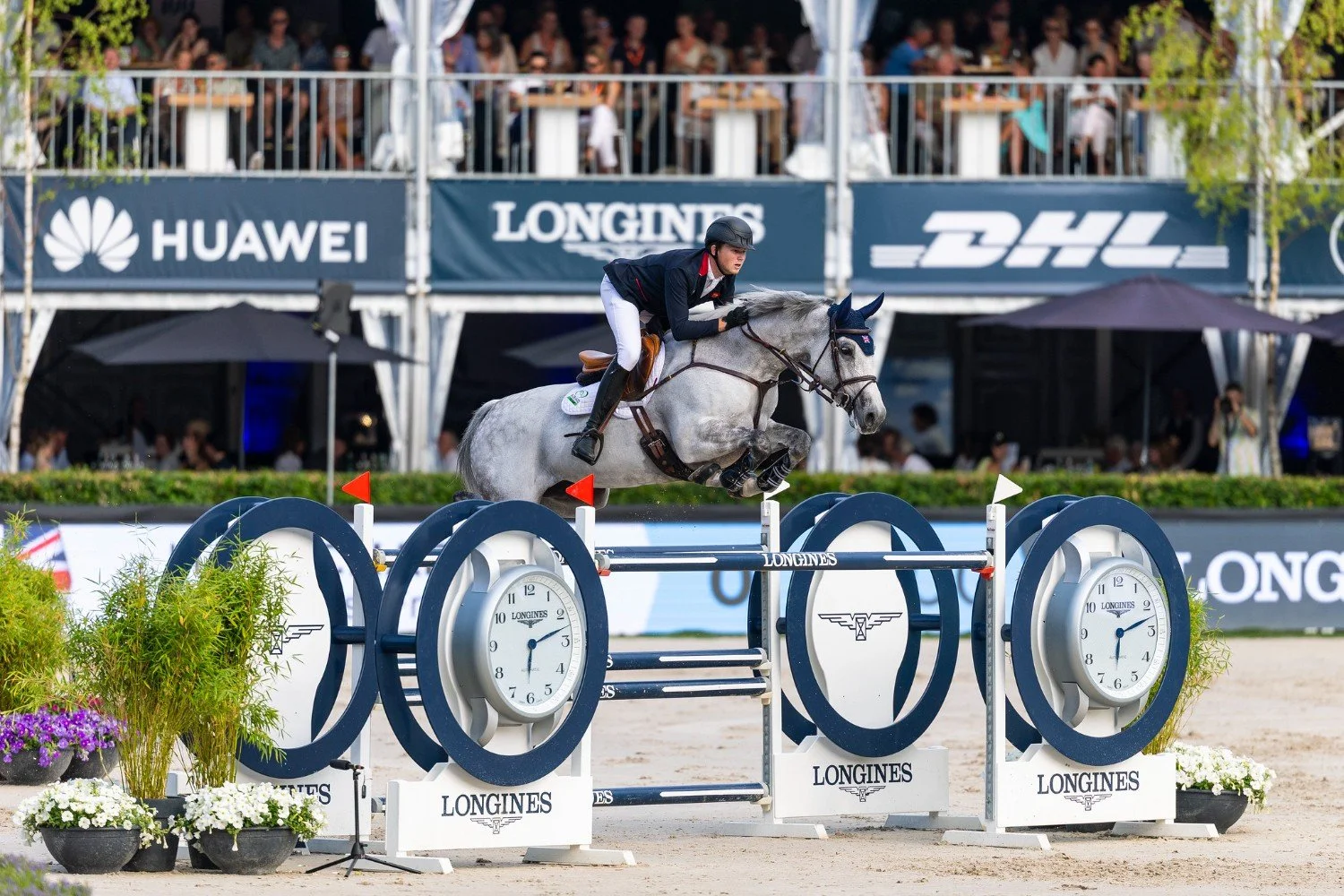
Harry Charles (GBR) and LT Holst Freda during the Longines League of Nations™ 2026 in Rotterdam (NED). Image:© FEI/Leanjo de Koster
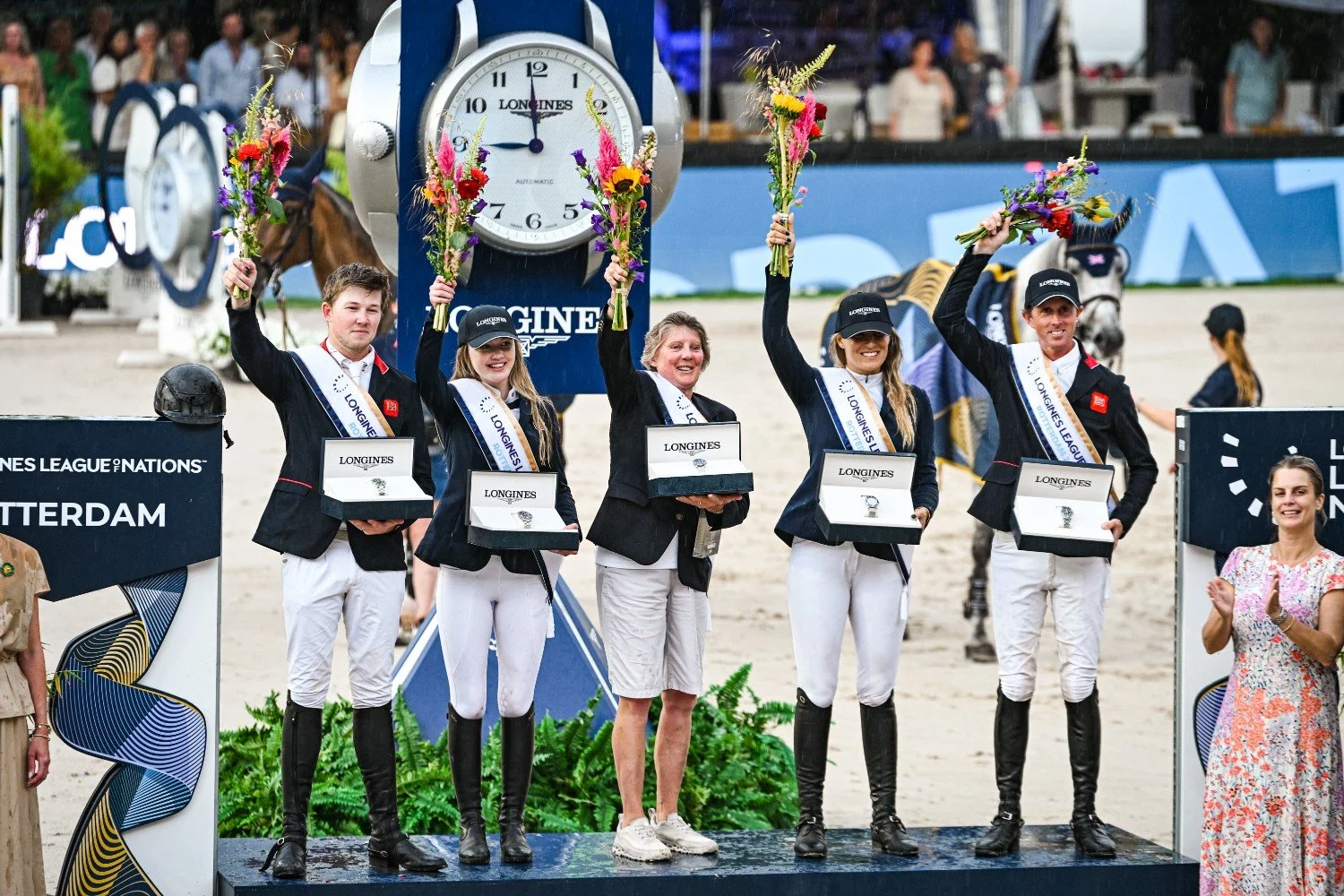
Team Great Britain: Harry Charles, Sienna Charles, Di Lampard, Jessica Mendoza and Ben Maher, winners of the Longines League of Nations in Rotterdam (NED) 2026. Image: ©M. Froment for Equerry
The Longines League of Nations was designed to produce exactly what happened in the Kralingse Bos on Friday, and the margins show how.
Great Britain won the third qualifying leg of the 2026 season on a score of 8/0/31.18, from the United States on 8/0/31.25 and Switzerland on 8/0/31.64. Three nations, identical fault totals, and 0.46 seconds covering the podium after a jump-off.
The format did the work. All four riders jump in round one with the best three scores counting, but only the top eight nations return for round two, and in round two there is no drop score. France and Germany, the two teams best placed to profit from the day, both missed the cut after disappointing first rounds, which reshaped the class before it had properly started. With no discard available, the leaderboard moved constantly through round two: early leaders picking up faults, teams that had looked out of it climbing back. By the time the third-line riders had gone, Britain, the USA and Switzerland were locked together on eight and a jump-off was unavoidable.
Di Lampard's British squad was Harry Charles, Sienna Charles, Jessica Mendoza and Ben Maher, a line-up combining an Olympic champion, a Nations Cup regular and a rider in her first season at this level of the series.
What It Did to the Standings
Germany arrived in Rotterdam as the team to beat. Victory at Ocala in March had moved Otto Becker's side to 190 points at the halfway stage of the qualifying campaign, 35 clear of France and 40 clear of Ireland. Missing the round-two cut in Rotterdam was the first serious interruption to that.
For Britain, the win did something more than points. Lampard's team came into 2026 as reigning champions, having won the 2025 Final in Barcelona in a jump-off against Ireland, and had qualified automatically for the new season on that basis rather than through the ranking. Lampard has spoken about what winning in Barcelona did to the group, that riders and owners want to be part of a successful team, and that it raises standards across the squad rather than just producing one result. Rotterdam, eight weeks before Aachen, was the evidence.
Rotterdam's Own Weight
The 77th CHIO Rotterdam had more going on than the team competition. It ran a full CDIO5* dressage programme alongside the jumping, making it one of the last significant pre-Worlds selection opportunities in both disciplines, and every major national coach in Europe was watching the week.
Brazil's return to the series after a season's absence brought Rodrigo Pessoa back to a venue where the family history runs deep: his father Nelson won the Grand Prix of Rotterdam in 1966, and Rodrigo won it thirty years later in 1996. Marlon Modolo Zanotelli, Yuri Mansur and Eduardo Pereira de Menezes made up the rest of a Brazilian squad sitting fourth in the standings on arrival. The Netherlands were defending Rotterdam winners with Harrie Smolders back from the 2025 team.
Where It Leaves the Series
One qualifier remains, St Tropez–Gassin in September, before the top eight teams go to the Real Club de Polo de Barcelona in October for a Final worth €1,600,000. Britain won that Final last year. On the evidence of Rotterdam, they intend to be there defending it.