There is a moment on the drive south out of Calgary where the city stops and the foothills begin, and somewhere in that transition, behind a line of spruce planted half a century ago, sits one of the most improbable businesses in international sport. Fifty-odd years ago the site was a cattle feedlot. Today it covers 553 acres, employs the equivalent of a small town, and generates a quarter of a billion dollars a year for the province around it.
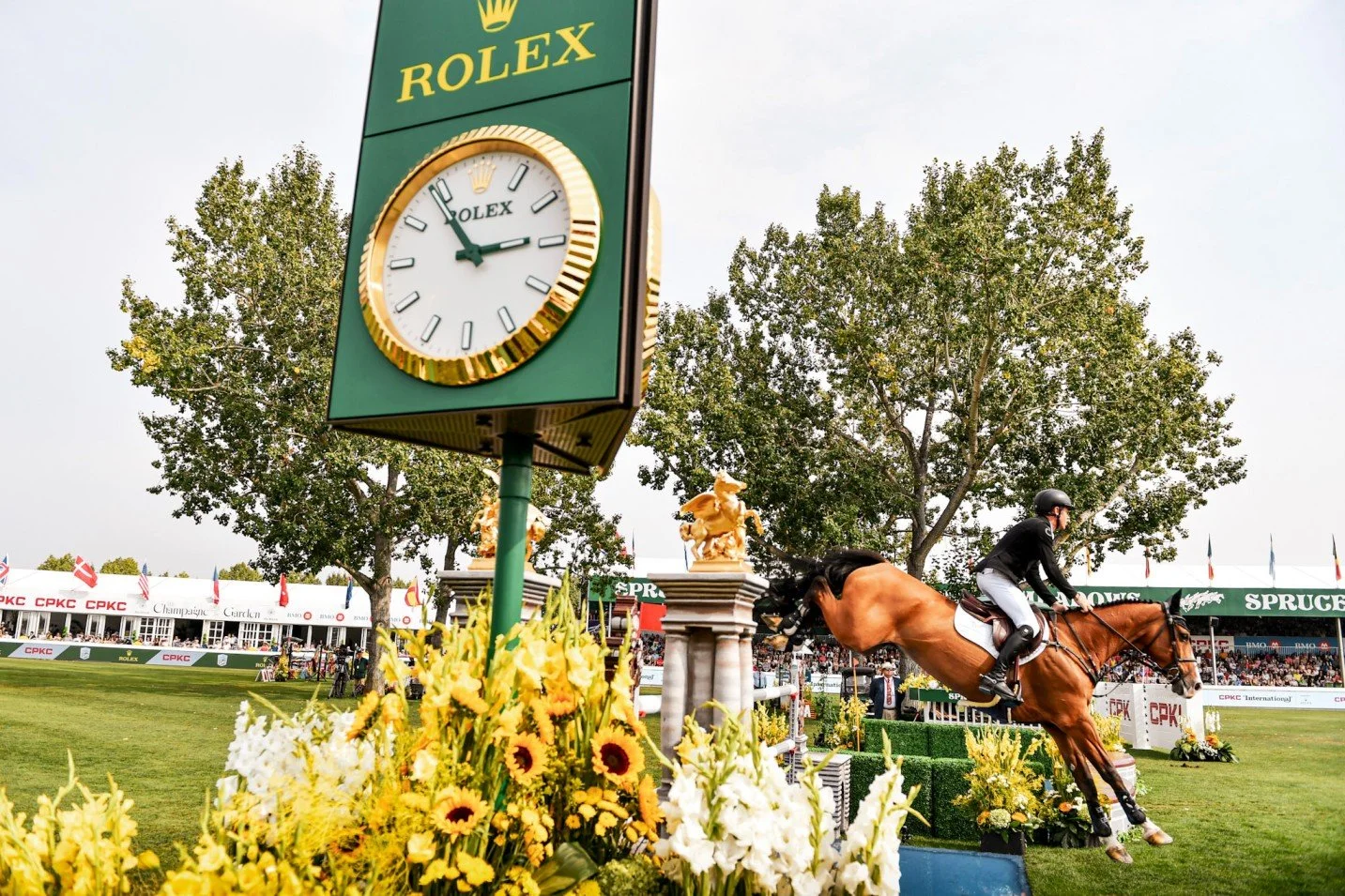
Scott Brash (GBR) riding Hello Jefferson winners of the $5M CPKC 'International' Grand Prix at Spruce Meadows 2025. Image: © M. Froment for EQuerry Co
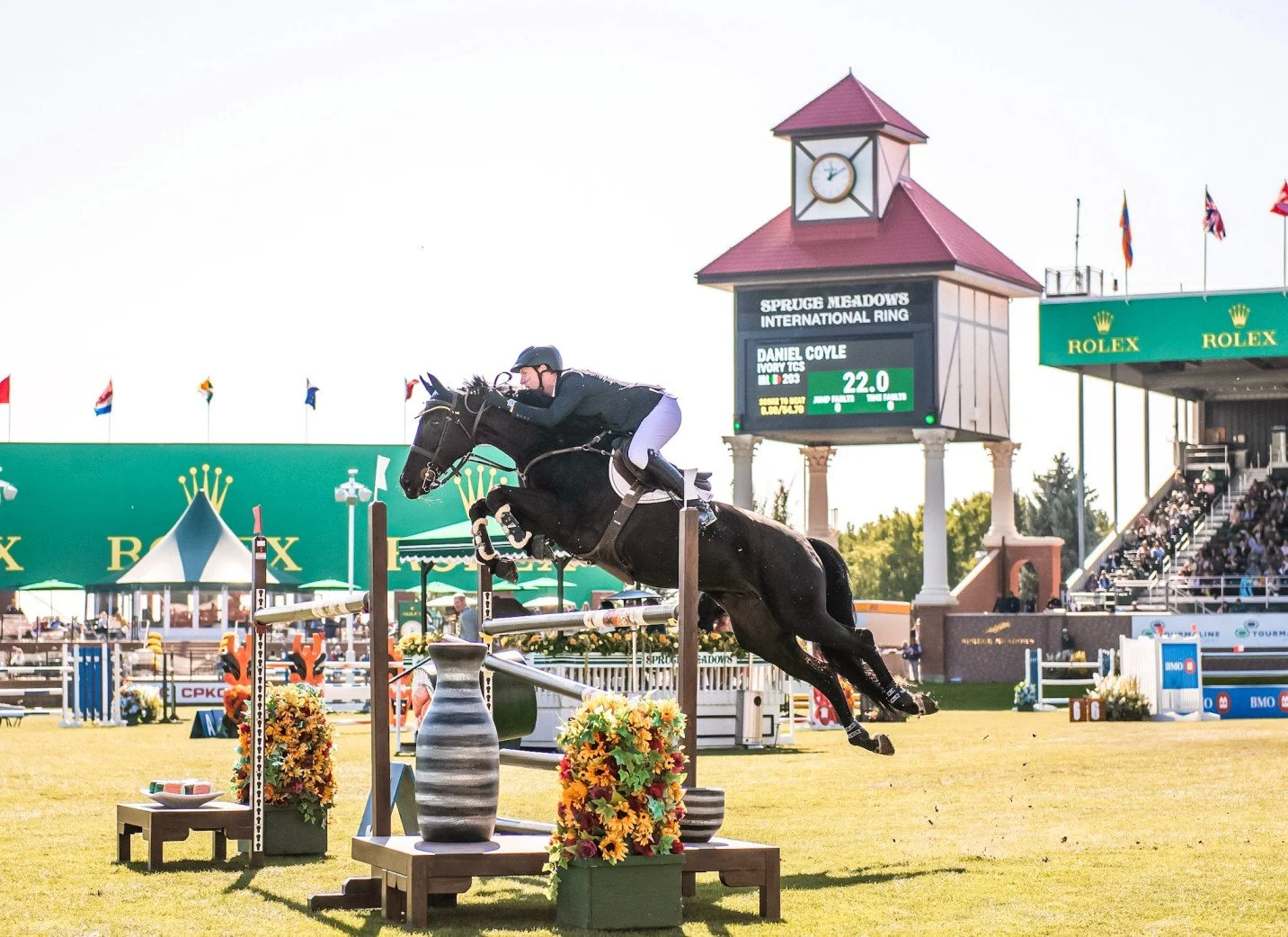
Daniel Coyle and Ivory TCS during the Spruce Meadows Masters 2023. Image: ©C. Grimshaw for EQuerry Co
The numbers come from a third-party economic impact analysis commissioned by Spruce Meadows and authored by Hubba Khatoon, Principal Economist at Root Economy, and the headline figure is $239 million in direct spending generated through the venue's events and operations in Alberta. That is what gets spent because Spruce Meadows exists, before any of the modelling that converts spending into broader economic activity begins.
Once that modelling is applied, the picture widens considerably. The analysis attributes $222.2 million of GDP impact across Canada to the venue, of which $160.7 million lands in Alberta, alongside 1,979 full-time jobs supported nationwide and 1,479 of them in the province. Wages and salaries come to $128.6 million across the country with $93.0 million paid in Alberta, and the tax take reaches $34.5 million, $9.1 million of it provincial.
Where the Money Actually Lands
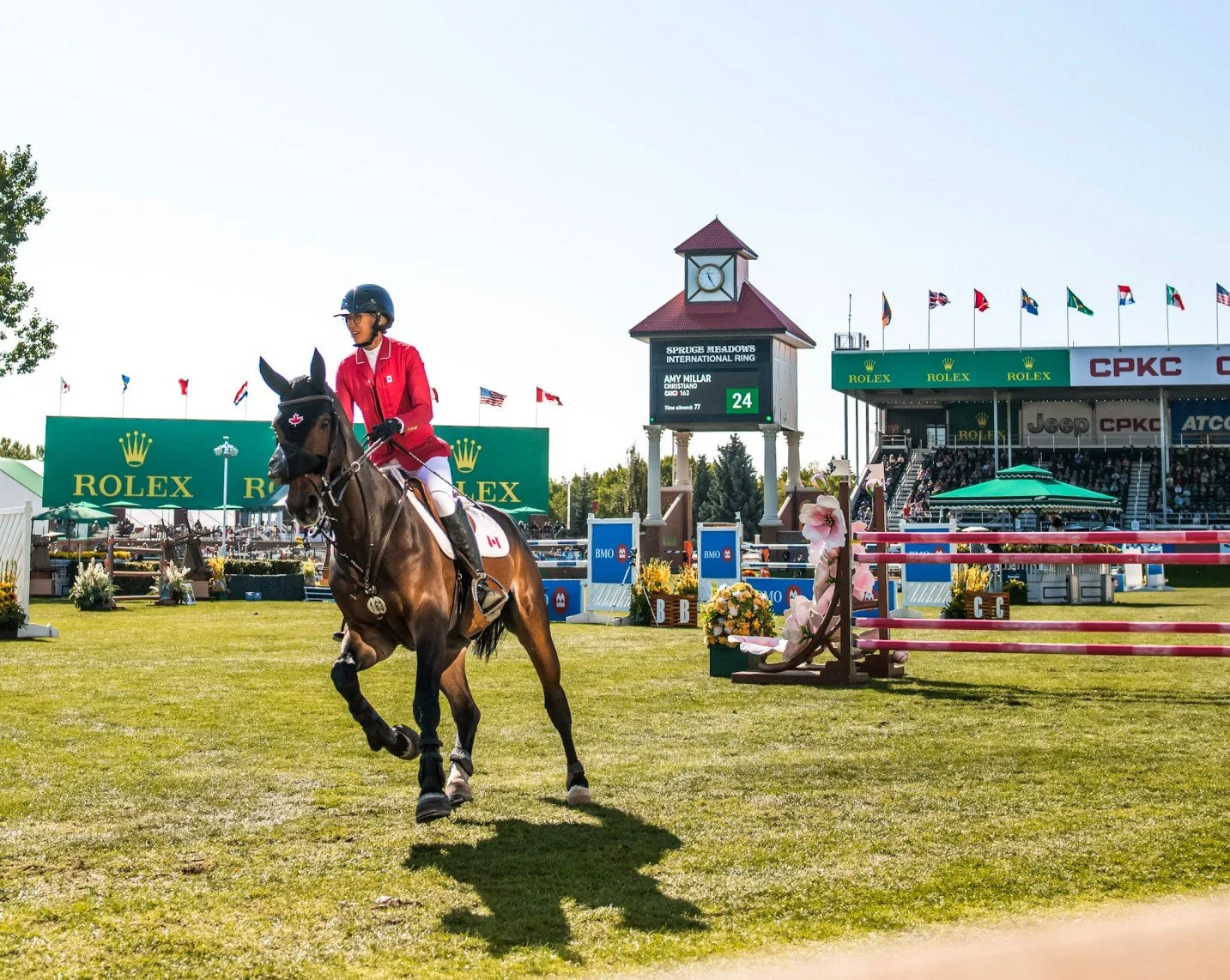
Amy Millar and Christiano during the Spruce Meadows ‘Masters’ 2023. Image: © M. Froment for EQuerry Co
What makes those figures more interesting than the usual venue impact study is how the direct spending breaks down, because a substantial portion of it never passes through the Spruce Meadows till at all.
Of the $239 million, roughly $138 million is estimated annual direct visitor spending, which is the money people hand over for tickets, hospitality, food, retail and everything else inside the gates. The remaining headline figure that matters to Calgary is the $48 million that out-of-town visitors are estimated to spend at local businesses outside the showground: the hotel rooms, the restaurants, the taxis, the fuel and the shopping that happen because a horse show brought somebody to Alberta who would not otherwise have come.
That distinction is the one every organiser should understand, because it is the argument a venue makes to the city and the province that surrounds it. A showground that keeps all of its revenue inside its own perimeter is a business. A showground that pushes tens of millions into the local economy it sits in becomes an asset worth protecting, and it is considerably easier to secure planning consent, infrastructure support and political goodwill when you can demonstrate the second rather than merely the first.
Four Hundred Events, and Only Some of Them Have Horses in Them
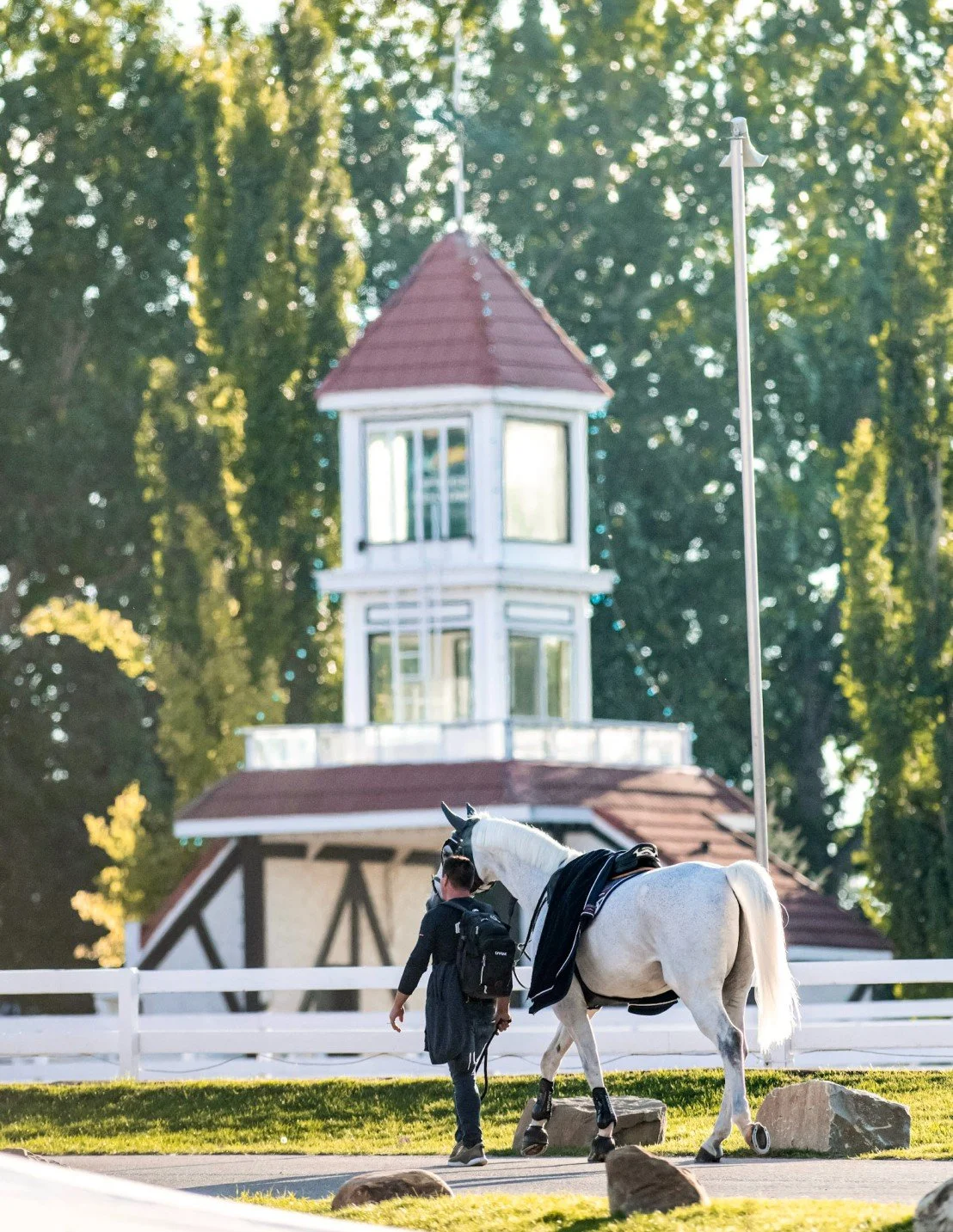
Moments from Spruce Meadows 2023. Image: © C. Grimsahw for EQuerry Co
The thing that sustains all of this is not, in the end, the show jumping. It is the diary.
Spruce Meadows welcomes more than 500,000 visitors and spectators across a year and stages around 400 events, equestrian and non-equestrian, on a site that stays open twelve months of the year rather than waking up for a fortnight each summer. The International Christmas Market alone draws 100,000 people, which is to say that a horse venue's festive programming pulls in a larger crowd than most European five-star shows manage across their entire season, from an audience that in many cases has no particular interest in horses.
Add to that a broadcast operation that drew 770,000 viewers per minute across the season and reached audiences in more than 100 countries, 35.6 million social media impressions in 2024, and a visitor satisfaction figure that saw 88% rate their likelihood of returning at five out of five, and the shape of the business becomes clear. Spruce Meadows is not a tournament with a showground attached. It is a year-round venue and media operation that happens to stage some of the finest jumping in the world for one week each September.
The Half of the Report That Does Not Appear in the GDP Figure
Most impact studies stop at the economics, and the more revealing section of this one is the part that follows afterwards, where the venue sets out what it contributes in ways no multiplier can capture.
Volunteers gave 15,718 hours across the year, a contribution the report values at $608,267 and equates to 7.56 full-time jobs, underpinned by a Pegasus Club membership of more than 300 people who return season after season. The Leg Up Foundation, the venue's charitable arm, has donated over $2.4 million to 54 charities. On the ground itself, 4,000 trees have gone into the property and 150,000 bottles and cans are recycled annually.
None of that shows up in the $222.2 million, and all of it is central to the case the venue makes for itself. A commercial operation that relies on 15,000 hours of donated labour has a relationship with its community that cannot be bought, and losing it would cost considerably more than the $608,267 the report puts against it.
Linda Southern-Heathcott, the venue's president and chief executive, puts the same point rather more romantically, describing Spruce Meadows as unlike any other equestrian venue, open year round, privately owned, dedicated to the welfare of the horse, and in her words more a sanctuary than a showground: clean, green, full of entertainment and excitement, and carrying a touch of Camelot. It is the kind of line that invites a raised eyebrow until you look at the Preview day admission price, still set at the original five dollars, and the year-round public access that comes with it.
What the Numbers Will Not Tell You

Spruce Meadows Masters, 2025. Image: © M. Froment for EQuerry Co
Two caveats belong in any honest reading of a report like this, and the first is methodological. Economic impact studies are commissioned by the organisations they flatter, the multipliers that convert direct spending into GDP and employment are rarely published for independent scrutiny, and the hardest judgement in the whole discipline is distinguishing spending that is genuinely new to a regional economy from spending that would simply have occurred somewhere else within it. The 500,000 visitors and the 15,718 volunteer hours are counted. The $222.2 million is modelled, and the two should not be read with equal confidence.
The second is timing. The study captures a venue in an exceptional year, one in which the Masters hosted a live Rolex Grand Slam bid that came down to a single rail, a record twelfth German victory in the BMO Nations' Cup, and the richest Grand Prix in the sport staged three weeks after a World Championship. September does not always look like that, and a venue's impact figures move with the quality of the sport it manages to attract.
The Lesson That Travels
Very little of the Spruce Meadows model can be copied. A privately held 553-acre site, a fifty-year capital programme and a family prepared to fund both are not available to most organisers, and pretending otherwise wastes a genuinely useful case study.
What does transfer is the diary. Four hundred events a year, the majority of them not equestrian, spread fixed costs across a trading year rather than a trading fortnight, and a Christmas market that brings in 100,000 people who may never sit on a horse turns a seasonal facility into a permanent local amenity. British showgrounds standing empty for eleven months carry much the same overheads as Spruce Meadows and recover them across a fraction of the days, which is the real lesson buried in the report, and a considerably more useful one than the headline number.
For more on how major venues are funded, built and justified, read our look at the economics behind the CSIO di Roma at Piazza di Siena, and sign up for The EQuerry Briefing for our weekly coverage of the business of equestrian sport.