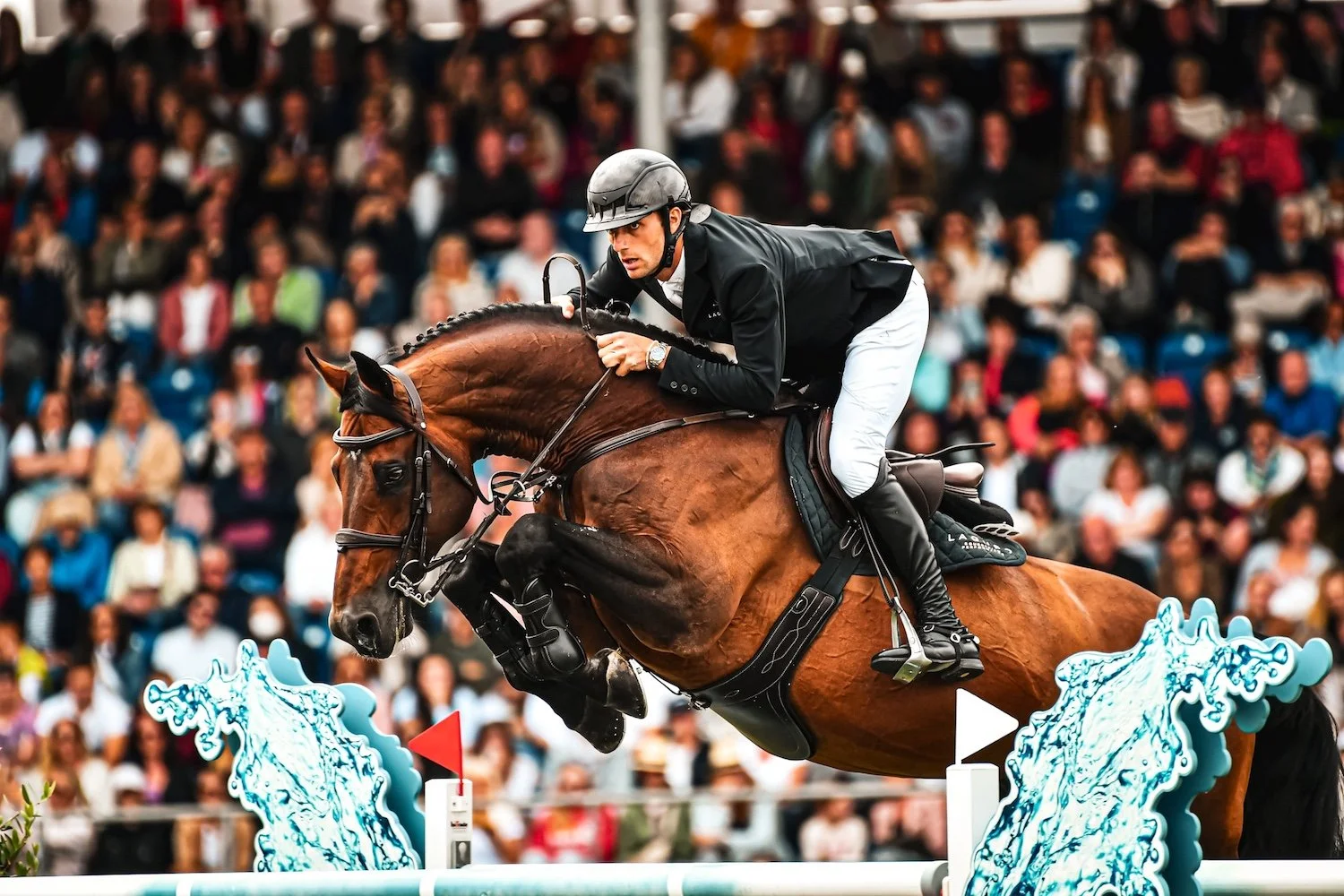
The Free to Enter Event Worth €33.7 Million: The Piazza di Siena Model
Seventy-seven thousand people walked into a five-star international horse show in the centre of Rome this May and not one of them paid for a ticket.
Sport aside, this might be the most interesting fact about the centenary edition of the CSIO di Roma Piazza di Siena, which took place at Villa Borghese, 27 to 31 May 2026. When compared to other headlines on barrier-to-entry and the cost of attending horse shows, it becomes an even more striking fact. A study by KPMG put the economic impact generated by the show at €33.73 million, up 26.6% on the €26.67 million recorded in 2025.
So how can an event with no gate revenue generate an estimated €33.73 million in economic impact, and what can the wider equestrian industry learn from it?
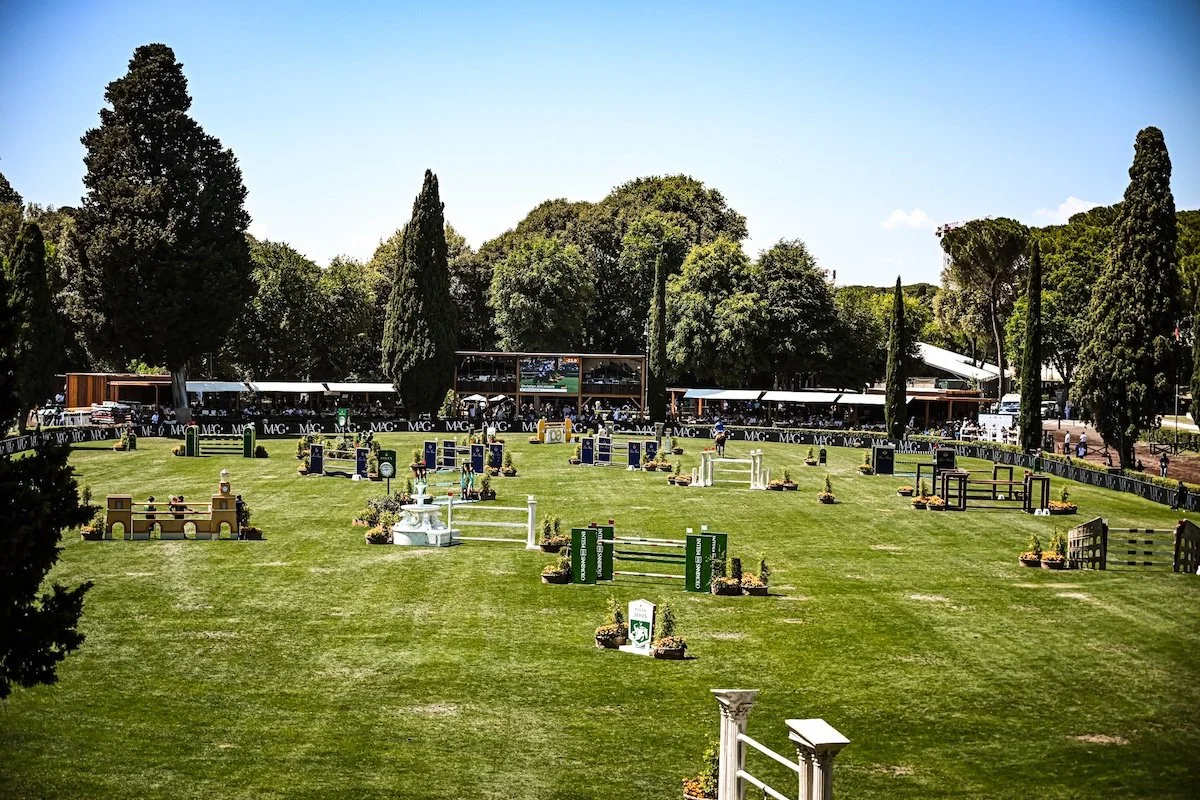
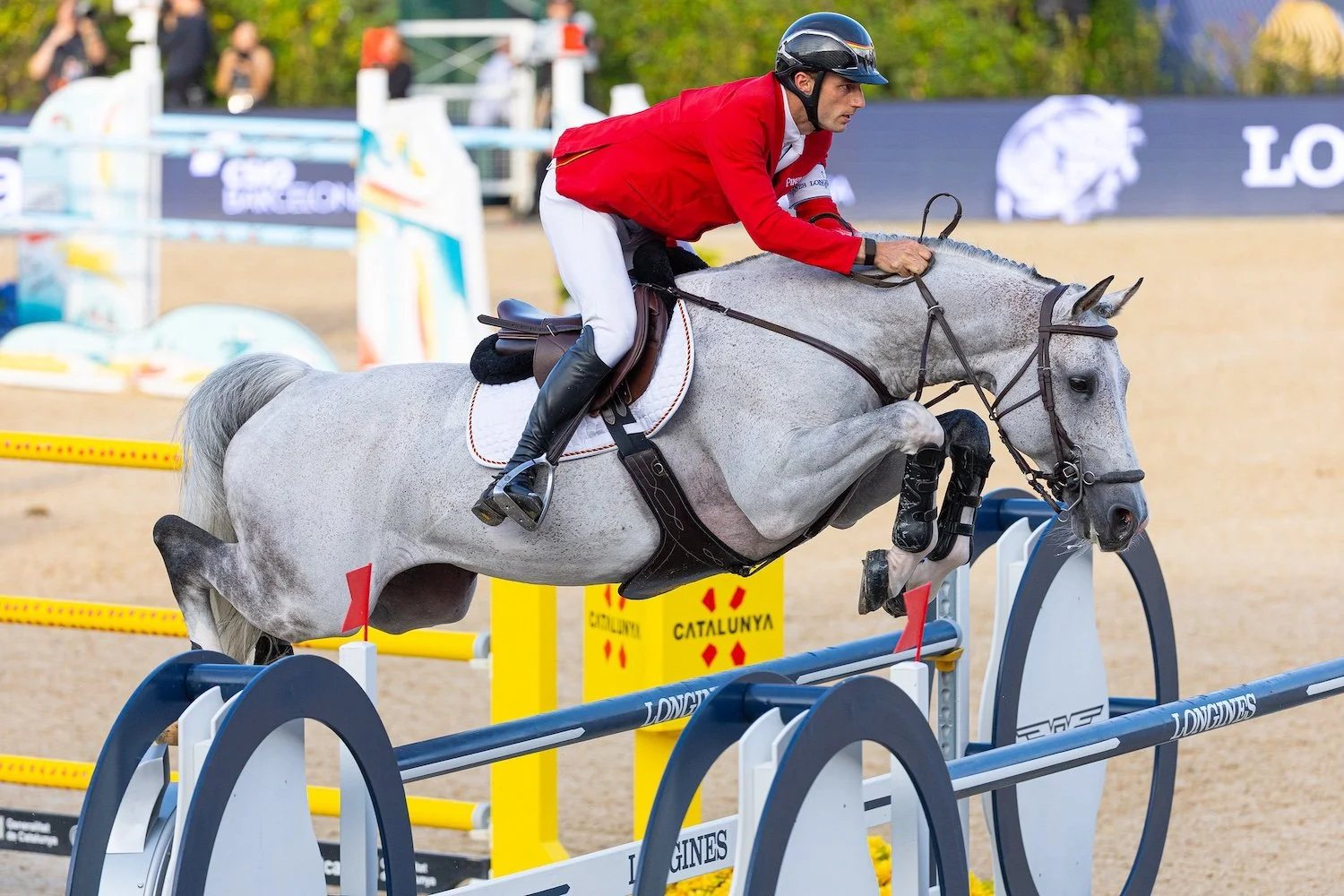
The main arena at Piazza di Siena, located in the historic Villa Borghese. Photo: ©M.Froment for EQuerry Co.
The Numbers
Attendance of 77,000 people across five days represented growth of 24.2% on 2025. This is achieved on a completely free admission model inside a public park.
The sport itself brought 620 horses and 475 athletes from more than 20 countries, with 1,833 accredited people across the competition area once riders, grooms, technical staff and officials are counted, representing 38 nations and five continents.
Broadcast delivered 23 hours of live coverage on Rai and 30 hours of total programming, which for a state broadcaster is a substantial commitment to an equestrian fixture. The official social channels recorded 6.3 million views against four million in 2025, a rise of 57.5%, with more than 300,000 interactions generated by over 350 pieces of content published during the week.
The event is more than horse sports; Frecce Tricolori flew over Villa Borghese to close the centenary edition, which is the sort of thing a national government does for events it considers part of the country’s image rather than merely its sporting calendar.
A Hundred Years, and Ninety-Three Editions
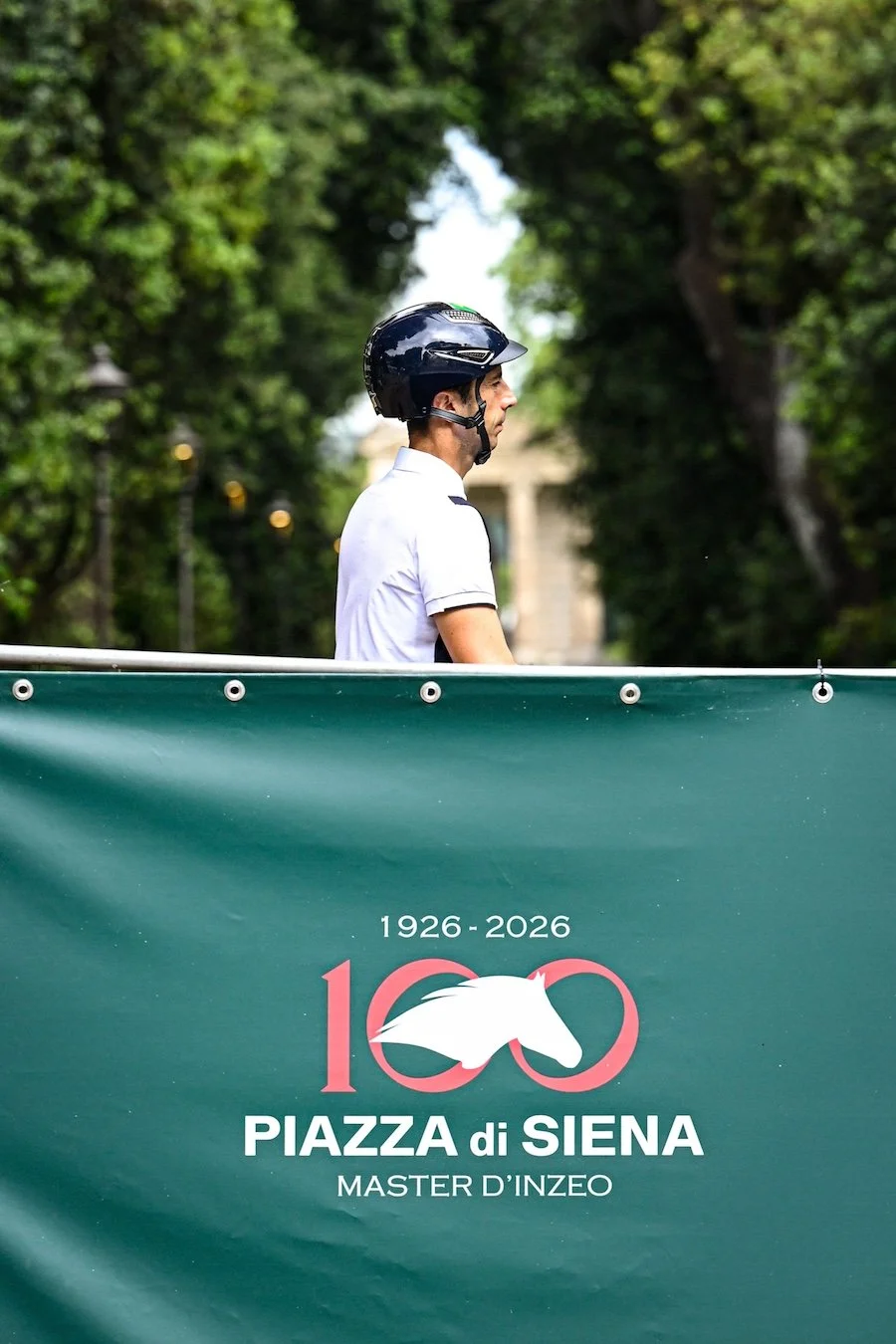
Yuri Mansur (BRZ). Photo: ©M.Froment/EQuerry Co
The first horse show was held at Piazza di Siena in 1922. It became an international fixture in 1926, and from 1928 it has staged Italy’s official CSIO. This year was the 93rd CSIO di Roma and the hundredth anniversary of the international competition.
The venue itself long predates all of it. The oval arena sits inside Villa Borghese, the gardens Antonio Canova described as the most beautiful villa in the world, and the course walk takes riders past a seventeenth-century landscape and one of Europe’s significant art collections. The show carries the Master d’Inzeo name in honour of Raimondo and Piero d’Inzeo, the brothers who made Italian jumping a global force in the post-war decades.
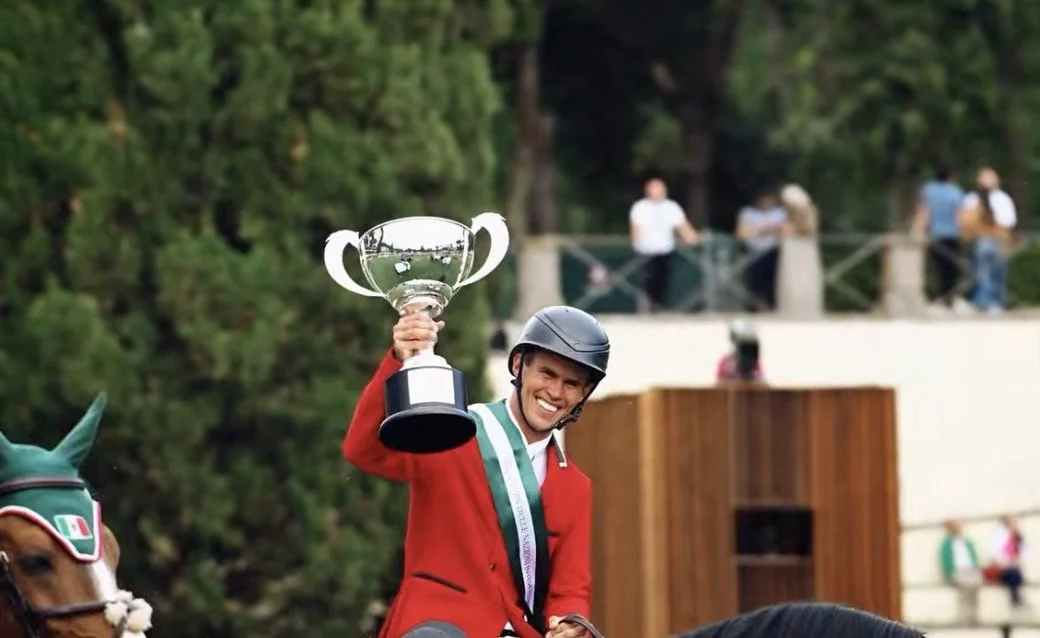
Italy still heads the Nations Cup roll of honour at Villa Borghese with 29 wins, ahead of France on 20. Which is partly what made this year’s result notable: Mexico won the Intesa Sanpaolo Nations Cup for the first time since 1948, settled in a jump-off against Germany. Piergiorgio Bucci took the Rolex Rome Grand Prix, worth €500,000, with Pallieter vd N.Ranch, in the arena his uncle first brought him to as a child. Jack Whitaker won Friday’s 1.55m on his Rome debut, the family’s twentieth victory at the venue.
What the Model Actually Does
The free-admission structure is not charity, but a commercial model that recognises the value of an audience beyond ticket sales. It is a calculated trade of gate receipts for scale, with wider economic benefits extending into hospitality, tourism, transport, media exposure and commercial partnerships. Rome's €33.73 million economic impact estimate shows how a sporting event's value can extend well beyond its competition arena.
Rome is not alone in recognising the value of accessible sport. Fontainebleau's Printemps des Sports Équestres offers free admission and parking throughout its two-week programme, bringing international competition within reach of a wider public. Other events have developed different, equally successful models. Aachen and Spruce Meadows demonstrate the commercial strength of ticketed attendance, premium hospitality and established spectator communities.
These approaches need not be mutually exclusive. Each event operates within different commercial and geographical circumstances, and ticketing remains an essential income stream for many organisers. Yet Rome and Fontainebleau illustrate how removing the admission fee can serve a different, equally important purpose: introducing international equestrian sport to audiences beyond those already invested in it.
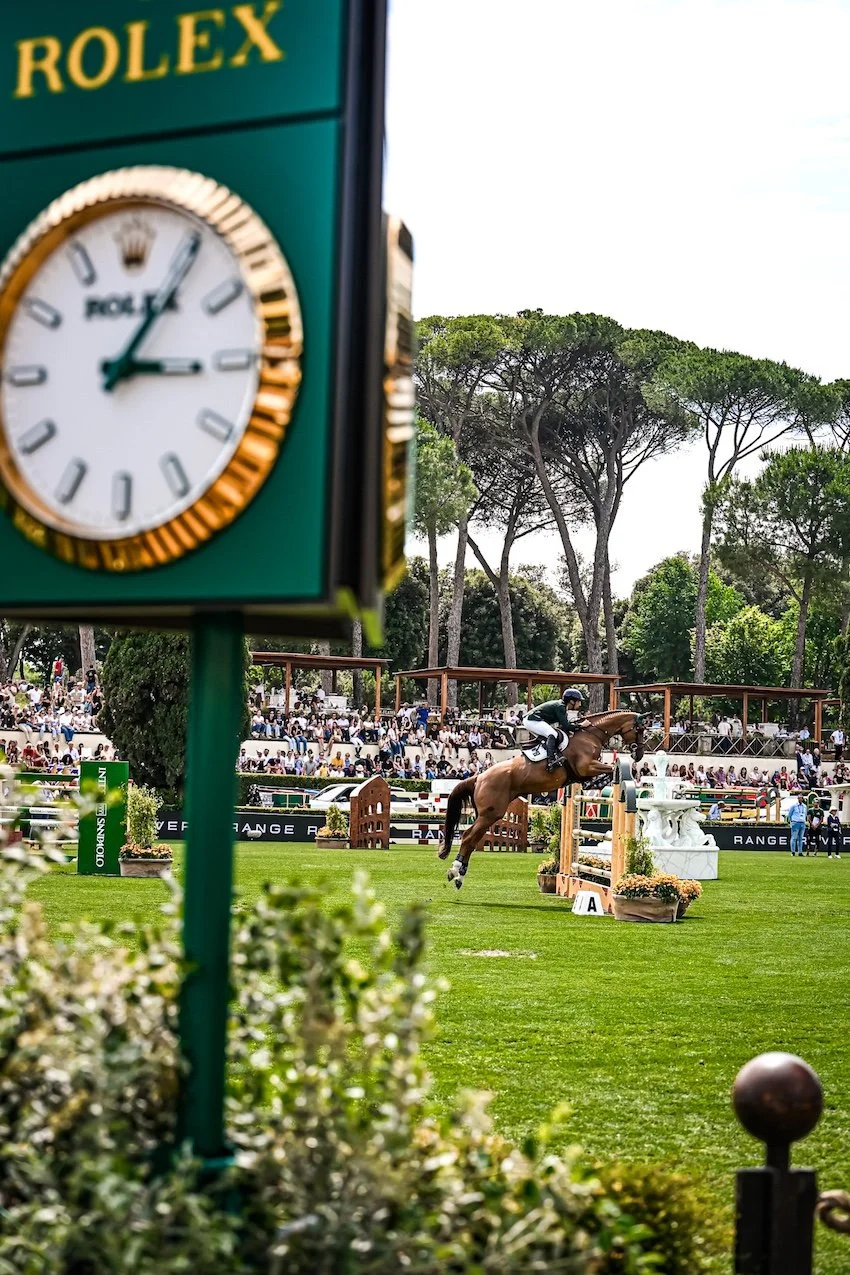
The CSIO Roma Piazza di Siena is the second leg of the seven legs in the Rolex Series. Photo: ©M.Froment/EQuerry Co
There are parallels across mainstream sport. The Tour de France attracts an estimated 10 to 15 million roadside spectators annually, most watching without paying for admission. The event has nevertheless developed into one of cycling's most commercially valuable properties, supported by broadcasting rights, sponsorship and host-city investment. Its commercial success demonstrates how free public access and substantial commercial revenue can coexist.
Paris 2024 offered another example. While the Olympic and Paralympic Games sold more than 12 million tickets, the city also reported 2.6 million spectators across its road races, many accessible without tickets. Its 26 festival sites attracted a further 2.5 million visits, while more than 40,000 people participated in the free Marathon pour Tous and accompanying 10km event. Elite sport became part of everyday public life, providing opportunities to discover, experience and even participate in the Olympic movement without purchasing a ticket.
For equestrian sport, the relevance extends beyond attendance figures. A 2024 national study of UK public attitudes towards horse sport found that 89% of respondents considered the costs of buying and keeping horses a barrier to accessibility, while 90% identified equipment and training costs. Perhaps more tellingly, 78% identified a lack of awareness about how to participate, and about training and employment pathways, as barriers to access.
The distinction between watching a sport and participating in it matters when we look at future sustainability. Free event attendance will not make horse ownership more affordable or resolve the pressures facing riding schools. But what it can do is remove the first barrier: The opportunity to encounter equestrian sport in the first place, understand its appeal and develop an interest that might otherwise never emerge.
That opportunity becomes particularly valuable in a sport where much of the international competition calendar is accessible primarily through specialist subscription platforms, with social media providing the most visible, and often fragmented, exposure to audiences outside the existing equestrian community.
Not every horse show can, or should, adopt free admission. Ticketing, hospitality and premium experiences remain important revenue streams, particularly for venues carrying substantial operational costs. But the success of Rome, alongside the wider examples from mainstream sport, makes a compelling case for treating public accessibility as part of an audience development and commercial strategy, rather than simply a ticketing decision.
The question is not necessarily how many events can afford to open their gates for free, but how many new audiences the sport can afford not to reach.
With attendance rising 24.2% and social media views increasing 57.5%, Piazza di Siena offers an encouraging example of what happens when world-class equestrian sport becomes accessible to a wider public. Its greatest contribution may ultimately be measured not only in the economic value generated during five days in Rome, but in the interest, understanding and future engagement those five days create.
More From Rome