For Jack Huang, the importance of horses has never been measured solely through sporting results. His relationship with equestrianism began not through competitive ambition, but through his father's rehabilitation, when therapeutic riding helped restore confidence, independence and a sense of possibility following a debilitating illness. It was an experience that would shape three generations of his family, and ultimately influence his understanding of the wider role horses can play in people's lives.
Today, Huang serves as Vice President of the Fédération Équestre Internationale (FEI) and Chair of Regional Group VIII, representing Asia and Oceania. He is also one of three candidates standing in the FEI presidential election this December, alongside Mark Samuel and Sabrina Ibáñez.
Yet, speaking with The EQuerry, the conversation extends well beyond governance and the upcoming election. From the relationship between horses and humans to the realities of developing equestrian nations, Huang offers a perspective shaped equally by personal experience, international leadership and his professional background in technology and entrepreneurship.
A Family Connection That Changed Everything
Before horses became part of Huang's professional responsibilities, they were a source of rehabilitation and connection within his family.
His father, previously an accomplished golfer and semi-professional baseball player, had faced the prospect of life in a wheelchair. Therapeutic riding offered more than physical rehabilitation.
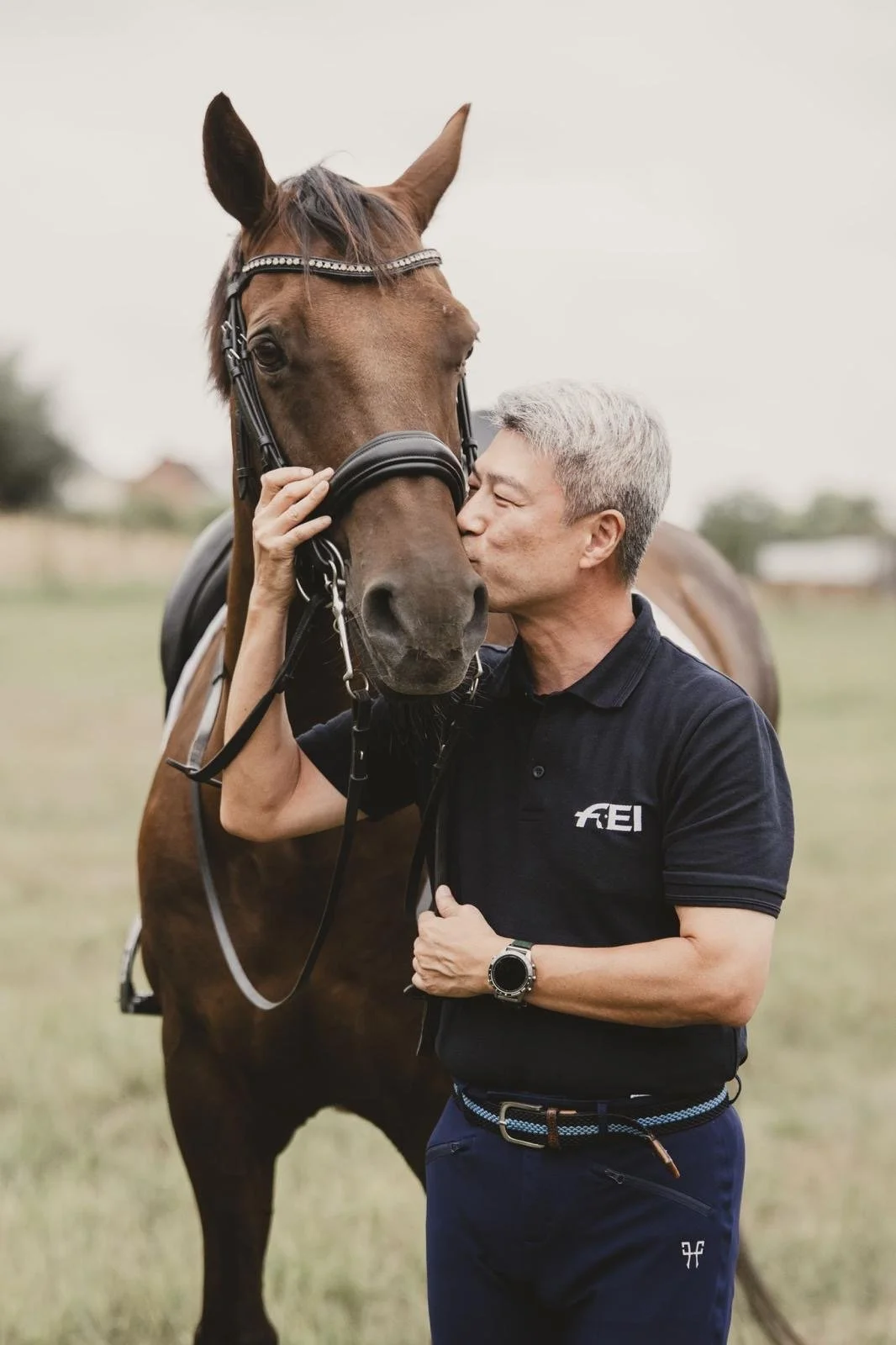
Photo: Melissa Breugelmans
"Horses have changed my life and my family's life completely," Huang reflects. "It brought him (Huang’s father) the respect and the confidence that he needed when he was rehabilitating."
That experience developed into a shared family passion, with Huang's daughter introduced to horses at just eight months old. Riding became an activity connecting three generations, while offering Huang something equally important outside his career in the high-pressure technology industry.
For him, horses are not simply a competitive outlet, but an opportunity to disconnect, communicate and reconsider the way we interact with others.
He describes how working with an animal requires patience and a willingness to understand different perspectives, qualities that have subsequently influenced both his business career and his approach to leadership.
"The horse doesn't care who you are," he says, reflecting on the humility and responsibility that come from caring for an animal. It is a personal philosophy that also raises a broader question for equestrian sport: Are we adequately communicating these benefits to audiences beyond the competition arena?
Developing Equestrian Nations: Beyond Participation and Results
Having spent years working with national federations across Asia and Oceania, Huang has encountered vastly different relationships between people and horses.
He recalls visiting Mongolia, where horses remain deeply embedded in everyday life and cultural identity, contrasting this with the increasingly performance-driven environment of established sporting nations. In his view, elite competition remains important, but the industry's pursuit of sporting excellence can sometimes overshadow the relationships and traditions upon which equestrianism was built.
Emerging nations, however, face their own challenges, particularly around access to scientific research, professional education, welfare knowledge and international competition. But rather than treating development purely as an exercise in increasing participation, Huang believes sustainable growth requires investment across the entire equestrian ecosystem.
One example is the Asia-Pacific Rising Star Academy, introduced through FEI Regional Group VIII with support from FEI Solidarity. For Huang, establishing clear, measurable objectives and timelines is essential to ensuring that FEI Solidarity projects deliver meaningful results. He believes development initiatives must demonstrate tangible progress and build lasting capabilities within National Federations to remain relevant and sustainable.
The initiative brings together athletes from 11 of the region's 19 national federations, providing opportunities for international competition alongside education in horsemanship, grooming, mental preparation, officiating and course design. Importantly, athletes compete on borrowed horses, reducing the financial and logistical barriers facing countries that might otherwise struggle to participate internationally.
"We need to have local heroes and also achievements," Huang explains, highlighting the importance of creating visible sporting role models within developing nations. The programme has a defined ambition: Representation from all 11 participating countries at the 2029 Asian Championships, creating a pathway towards the 2031 Asian Games. Yet sporting participation is only one measure of progress. Building local expertise, supporting horse welfare and creating sustainable professional structures are equally important if these nations are to develop their competitive success.
Building the Foundations for Sporting Growth
Expanding the international competition calendar is important, but more events alone will not guarantee sustained sporting progress. For Huang, grassroots participation and high-performance sport are closely connected. Developing nations need competitive pathways that allow athletes to progress from national to international competition, while creating opportunities to retain and develop talent over time.
But creating opportunities for athletes is only part of the equation. Developing competitive equestrian nations also requires the people, expertise and infrastructure necessary to sustain the sport. This includes everything from qualified coaches and officials to stable managers, veterinary professionals, competition organisers and the wider support teams that make international sport possible.
In Cambodia, for example, Huang has supported an initiative providing vocational opportunities for young women through equestrian education, including training in horse care and stable management using former racehorses from the Hong Kong Jockey Club. It is an example of how investment beyond the competition arena can support both professional development and the long-term foundations of equestrian sport.
Across Asia, the continued development of international competitions presents further opportunities. Huang points to the importance of giving emerging athletes experience at established venues, exposure to leading competitors and a competitive pathway that encourages them to progress. The benefits extend to national federations, officials and organisers, who gain practical experience through involvement in international events.
From Governance to Sporting Development
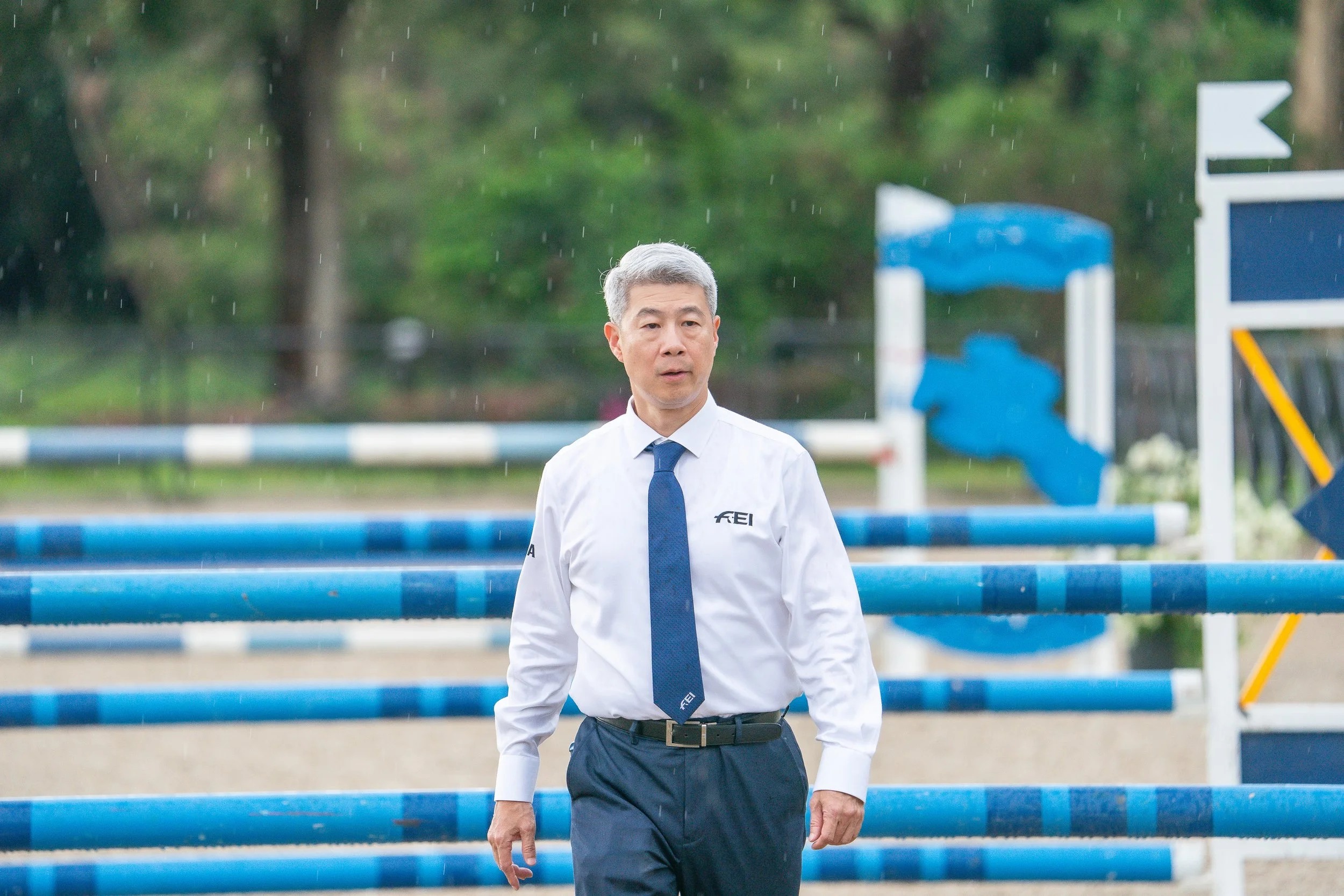
Photo: Thailand Equestrian Federation
As the FEI looks to its next chapter, Huang believes the organisation must keep evolving from a traditional governing body into one that offers more practical support to its national federations and wider audiences. While establishing and enforcing sporting regulations remains fundamental, he argues the organisation's broader responsibilities must include improving access to education, strengthening federation capabilities, and enabling members to participate more effectively in the sport's development.
One of the challenges he identifies is the considerable disparity in resources and expertise between established and emerging equestrian nations. Many national federations rely heavily on volunteers and operate with limited resources, while language barriers can make it difficult to access technical regulations, scientific research and welfare guidance.
For a global sporting federation, these limitations have implications beyond administration, because they influence how countries develop athletes, implement sporting rules, protect horse welfare and contribute to decisions affecting international competition.
Drawing on his background in technology, Huang believes artificial intelligence and digital platforms could help address some of these challenges, particularly by making educational materials, governance information and technical guidance available in multiple languages. He also sees opportunities for greater collaboration between equestrian organisations, including jointly funding research and sharing resources rather than duplicating work.
Ultimately, the objective is to strengthen the ability of national federations to make informed decisions and take a more active role in shaping the sport.
For Huang, this also requires the FEI to engage more openly with its members and the wider equestrian community.
During our conversation, we discussed the challenges surrounding the communication of sporting regulations, including changes to horse welfare rules, and how insufficient explanation can create confusion and criticism amongst stakeholders.
"We have to be telling the right stories. The stories behind the scenes," Huang argues, suggesting that equestrian governance needs to become more proactive in communicating its decisions and demonstrating the work undertaken across the sport. It is a matter of transparency, but also of trust. A sporting federation's ability to lead depends not only on the regulations it establishes, but on whether its members and wider audiences understand the purpose behind them.
It’s an Evolution, not a Revolution: Protecting the Future of Equestrian Sport
Beyond national federation development, Huang sees wider challenges surrounding equestrian sport's relevance, particularly as it seeks to maintain its position within the Olympic movement and attract new generations of participants and spectators.
For him, international growth and greater representation are essential. A sport concentrated amongst a relatively small number of established nations risks limiting its global reach, while stronger pathways for emerging countries can support greater universality and competitive diversity. This also has implications for equestrianism's Olympic future, where broader international representation and competitive development are important to demonstrating the sport's global relevance. However, sporting relevance extends beyond participation alone.
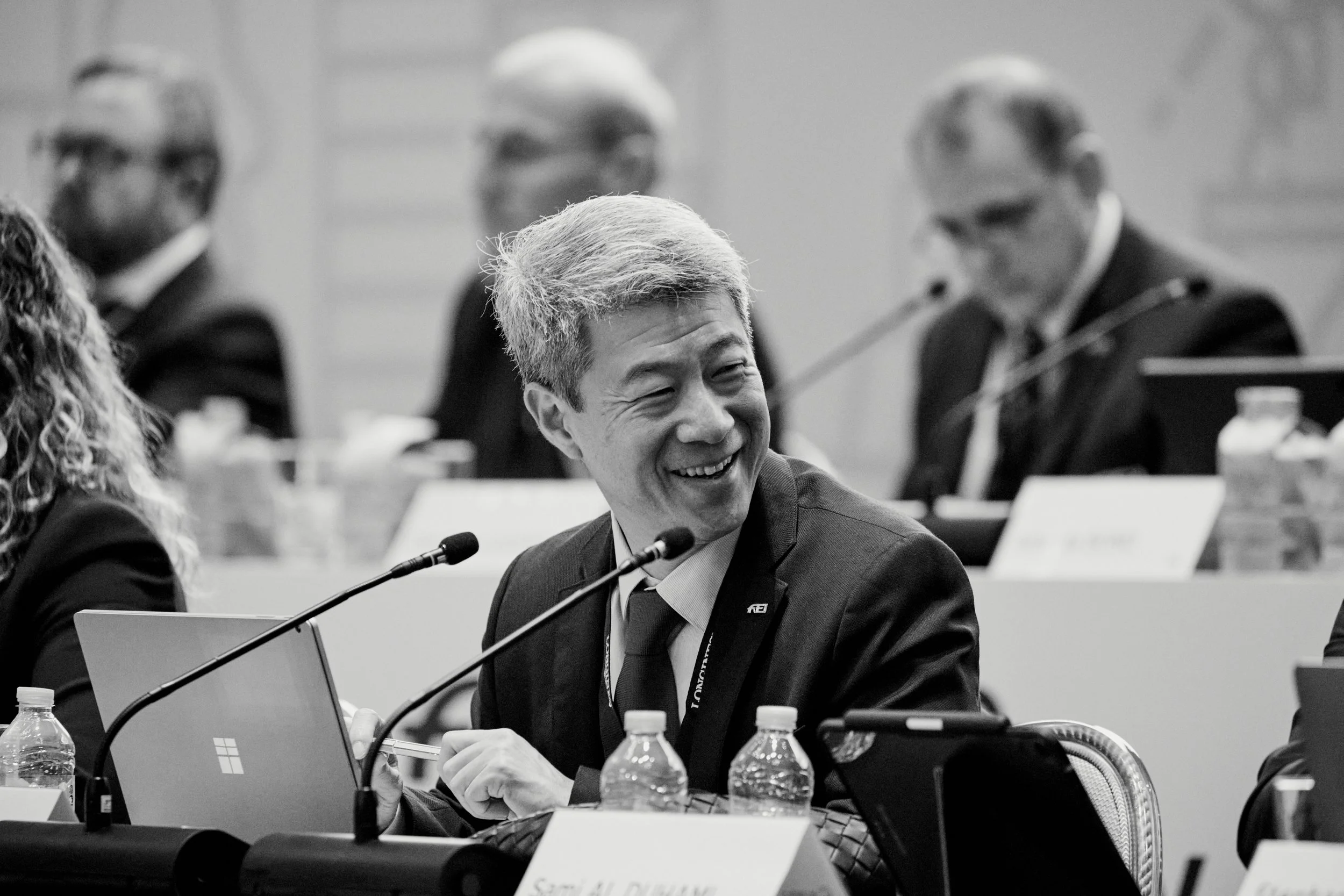
Photo: FEI
Throughout our conversation, Huang returned to the importance of making equestrianism more accessible and understandable to audiences outside its established community. The sport has considerable stories to tell, from the dedication and expertise behind elite performance to the relationships between horses, athletes and their support teams. Yet much of this remains largely invisible to those unfamiliar with equestrianism.
Huang believes the industry must become more confident in communicating these aspects of the sport, helping to build greater public understanding and trust rather than responding primarily when challenges arise. His perspective also extends to commercial development. With a professional background in technology and entrepreneurship, he sees opportunities to attract new partners and investment into equestrian sport, particularly from industries outside its traditional sponsorship base. Such investment could support developing federations, strengthen grassroots programmes and expand competitive opportunities in regions where resources remain limited.
That opportunity, however, depends on demonstrating the sport's wider relevance and value to potential partners, spectators and participants. And this is a challenge facing equestrian sport at every level. Elite competition provides international visibility, but its long-term strength depends on the relationship between national federations, athletes and the communities supporting them.
Looking ten years ahead, Huang envisages national federations better equipped to turn access to knowledge and resources into stronger sporting structures, competitive pathways and sustained international participation. Rather than proposing wholesale change, he believes the FEI should build on its existing financial and governance foundations whilst responding to the needs of a changing sporting landscape. "It's an evolution. It's not a revolution", he explains.
Ultimately, the future of equestrian sport will depend not only on the results achieved at the highest level, but on its ability to develop competitive opportunities across more nations, maintain the highest standards of horse welfare and strengthen its connection with the people who participate in, support and follow the sport.
For Huang, whose own journey began with the transformative effect of horses on his family, that future remains inseparable from the relationship between horses and people, and the opportunities that equestrian sport can continue to create.