
Data, Diversity and Decision-Making: Emma Thorén Hellsten on Breeding for the Future
Emma Thorén Hellsten has blended scientific rigour, practical breeding insight and global vision into one rare career arc. With a background rooted in animal science, genetics and top-level sport horse breeding, she spent more than a decade as Breeding Manager at the Swedish Warmblood Association before turning her focus to knowledge transfer for breeders, educators and equestrian organisations worldwide. She believes that impartial fact-based information made available for breeders and knowledge about some basic genetic principles could greatly improve sport horse production. In this feature, we explore how she bridges research and industry, what she sees as the greatest challenges facing breeders today, and how decision-making must evolve if we are to produce sport horses fit for tomorrow.
1. Tell us a little about your background, and how your path led to combining genetics, sport horse production and global knowledge transfer.
I grew up on a farm in southern Sweden with all kinds of animals - dairy and beef cattle, sheep, chickens and of course horses, both Sport horses and Thoroughbreds for the racetrack. I have been passionate about horses for as long as I can remember, long before my parents got into horses actually, and as a young rider, I competed quite a lot.
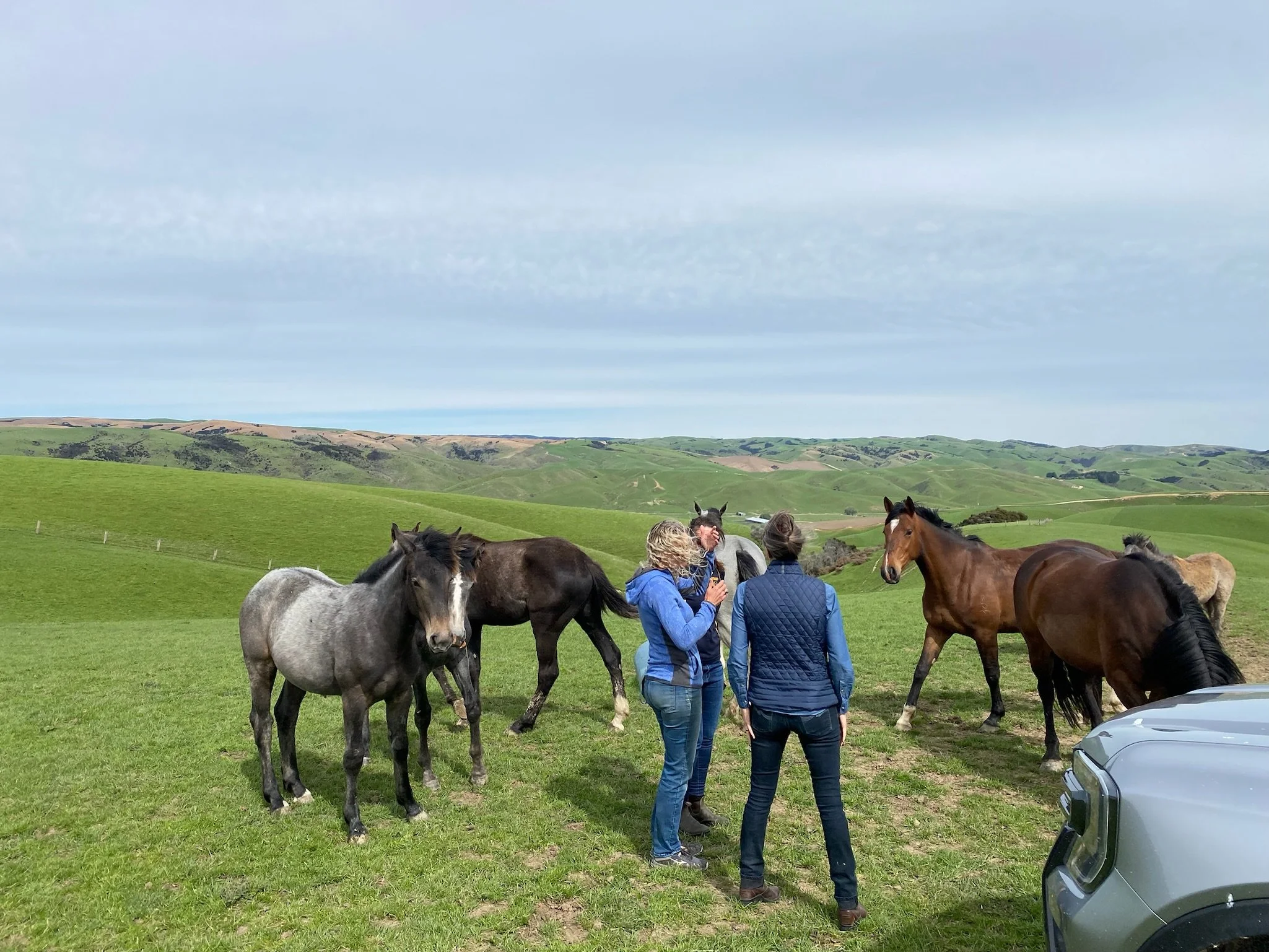
Image: Michael Doherty
I was always fascinated by breeding and by the biological ‘logic’ behind combining two individuals. Which traits dominate? Which persist over generations? On the farm I engaged in the breeding programs of the sheep and chickens and eventually I was also allowed to take part in the equine breeding decisions.
Being a very curious person, eventually I wanted to know more and to combine practical experience with scientific knowledge. I went to the Swedish University of Agricultural Science (SLU) where I got a degree in animal science. At SLU, I met Professor Jan Philipsson who was teaching genetics there at the time. He talked about the international breeding project “Interbull” which aimed at comparing bulls between countries. That captured my interest, and I asked him if it would be possible to do the same for sport horses. “Not yet” he said, but a few years later they launched the Interstallion project and I became one of its Phd students.
I completed my PhD on international genetic evaluation of sport horses in 2008. Alongside my academic work I remained involved in riding and practical breeding. I was recruited to serve on the board of the Swedish Warmblood Association (SWB) which led to my role as Breeding Manager. Making useful, impartial information accessible and easy for breeders to apply was one of my strongest motivations.
Because the sport and the breeding of sport horses are very much international, I co-founded and chaired the WBFSH Scientific Advisory Committee to promote data exchange and to make new research accessible to breeders.
To make more fact-based information available for breeders, I started a podcast together with my colleague Gustaf Johansson during my time at the SWB. In one of our episodes we interviewed fellow podcaster, Irish breeder Michael Doherty. We connected and kept in touch. After leaving SWB I started my own consultancy, working with knowledge transfer for breeders and organisations. Michael and I teamed up for a number of breeder events, focusing on networking and knowledge transfer. We call the concept “Connect, Select & Grow”. Connect is about building networks and sharing experiences, Select is about selecting breeding animals and how available tools and international databases can support the breeding decisions and Grow is about how even small breeders can market themselves and their horses. Through the connections I made during my time as a researcher, as the breeding manager at the SWB and through events I’ve participated in since then in different countries, I have a vast international network in the scientific world, in the breeder community and some in sport, through which I continuously learn more and try to help to bridge gaps between science and practice.
2. During your time at the Swedish Warmblood Association you oversaw programmes that connected science and practical breeding. What was the most important lesson you learned about scaling research into real-world decisions?
One of the most important lessons is that no matter how valuable an idea may be for the population as a whole, it will only work if breeders clearly see what’s in it for them. Doing something ‘for the greater good’ is rarely a strong enough motivator. You need to identify and communicate the practical benefits — the real USPs. If you can’t do that, the idea will remain a beautiful theory, because very few will help out to make it happen.
3. You frequently speak about data and infrastructure in horse breeding. In your view, what is currently missing in the way breeding organisations manage and share information, and what would fixing that unlock for the industry.
As was the case 30 years ago, many studbooks — especially the larger ones — remain very protective of their (their members) data. It is understandable, given the investment required to collect and manage it.
But sport-horse breeding is international, and the data needs to be international too. A unified database would create far greater value for breeders. Private companies such as Horsetelex and Hippomundo understood this early on, which is why they now attract far more attention than the studbooks themselves. By getting stuck in politics and principles, the studbooks have been overrun by the international commercial databases It’s a pity really that the studbooks missed that opportunity.
I hope though, that the studbooks will come to their senses and start collaborate, at least in sharing their linear-scoring data, which is extremely valuable and unique to them.
In a broader perspective, the industry would benefit greatly from an international, transparent system for registering horses, coverings, performance — and ideally health data. Many stallions and mares now have offspring in multiple countries, making it difficult to get a complete overview.
4. Genetic diversity remains one of the biggest but least talked-about problems in sport-horse breeding. How do you balance the drive for elite performance based on heritable traits, with the need for long-term population health?
It’s important to know the pros and cons with genetic diversity and inbreeding. The way we created breeds in the first place was to reduce the genetic diversity and make the animals within a certain breed more optimized for their use. By reducing genetic variation, breeding became more predictable. However, it comes at a cost. Reducing genetic variation may seem to work very well for a while, even for quite a long time. But when the environment or the demands on a population change, low genetic diversity reduces flexibility and resilience.
The first step to counteract problems is to make this knowledge available for breeders. For example, it’s possible to make online tools available for breeders so they can actually see how their choice of breeding animals affect the genetic diversity, before the mating is made. And then, to continuously inform about the effects of reducing genetic variation. Preferably by involving people with high credibility in the sport and among breeders, that people tend to listen to. Like successful riders, trainers and breeders.
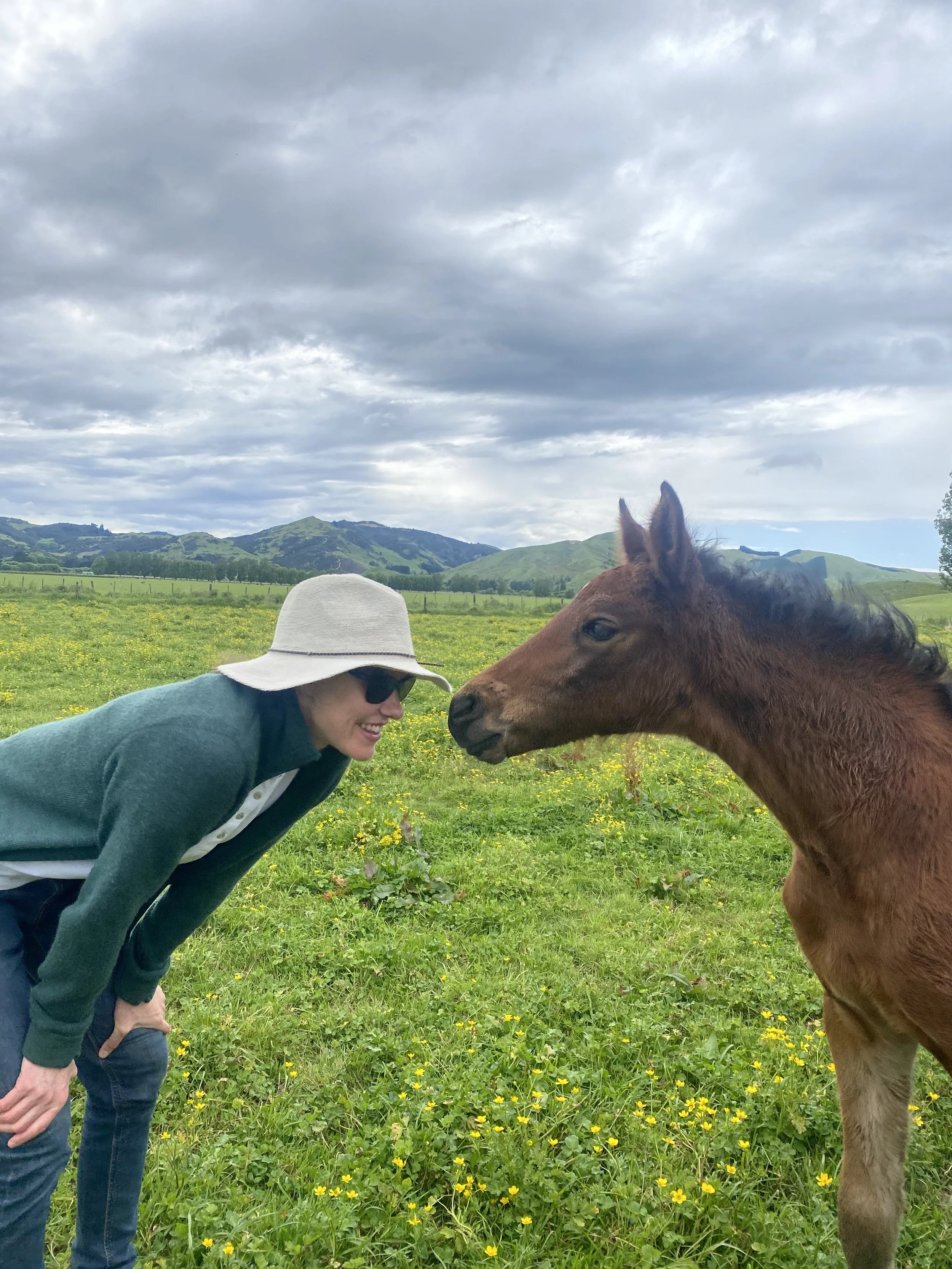
Image: Michael Doherty
But it remains difficult to convince people to prioritise something they cannot see or evaluate directly. Some breeders still select for colour traits associated with severe welfare issues. If it is challenging to shift attention away from visible traits like colour, it’s even harder to make breeders consider the long-term, “invisible” consequences of reduced genetic diversity.
5. When you assess young or future breeding stock, what qualities do you now prioritise that ten years ago would have been overlooked or undervalued (either genetically or phenotypically).
Ten years ago we were talking a lot about rideability. Today I think we have expanded the interest in the horse’s mentality to include for example robustness. Both in dressage and show jumping we have developed more sensitive horses through breeding. Everyone wants a good mentality in the horse. In all disciplines. But it’s very difficult to measure and describe it in a way that makes it possible to follow up on. Riders can describe what they feel, but that’s still very subjective. Another rider might have another experience of that same horse. For breeders, it’s extremely difficult to get reliable and impartial information about the mentality of stallions.
6. Most outward-facing discussions in breeding focus on stallions and their promotion, while far less attention is given to the conversation around mares. Genetic contributions aside, do you think there is a difference in well-being for breeding stallions compared with mares, and if so, are we due a shift that places the well-being of mares, not only improved fertility or conception, on equal footing with the more public management and care given to breeding stallions?
From a human-centric point of view it may look like the stallions have a better well-being than mares. Of course, there are always exceptions, but in general, I believe a majority of mares actually live far better lives than most stallions, from the horse’s point of view. They have more freedom to express their natural behaviour and usually live much less constrained lives than stallions do, having access to pastures and horse companions. How many stallions live their lives like that?
7. Looking ahead five to ten years, what innovation, whether in data systems, international collaboration or breeding strategy, gives you the most hope for the sport-horse industry, and what concern keeps you up at night.
It’s no innovation and I think it’s the same issue that gives me hope and that keeps me up at night. The focus on horse welfare and what it has led to in terms of discussions around how we keep, breed, use and handle our horses. Much new knowledge about how the horse’s mind works, how it communicates and our interpretation thereof have been brought to our attention. There’s a slight shift in how we perceive the use of horses and in how we treat them. I think that’s great. Our industry really need this process. The part that keeps me up at night is what happens if we don’t listen and change enough and fast enough? If our sport loses its social license to operate. That can happen really fast and I’m afraid we’re not changing to the better fast enough.
8. What advice would you give to younger breeders who now want to build programmes designed not just for this Olympic cycle, but for the next generation of sport horses.
Stay informed, be curious, learn both from experienced breeders and from the latest science. Learn from breeders of other species and don’t get stuck in your own silo. Cooperate with others as much as possible, both with fellow breeders and with riders, but make sure you have solid written agreements when you do. I’d like to see much more cooperation in the breeding world. Not only does it have economic benefits, but it can also make it much more fun. And last but not least; start with the best mare you can get hold of. It’s worth the investment because it will be easier to sell offspring and even to choose stallions because you can focus more on consolidating and improve already strong traits than compensating for shortages.