Jumping: Saudi Arabia Dominates a Games with a New Format
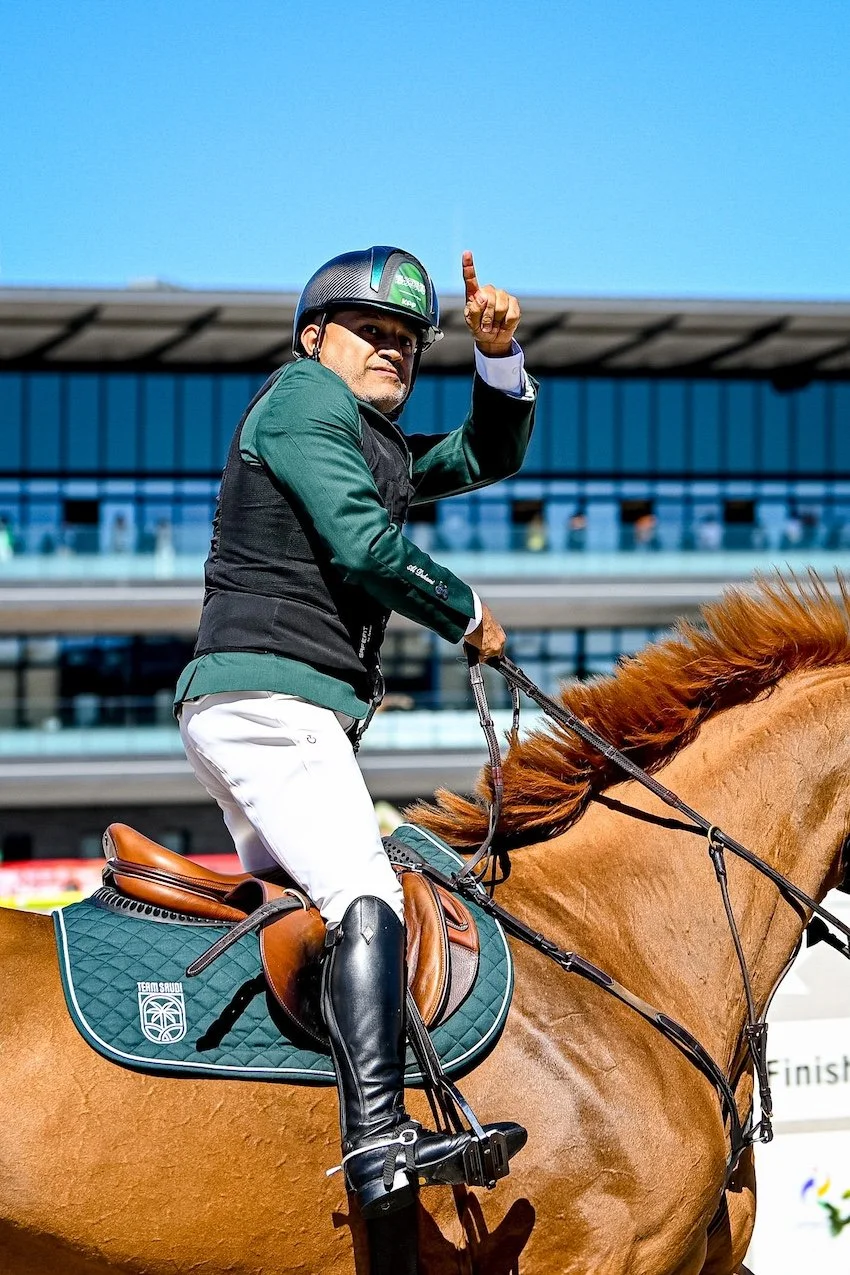
Alduhami Ramzy Hamad A (KSA) and Untouchable 32. Image: ©Morgan Froment/EQuerry Co
The Gulf nations have been the dominant force in Asian Games jumping for the better part of two decades, and Aichi-Nagoya did nothing to change that. What did change was the structure of the competition itself, and the effect was to spread the medals rather than concentrate them.
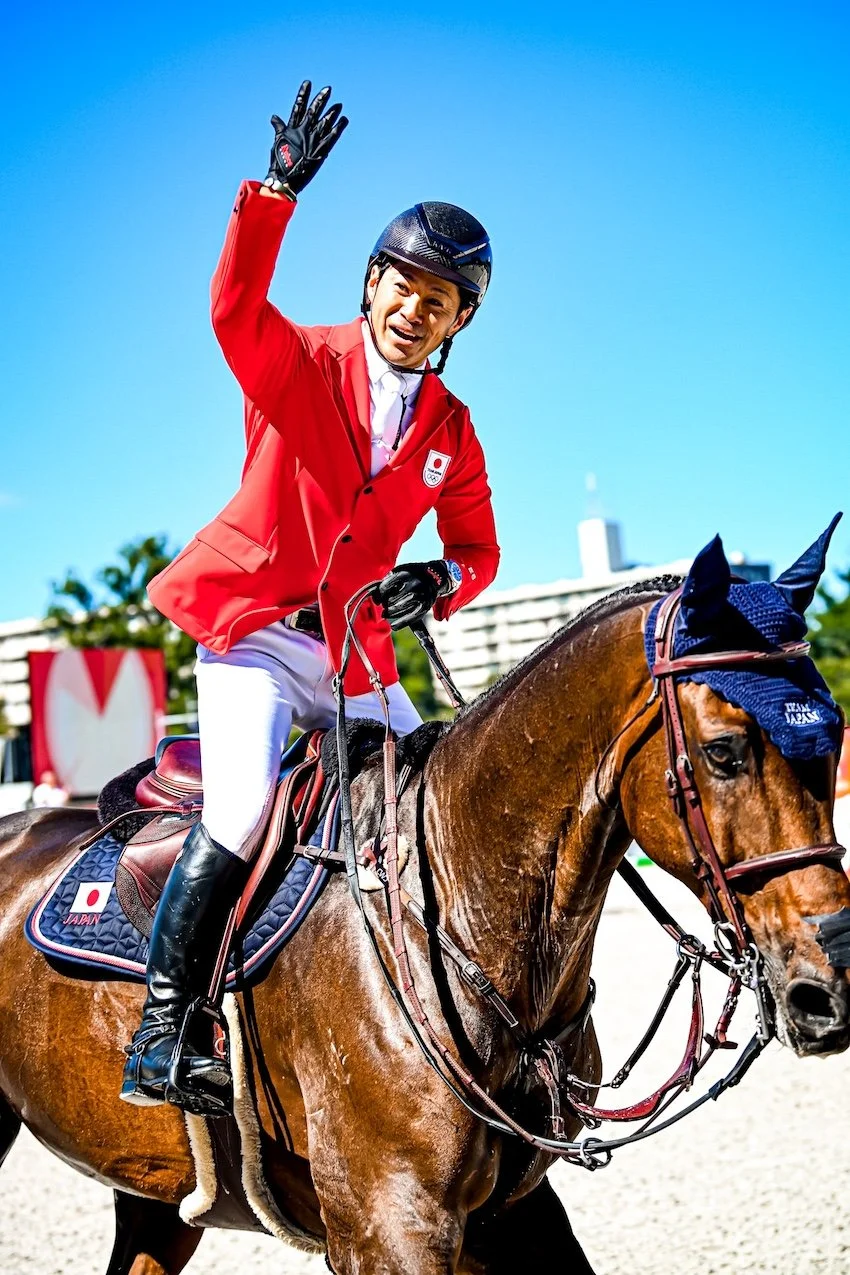
Saudi Arabia won team gold on Thursday 1 October, ahead of the United Arab Emirates, with hosts Japan taking bronze. The Saudi quartet of Saad Al-Ajmi, Ramzy Al-Duhami, Khaled Al-Mobty and Abdulrahman Al-Rajhi delivered the gold, with Al-Duhami’s clear on Untouchable 32 in the decisive round. The Emirati silver medal team was Latifa Al-Maktoum, Omar Al-Marzooq, Abdulla Al-Mheiri and Humaid Al-Mheiri. Japan’s bronze came from Koki Saito, Eiken Sato and Taizo Sugitani.
The Two-Tier Individual Format
For 2026, the Games split the individual jumping competition into two tiers: Competition A at 1.45m to 1.50m, and Competition B at 1.55m. Two sets of individual medals, at two different heights, within the same Games. Qatar’s Faleh Al-Ajami won Individual A gold, from Abdulla Al-Mheiri of the UAE and Saudi Arabia’s Khaled Al-Mobty. Individual B went to Ramzy Al-Duhami, with Abdulrahman Al-Rajhi making it a Saudi one-two and Qatar’s Bassem Mohammed taking bronze.
Saudi Arabia therefore left Tokyo with team gold, an individual gold, an individual silver and an individual bronze from a seven-medal jumping programme.
Saturday’s Qualifiers
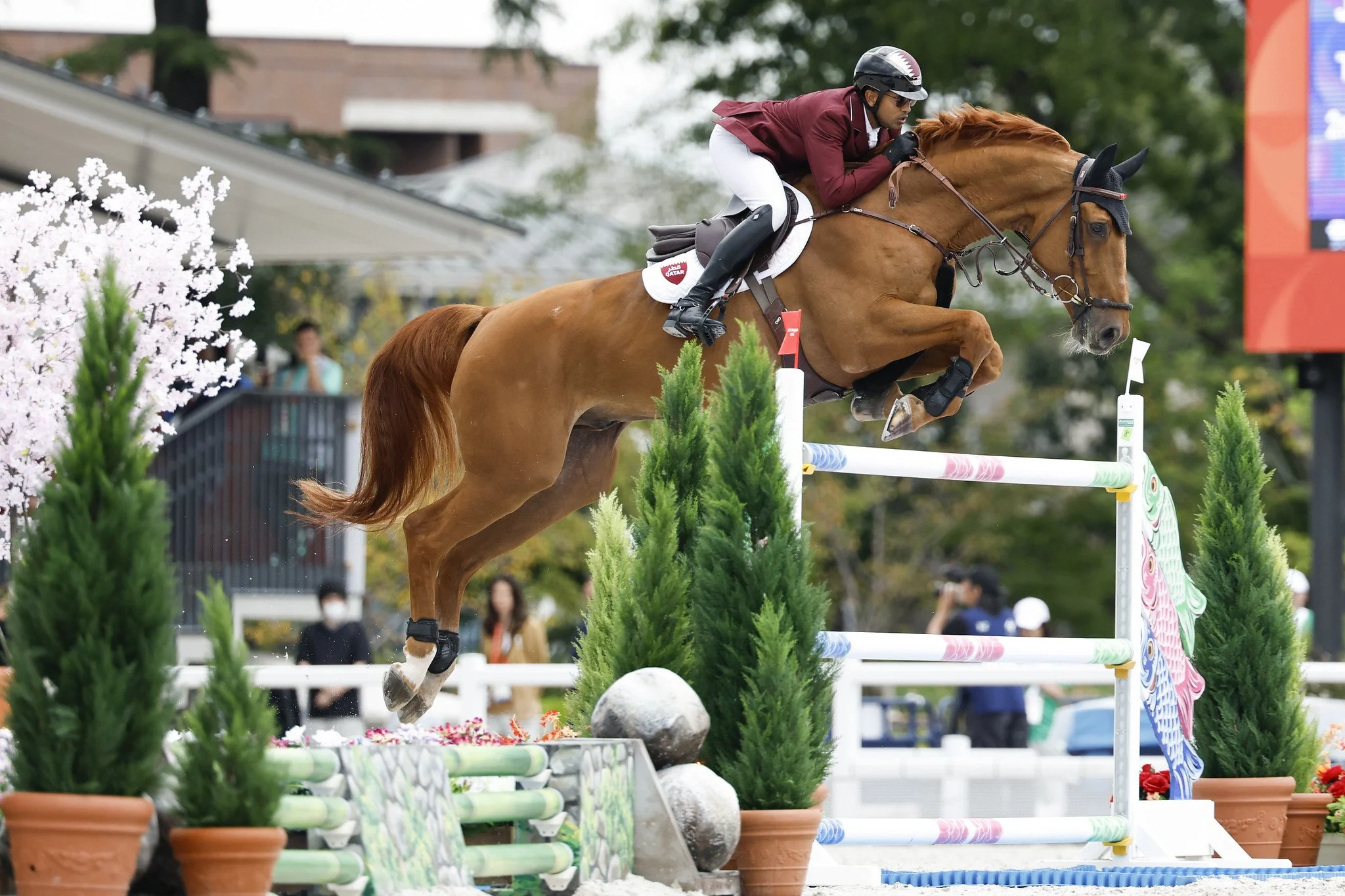
Mohammed Basem (QAT) and Wathnan Chaccball during the Jumping individual B 2nd Round of the 20th Asian Games Aichi-Nagoya 2026 at Equestrian Park in Tokyo. Image: ©FEI/Yusuke Nakanishi Photography
The form was set two days after the team gold. Al-Rajhi and Lorenzo ES were the fastest of five combinations to complete Competition B’s opening round on zero penalties, clear in 72.87 seconds, just 0.22 ahead of Bassem Mohammed and Chaccball, with Al-Duhami and Untouchable 32 third in 73.95.
In Competition A, Al-Mobty and Diana du Plevau Z led on 74.38, with teammate Saad Al-Ajmi second on zero in 75.18 aboard Davenport. The 15-year-old Davenport was competing internationally at 1.60m with Al-Mobty as recently as August, before Al-Ajmi took over the ride ahead of the Games. The new combination was already part of Saudi Arabia’s gold-medal team on Thursday.
What the Format Actually Does
The split-tier approach is the jumping equivalent of the mixed Small Tour and Big Tour arrangement the Games used in dressage, and it comes from the same place: A continental competition spanning nations with vastly different depths of programme, trying to produce meaningful medals at both ends.
The case for it is straightforward. A rider from a federation with a dozen registered horses at 1.45m now has a championship to aim at, rather than a weekend making up the numbers behind the Gulf teams. The case against is equally clear, and it is the one to put to officials: Two sets of individual medals at different heights means two individual champions, only one of whom jumped the biggest track.
There is no obvious right answer, and the FEI and the Olympic Council of Asia made a deliberate choice about what a continental Games is for. Other continents will be watching how it lands.
The Wider Games
India, who won team dressage gold in 2022, had no jumping entry at all. Their equestrian campaign ended without a medal, with a fourth in team dressage, eighth in team eventing, and a retirement for Fouaad Mirza in the eventing final.
The event in Aichi-Nagoya ran from 21 September to 4 October with 135 competitors from 22 nations across seven events. The medals went: team dressage to China for the first time, individual dressage to Korea’s Dongheon Nam, team eventing to Thailand, individual eventing to China’s Alex Hua Tian, and the jumping programme to Saudi Arabia and Qatar. Read more from the 2026 Asian Games below.