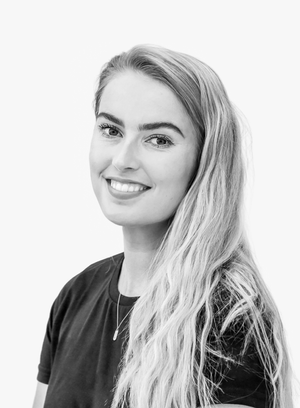
Alexa Fairchild: “We Owe Our Horses Everything”
There is a softness to the way Alexa Fairchild speaks about horses that feels increasingly rare in modern sport. Not naïve softness, nor idealism detached from elite competition, but the kind built through years of pressure, partnership, disappointment, growth, and trust.
Having represented Belgium on some of the sport’s biggest stages for years, Fairchild has grown up within the realities of international dressage. Yet despite the medals, championships, and increasing expectations that accompany high-level sport, it is not the results she returns to first when reflecting on her career. It is the horses. The relationships. The moments that quietly reshaped her understanding of riding itself.
“After competing from the age of 12, there have been several moments that felt like true turning points,” she reflects. “The hardest step to take is from Young Riders to U25. None of the youth levels truly prepares you for riding a Grand Prix. That switch takes time, and it’s a huge step.”
Like many riders navigating that transition, she found herself searching not only for the right horse, but the right people around her. “It was hard to find the exact right trainer for this as well,” she says. “I’m most grateful for the Grand Prix schoolmasters I had, because they truly taught me how to get through the test. When I rode my first ever 70% Grand Prix, I was floating on a cloud knowing all the hard work and years of training it took to get there.”
But perhaps the greatest evolution came not through chasing more instruction, but through learning to trust herself. “It wasn’t until I took a six-month pause to focus on myself without a trainer, to listen to my horses and find solutions, that my confidence truly built. I realised how important it is to have trainers who listen to what you are feeling on your horse, and to trust your own instinct too.”
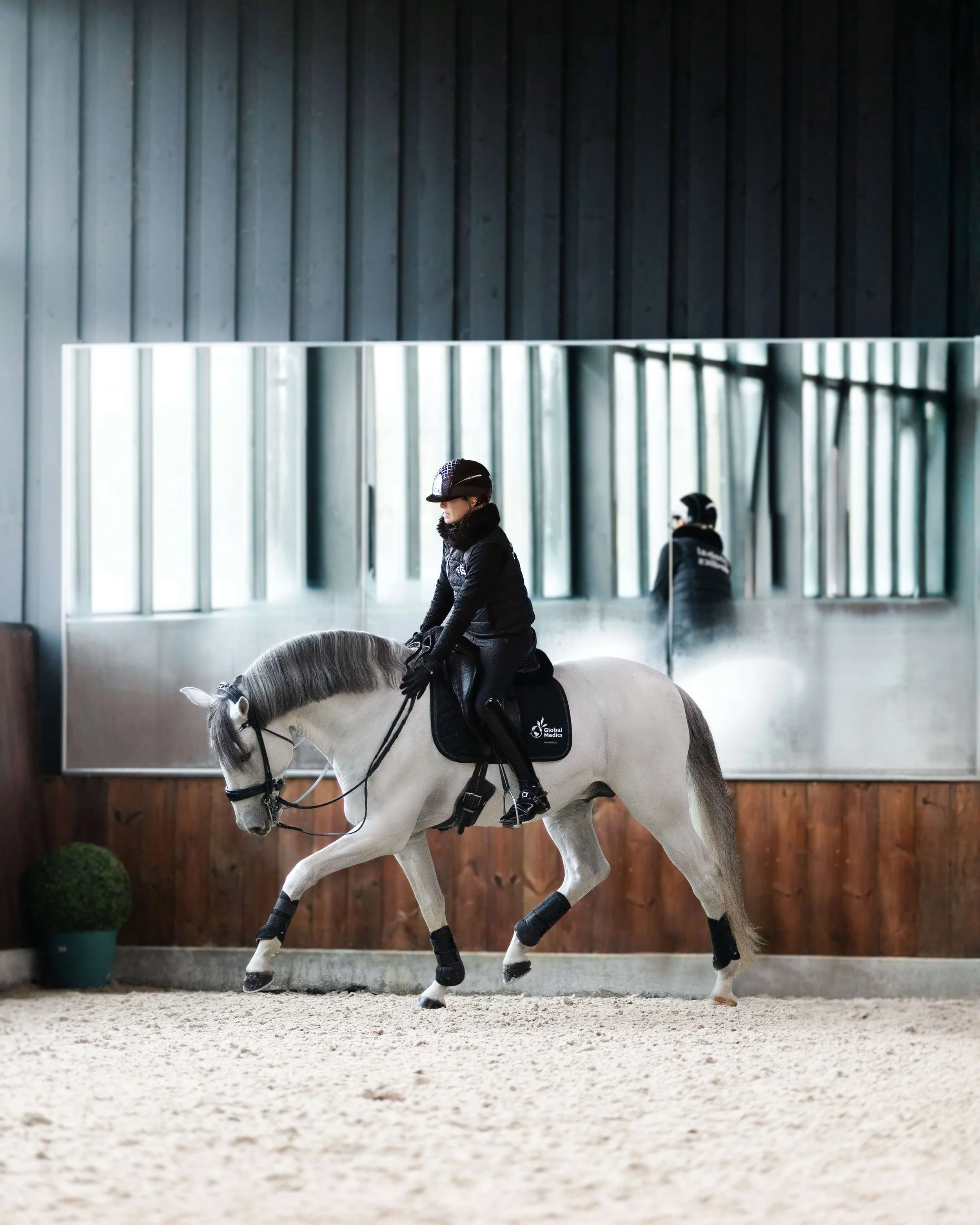
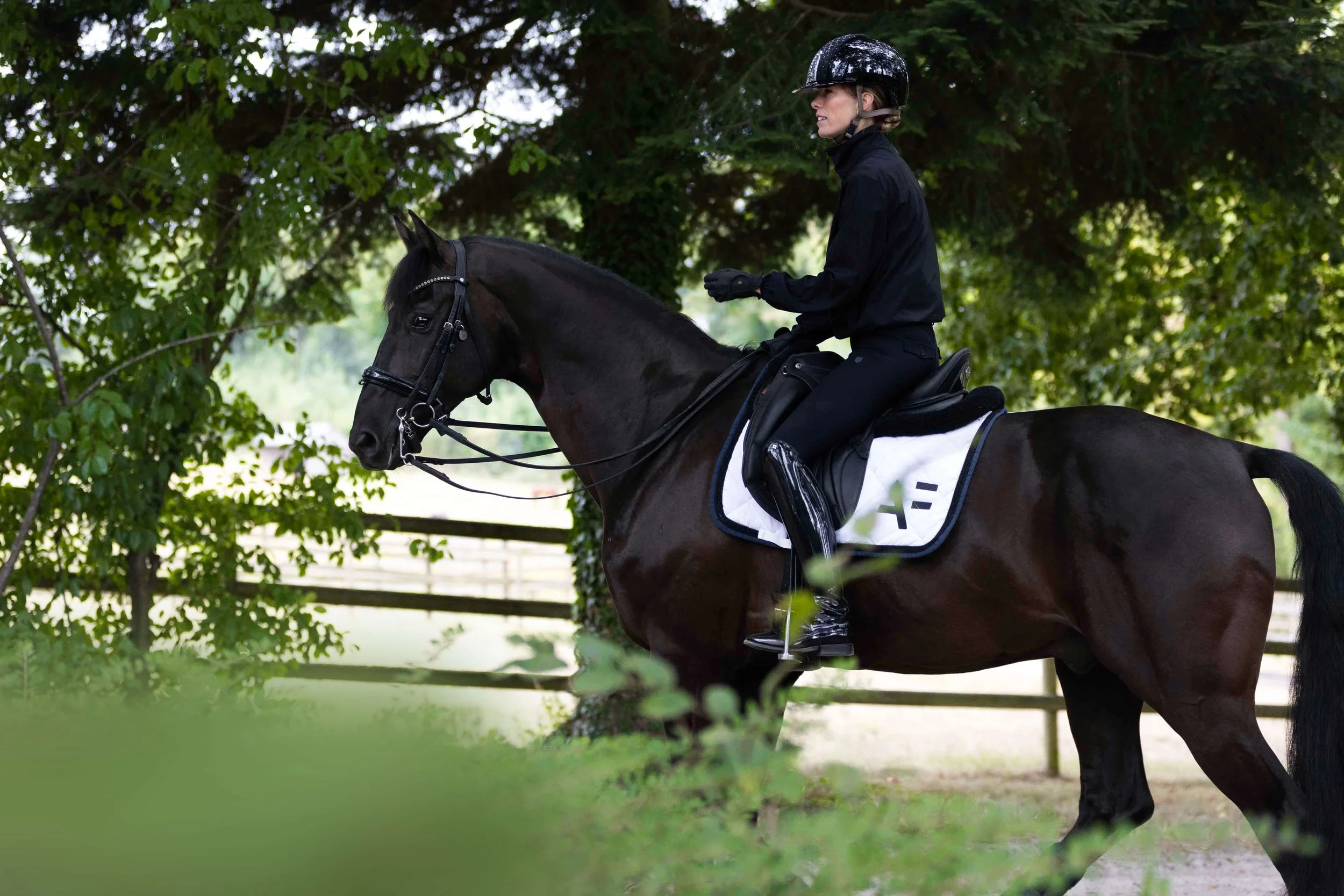
Even now, Fairchild still considers herself a student of the sport. “I obviously love getting help from my trainer, and I am a true believer in ‘you never stop learning’, especially with horses,” she says. “Having an outside eye on the ground brings me so much and drives me towards success.” Alongside that, she credits mental coaching as another crucial turning point in her career. “Everyone is different and needs to click with their mental coach,” she explains. “I found such a super one, and she is such an important member of my team.”
Competition itself, however, has never lost its appeal. “I have always loved competition. It’s one of my favourite aspects of the sport,” she says. “I love to work towards something big.” What has changed, she admits, is her relationship with pressure. “Instead of looking only at an outcome, I’ve learned to enjoy the entire process of getting there. The fact that I can dance with my favourite horses in the most beautiful arenas is the best feeling in the world.”
That emphasis on listening - really listening - appears repeatedly throughout Fairchild’s reflections, particularly when she speaks about the horses who shaped her career.
“All of my horses guided me on different paths,” she says. “But Dabanos holds a really special place in my heart.” The horse who would eventually take her to the Tokyo 2020 Olympics as reserve for Belgium initially struggled with stress to the point that simply tacking up became a challenge.
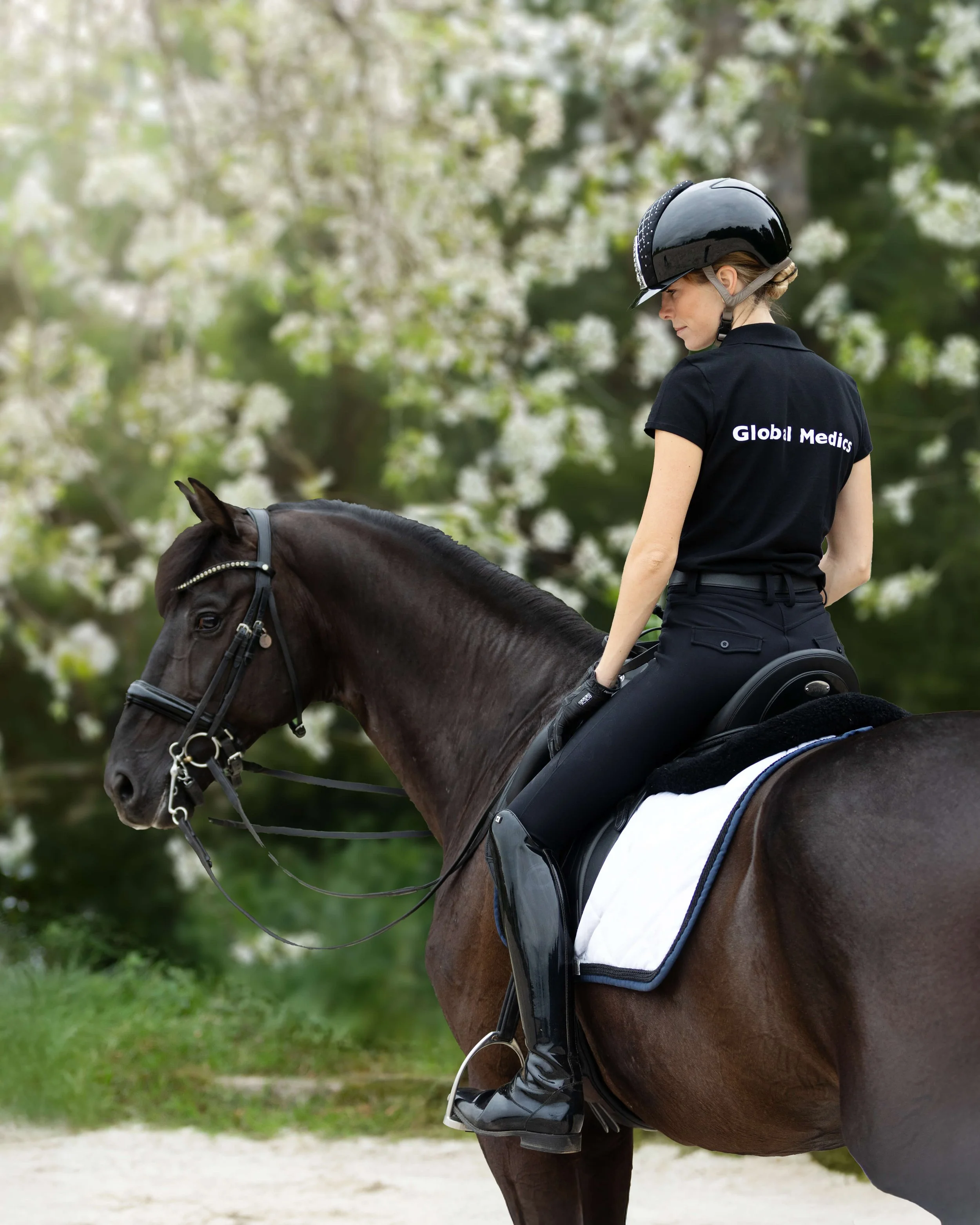
Image: Alexa Fairchild
“It would take me 45 minutes, and he would squish me against the wall - not in a mean way, just out of stress,” she explains. “We quickly understood he didn’t like being in small spaces.” Instead of forcing compliance, Fairchild adjusted. Slowly, mutual trust replaced tension.
“It’s crazy how openly horses communicate,” she says. “Once we found a mutual language and trust, our relationship grew so big. He had all these interesting ways about him, but I appreciated that because I could relate.”
Over time, Dabanos reshaped not only her riding but her understanding of horsemanship itself. “I noticed such a big change in him when I would get on and let him decide where he wanted to go each day. Often he wanted a hack around the fields before focusing in the arena. He was highly sensitive, but just letting him choose one thing daily made him give me so much more.”
Fairchild pauses when speaking about him, choosing her words carefully. “Dab really taught me that every horse is truly different and their needs are truly different,” she says. “Listening to them allows you to build unforgettable trust.”
It is a perspective that feels deeply connected to a recent Instagram post Fairchild shared titled “10 things I hate about the high-level equestrian world” — a post that sparked widespread discussion around horse welfare, pressure, and culture within elite sport.
“What prompted me to write it is that I think this is a really important time for communication and change,” she says. “You can already see the shift happening more and more.”
Importantly, her criticism does not come from disillusionment with horses or dressage itself. Quite the opposite. “First of all, I want to say how much I love horses, how much I love dressage, and how much I love high-level sport,” she says. “I’ve been riding since I was five years old, and now, at 31, expecting my first child, my entire life still revolves around horses. I honestly couldn’t imagine it differently.”
“To me, we owe our dance partners or sports teammates everything - and above all, respect. We should treat them as our equals.”
Still, she acknowledges that in the pursuit of excellence, the industry can sometimes lose sight of the animal at the centre of it all. “In the sport’s quest for excellence, the points, results, and financial aspects can sometimes overshadow the genuine appreciation and admiration that made us all fall in love with the sport in the first place.”
She is also quick to emphasise that her intention was never to criticise individuals. “Obviously, not every high-level equestrian falls into this category, and my purpose is not to point fingers at anyone,” she says. “It was more about motivating people to empower their horses.”
At the same time, she is careful not to paint the sport with a single brush. She points to riders such as Carl Hester, Cathrine Dufour, Becky Moody and Justin Verboomen as examples of the softness, harmony, and horsemanship she believes the sport is increasingly embracing. “I think if we take some of the very top riders, they are setting the right tone,” she says. “The harmony and softness they present is outstanding.”
“There are so many amazing people in this industry who dedicate their lives to treating their horses in the best way possible,” she continues. “People who go the extra mile, who spend extra time and effort protecting them. I think the sport is evolving positively.”
For Fairchild, good welfare is not a vague concept or marketing phrase. It is embedded in daily life. “To me, good welfare in a high-performance atmosphere is prioritising your horse at any time,” she explains. “It’s making every decision to accommodate their needs. It’s about mutual respect. They are as much athletes as we are.” Her horses go out daily, their schedules vary weekly, and recovery is treated as carefully as training itself; massage blankets, shiatsu therapy, turnout, hacking, downtime, and time spent simply bonding outside of work. “I want them to feel appreciated and loved,” she says simply. “That’s so important.”
Navigating the pressures that come with elite sport - commercial, federational, reputational - is something she approaches by narrowing her focus inward rather than outward. “Some of those pressures are simply out of your control as a rider,” she says. “So I focus on my own journey with my horses, my trainer, and my team. Small wins for us might mean nothing to other people, but when you unlock the key to consistency, you unlock a huge door.”
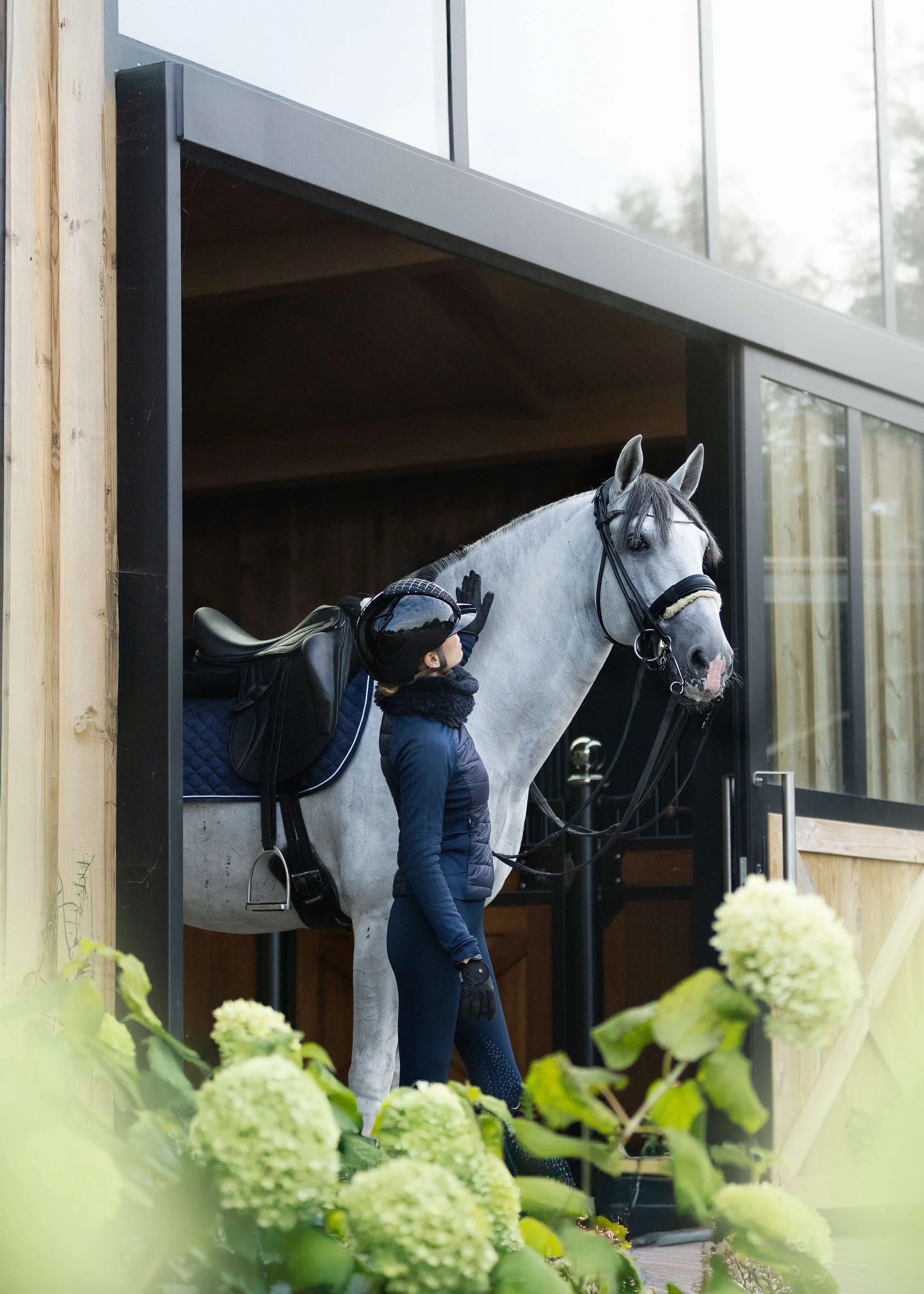
Image: Alexa Fairchild
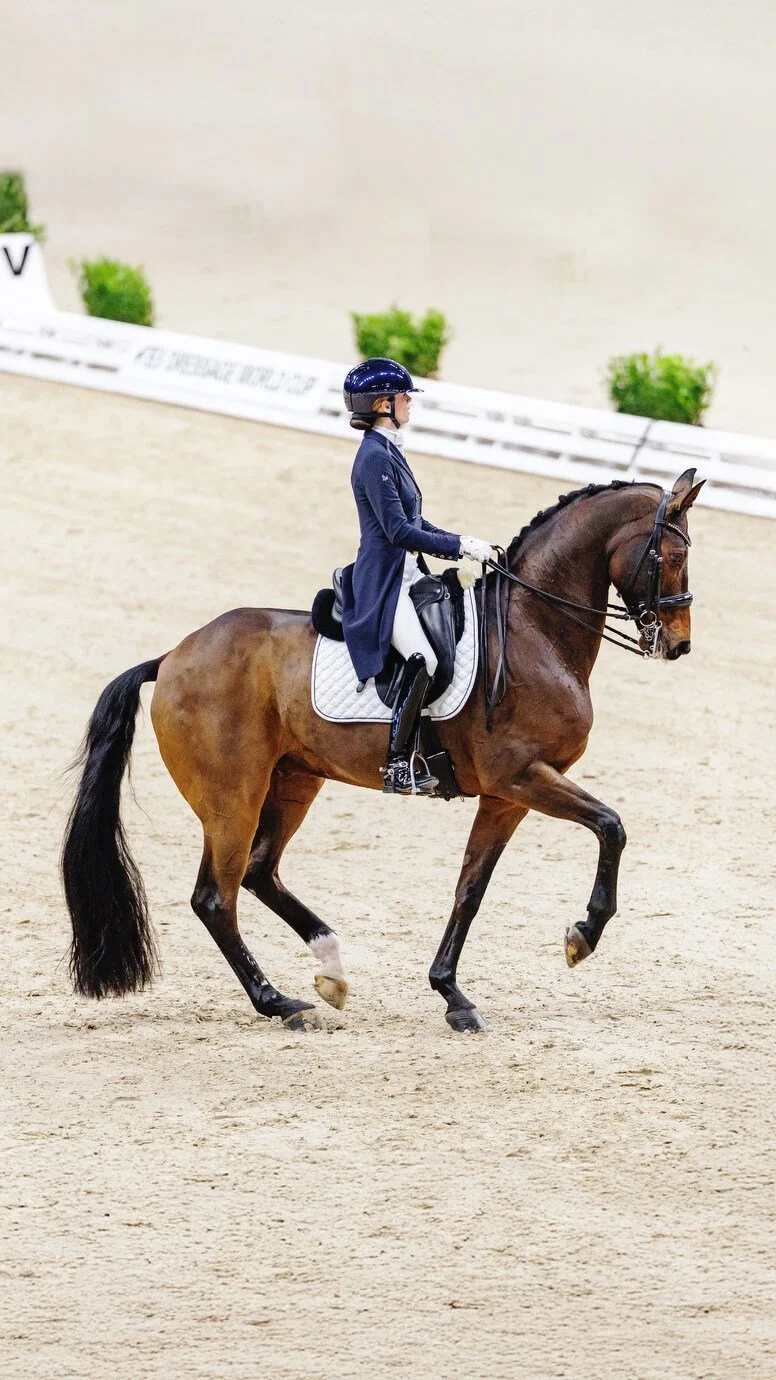
That mindset perhaps became even more profound earlier this year, when Fairchild competed at the 2026 World Cup Finals in Fort Worth while six months pregnant - a moment that resonated widely across the equestrian world.
“I had the best time ever in Fort Worth,” she says, smiling. “It was one of my favourite competitions ever. A truly memorable experience filled with emotion.” There was symbolism woven throughout the experience: competing at a World Cup Final, doing so on American soil after being born in the United States, and navigating it all while preparing for motherhood. “It was definitely more challenging physically,” she admits. “Your point of gravity changes, your weight changes, you’re less agile. So I’m incredibly grateful to Fairplay for coping with all of that and giving me everything. He really gave me 200% trust.”
Yet rather than intensifying her focus on outcomes, pregnancy unexpectedly softened her relationship with competition itself. “It shifted my perspective completely,” she says. “It didn’t feel like I had to put so much importance on the end goal anymore. It became much more about being present and enjoying every moment.” She credits much of that experience to the people around her. “I had the best support team - my family, my trainer, my groom - and that made the whole experience even more special.”
Soon after Fort Worth, Fairchild made the difficult decision to step away from riding temporarily to avoid unnecessary risk during the final stages of pregnancy. “It was really hard for me because I love riding and competing,” she says. “But this is an entirely new and life-changing chapter. Even though I trust my horses fully, they are still flight animals after all.”
Still, the pull of horses remains unwavering. Asked what kind of rider and horsewoman she hopes to become in this next chapter, her answer is immediate. “I don’t want to change the type of rider or horsewoman I am currently,” she says. “I just want to continue evolving positively with my horses.”
“I always look at how we can improve as a combination, and that always takes time and trust,” she continues. “I think that really peaked with Fairplay in Fort Worth, and I hope I can find that feeling again.” And if the sport itself could evolve in the way she hopes? “In five to ten years, I hope we continue seeing harmony, elegance, and love becoming the norm,” she says. “I hope we see a community that supports one another and brings positivity.”
Then, after a pause, she returns to the simplest truth of all — the thing that still excites her most after all these years.