A Behaviour Vet on Stress, Welfare and Modern Management
In debates around equine welfare, sport horses and leisure horses are often discussed as though they live in fundamentally different worlds. High-performance horses are frequently assumed to face greater pressures, while amateur horses are imagined to enjoy simpler, more natural lives. In reality, the behavioural needs of horses rarely divide so neatly along those lines.
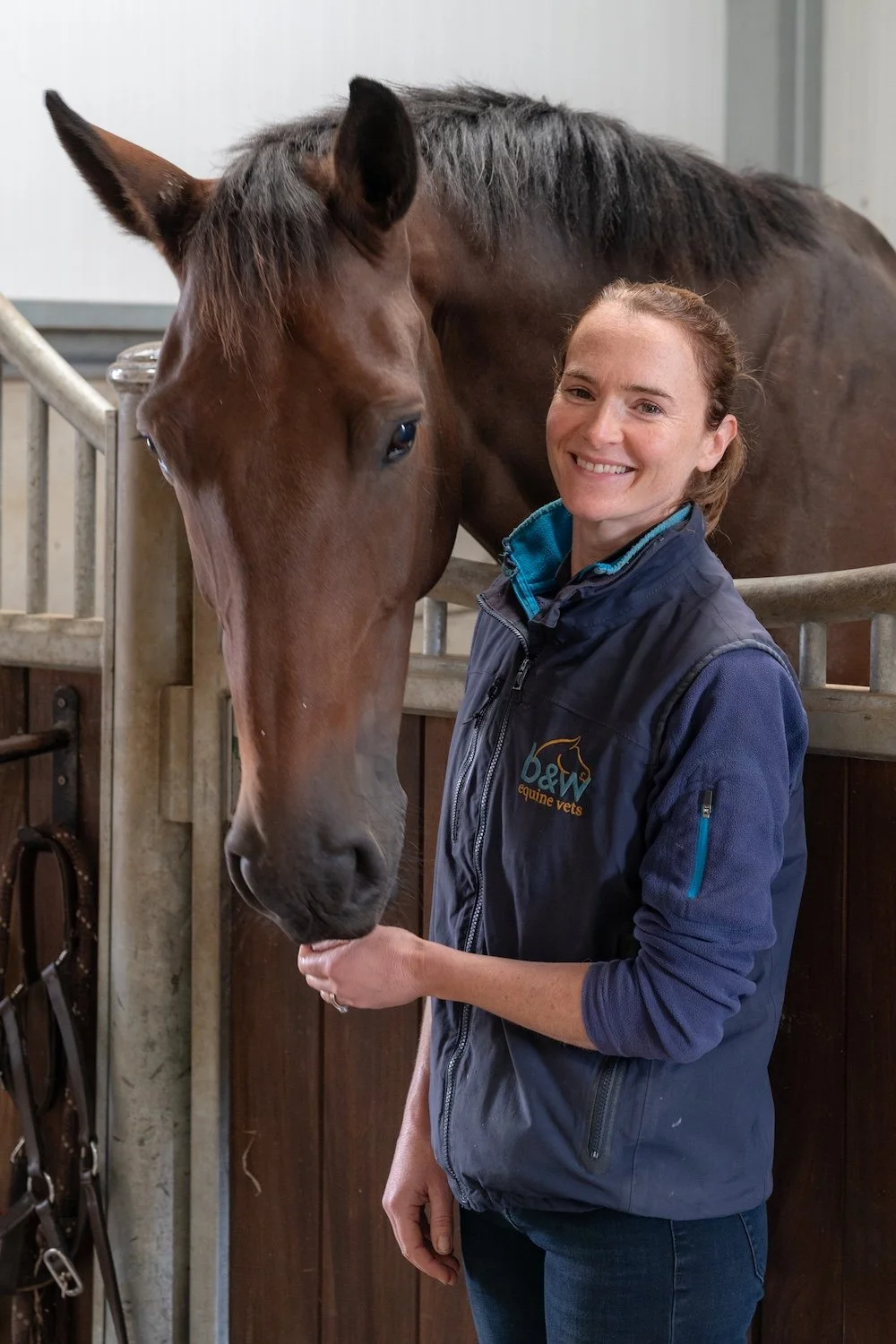
Alex Wood of B&W Equine Vets in England brings a perspective that bridges veterinary medicine, behaviour science and the realities of modern horse management. Working with both elite competition horses and amateur-owned horses, she sees firsthand how management routines, training expectations and social environments shape equine behaviour in very different ways.
In this conversation, Alex reflects on what genuinely distinguishes sport horses from hobby horses, where welfare risks can arise in both systems, and why understanding stress, behaviour and emotional wellbeing will become increasingly central to the future of equestrian sport.
From your perspective as both a veterinarian and behaviour specialist, what are the most noticeable behavioural differences between sport horses and amateur or hobby horses in day-to-day life?
“I don’t necessarily recognise behavioural differences between sports horses and amateur horses; their emotional needs and expressions of behaviour are largely similar, as are the type of behavioural concerns that present. What I do perhaps see a difference in is the severity of the behavioural concern or how long a problem has persisted before the owner or rider seeks the help of a behaviourist.”
“A professional rider or trainer is likely to manage a low-level handling issue themselves and only call me when an issue is either very dangerous or clearly impacting the horse negatively. Conversely, if a behavioural issue is affecting a horse’s ridden performance, particularly if physical pain is a contributing factor, this may be identified, and a treatment plan sought more rapidly in high-performance horses.”
Sport horses often live in highly managed environments. In your experience, what behavioural needs are most at risk of being overlooked in competitive settings, and what practices would strengthen their emotional wellbeing without compromising performance. On the other side, amateur or leisure horses may have what many consider a richer social environment but less consistent structures around management. Are there elements of sport-horse routine or care that you think could improve welfare and stability in the hobby sector. Do you believe these two worlds could learn from each other in meaningful ways?
“Sports horses do have to frequently travel, stay away from home, and have change of routine in that respect, as well as often maintaining a very high level of fitness. All of these factors can be associated with increased stress, though it should be recognised that a lot of horses can successfully habituate to these potential sources of stress over time.”
“Traditionally, sports horses have often been stabled more and turned out less than leisure horses, the concern being that horses are at risk of injuring themselves when turned out, or might not have enough energy to perform at a high level with a belly full of grass. It has been really nice to see in recent years the likes of Ros Canter and Carl Hester demonstrating that horses competing at the absolute top of their game can be regularly turned out without compromising performance.”
“In terms of what could help to strengthen the emotional wellbeing of sports horses without compromising performance, an area gaining increasing interest is environmental enrichment. Enrichment means providing opportunities for horses to express their natural instincts and engage in a variety of activities that stimulate their minds and bodies. When done correctly, enrichment adds quality to a horse’s life, reduces boredom, and can help to reduce stress. Although it certainly doesn’t replace good management, it can help to compensate for some of the restrictions on foraging time, social contact or turnout that may affect sports horses, particularly when away actively competing. It can also help to improve a horse’s cognitive abilities and so could actually enhance performance.”
“It is certainly true that some leisure horses may have a richer social environment, more turnout and travel less frequently than sports horses. They may also gain more mental stimulation from hacking and variety to their workload than some sports horses who only work in a school. However, I frequently see issues amongst my leisure horse clients that have arisen due to the social instability and lack of control over routines in livery yards.”
“Frequent herd changes (as will often happen at large livery yards where horses come and go) will upset the social structure of that herd and can be extremely unsettling for some horses. Equally, a horse may be bullied by another horse that is stabled next to it, or may be upset that it is the last horse to be fed or brought in if their owner works late, for example. Generally, professional yards are run as a whole unit, which allows more consistent routines but also the ability to adapt and change the setup to better suit individual horses.”
“Personally, I feel larger livery yards work best when divided into smaller units where someone oversees the routine so all horses in that unit are managed in a similar way, either by a manager or collaboratively between owners. This allows for a predictable, regular structure, but the ability to identify and adjust elements if something isn’t working for a particular horse. That way, we can work towards having the best of both worlds.”
Measuring stress in horses is a complex scientific challenge. What tools or indicators do you believe currently offer the most reliable insight into equine stress, and where are the gaps in our understanding?
“You are right, measuring stress is one of our greatest challenges, and unfortunately, currently, there is not a single easily applied, practical measure of stress. There can be disagreement regarding the best way of measuring stress, even in controlled research studies, let alone assessing it in a competition or riding environment. Generally, the three most accepted methods of quantifying stress in horse are measuring salivary cortisol levels, heart rate variability and assessing behavioural indicators. Obviously, salivary cortisol and heart rate variability can only really be used in a research setting, and behavioural indicators can be open to misinterpretation if not performed by trained observers, and may vary depending on the individual temperament of the horse.”
“I believe one of the biggest gaps in our understanding can be distinguishing between positive stress (sometimes known as eustress) and negative stress (distress). Behavioural indicators and body language may indicate a horse has a high level of arousal, but is it in a positive emotional state or a negative one? Often, the context makes it very clear- If I were dealing with a very vet-phobic patient, for example, any signs of stress that horse is displaying are clearly negative.”
“But what about a horse getting worked up and highly aroused before the start of a cross country round or a show jumping round? Is it excited because it enjoys its job and is keen to get on with it, or is it actually distressed because it struggles to cope in a busy warm-up environment, and it, for example, had a nasty fall last time it was out? I think often these horses may well be feeling a mix of emotions, and it can sometimes be a real challenge for riders and trainers to interpret. There is some really exciting research emerging known as cognitive bias testing. This is the closest we have come to assessing the emotional state of the horse, so this is hopefully something that will become more practically applicable in the near future.”
In welfare discussions, momentary expressions of tension in competition photos or video clips are oftentimes interpreted as pain or poor care. How do you differentiate between a normal stress response to the environment, versus genuine indicators of welfare concern or pain?
“I think the intensity of the behavioural indicators is really important here. If there are severe indicators of stress, then that is always indicative of a poor welfare state, whether it’s originating from pain, confusion from conflicting aids or stress. When milder expressions of tension are seen, it can be easy to jump to conclusions, but it is actually extremely difficult to distinguish between momentary expressions of tension and genuine indicators of pain from a single photo or video clip. You need information on the context of the behaviour, the duration, and how the horse behaves the rest of the time to even begin to unravel it.”
“For example, there could be a photo of a horse with a slightly intense stare and partially open mouth, but the horse only held that expression for a few moments while it was performing piaffe, which may not be a completely established movement for that horse yet. If that horse’s basic needs are well met, he is relaxed and happy the rest of the time when ridden and shows no negative associations with being tacked up or mounted, then this is likely a normal stress response to a more challenging movement, and not a welfare concern.”
“In contrast, there could be a photo or clip of another horse showing similar behavioural indicators, but this time these are present throughout the entire test, and indeed occur frequently throughout its ridden work. This horse also goes to the back of its box when the tack appears and has been much grumpier or withdrawn when handled recently. In this scenario, then absolutely those expressions of tension would be much more suggestive that this horse finds ridden work either painful or distressing and therefore of welfare concern.”
Is there a particular piece of recent research in equine behaviour or welfare that you believe every rider and trainer should be aware of, regardless of discipline or level.
“There has been some really good quality research published recently on the negative effect of tack (bits, noseband pressure etc) on horses. Many riders would consider themselves to be welfare-focussed and wish to give their horses a good life, but are unaware of the negative impact certain types of nosebands or bit, or poorly fitting tack might have on their horse.”
“There has also been a really good review paper recently published looking at the role of stress in horses with gastric ulceration. I think taking a holistic approach to gastric ulcer treatment and prevention is so important, especially when we consider the proportion of both competition horses and leisure horses affected by ulcers. Fundamentally, we should not just rely on repeated courses of medication to keep ulcers at bay, and this paper discusses how we can all (vets, riders and trainers) be better at managing and preventing ulcers.”
Looking ahead, what do you think will become the most important welfare question in the next decade, and how should not just the sport but the industry as a whole prepare for it.
“Public perception of equine sports and the social licence to operate is one of the biggest threats to equine sports going forward. We all need to be proactive and open-minded about what we can do to maximise the welfare of our equine athletes. Funding further research into welfare is vital, and this research needs to be both scientifically robust and also practically applicable in order to help our sports horses.”