Inside American Horse Culture: Ambition, Pressure and The Weight Of The Perfect Narrative
American equestrian culture exports narratives, identity frameworks, and expectations about what equestrians are and should be. Lana, known online as “Equestlana,” is an amateur dressage rider with a full life outside the sport, has become a voice for how riders express themselves online: She speaks from the space most equestrians actually live in, and uses humour and cultural observation to reflect how the internet shapes confidence, aspiration and belonging in modern horse life. Through her lens, the discussion becomes less about performance itself and more about the love and passion for horses. And within that lens sits a gentle but important question: Who are we showing up for - the horse in front of us or the audience behind the screen?
1. Tell us a little bit about yourself and your background. Who is “Equestlana”?
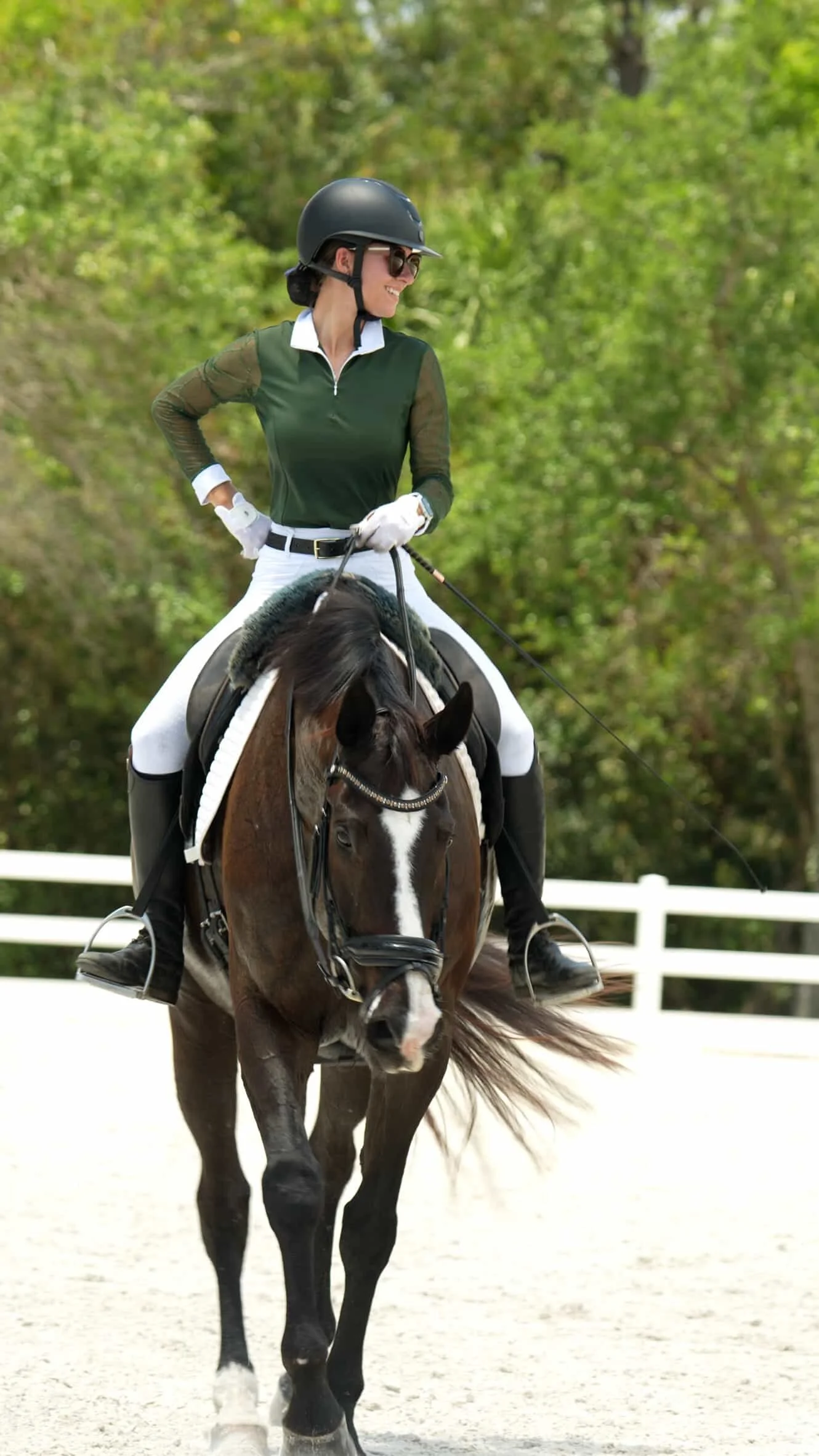
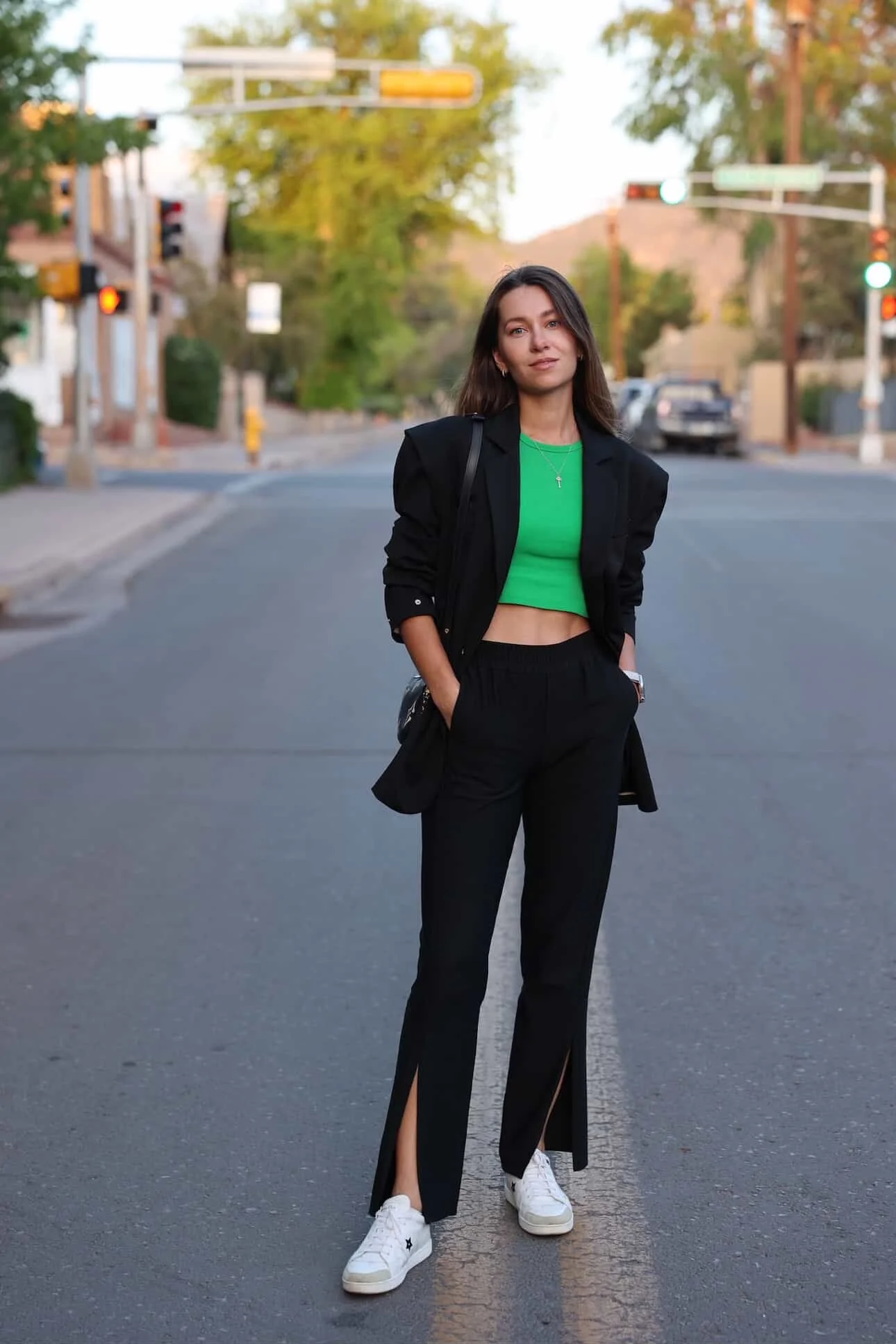
My name is Svetlana Kandybovich, a dressage rider based in Wellington, Florida, and the creator behind “Equestlana.” Horses are the heartbeat of my daily life, but I also come from a completely different world: I’m a professional motion graphics designer with more than thirteen years in the media industry. Eventually those two parts of my life blended together and became full-time content creation, where horses and storytelling share the same spotlight.
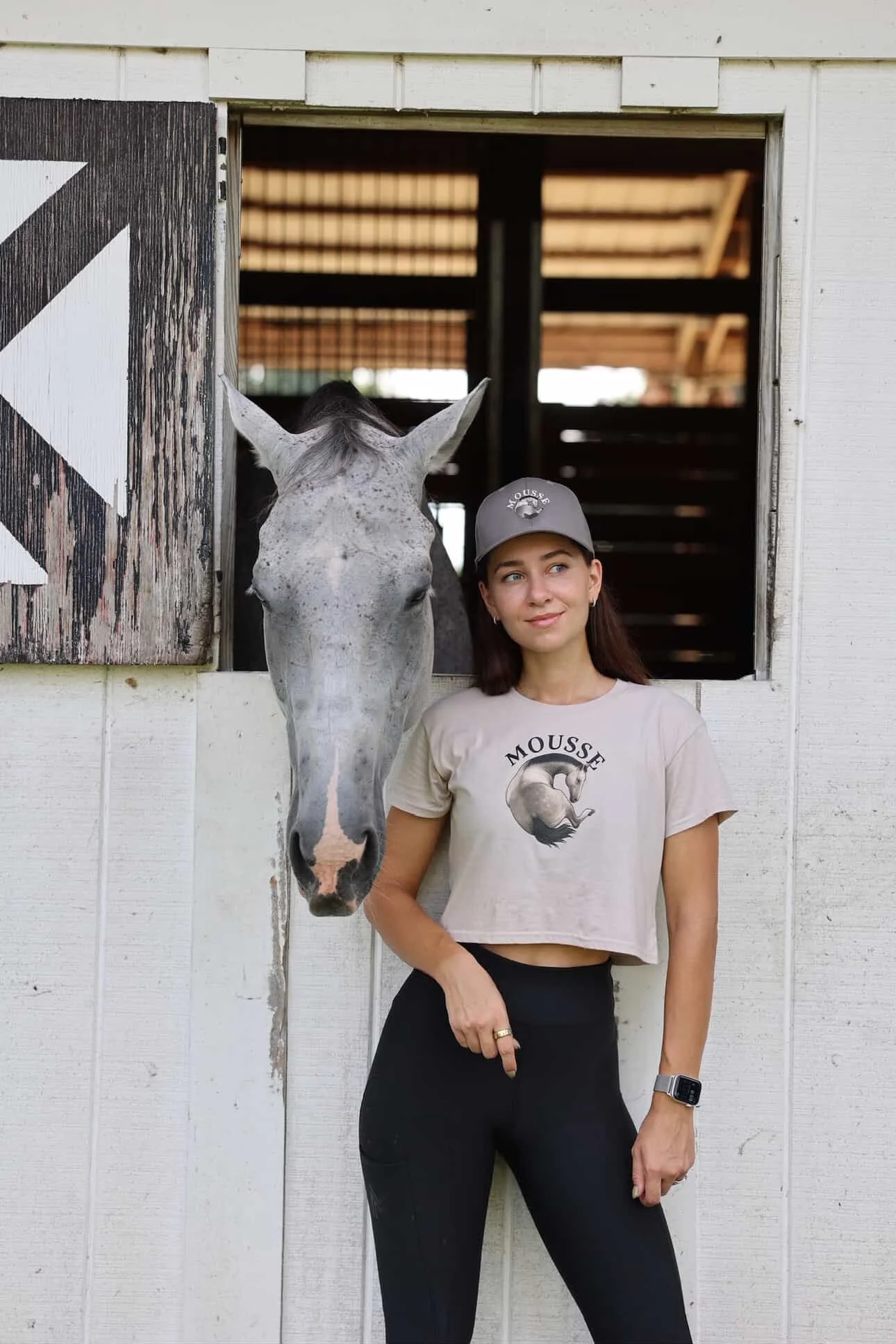
My blog actually began far from home. My husband and I spent a year traveling around the world and, even though it was an incredible experience, I felt a real disconnect from horses and from Mousse in particular. I had thousands of videos of him saved through the years, so I started making short, horse-themed edits just to feel close to him again. Those videos became my bridge back to the equestrian world and eventually grew into the platform I have today.
Now, I share my equestrian life the way it genuinely unfolds. Humor, honesty, the imperfect everyday moments. I love creating stories that feel relatable and remind people that the heart of this sport isn’t about perfection. It’s about the animals we love and the real lives we build around them.
2. From your viewpoint, what parts of the online American horse culture feel most influential in shaping how riders see themselves and measure progress?
What I notice online is almost like two different worlds existing side by side. One is the polished, competitive world filled with beautiful riding, big accomplishments and those picture-perfect moments that make you want to sit up straighter in the saddle. The other is the softer, messier, deeply human world where people share what their horse life actually looks like: muddy blankets, training detours, unexpected vet calls and all. And the truth is, I understand both sides. I’ve been inspired by the polished riders and their success, and I genuinely believe we need that ambition in our sport. Goals matter. Dreams matter. Seeing someone else reach theirs makes you feel like maybe you can too.
But I’ve also learned how important the real-life stories are. Especially now, when our horse world feels vulnerable and riders can feel isolated, the honest posts remind people that they’re not the only ones walking a tough road. That someone else out there is icing legs at midnight or navigating anxiety or crying in their trailer because the day didn’t go to plan. I try to be one of those voices too. I’ve shared the hard parts with Mousse not because it’s comfortable but because it’s true. When he was five and we found out he had kissing spines, my entire sense of direction shifted. Later, when we moved to Florida and he struggled with anhydrosis, multiple abscesses, and adapting to a new climate, it felt like every time we solved one problem, another one appeared. Those seasons were heavy, and they shaped me far more than any polished video clip ever could.
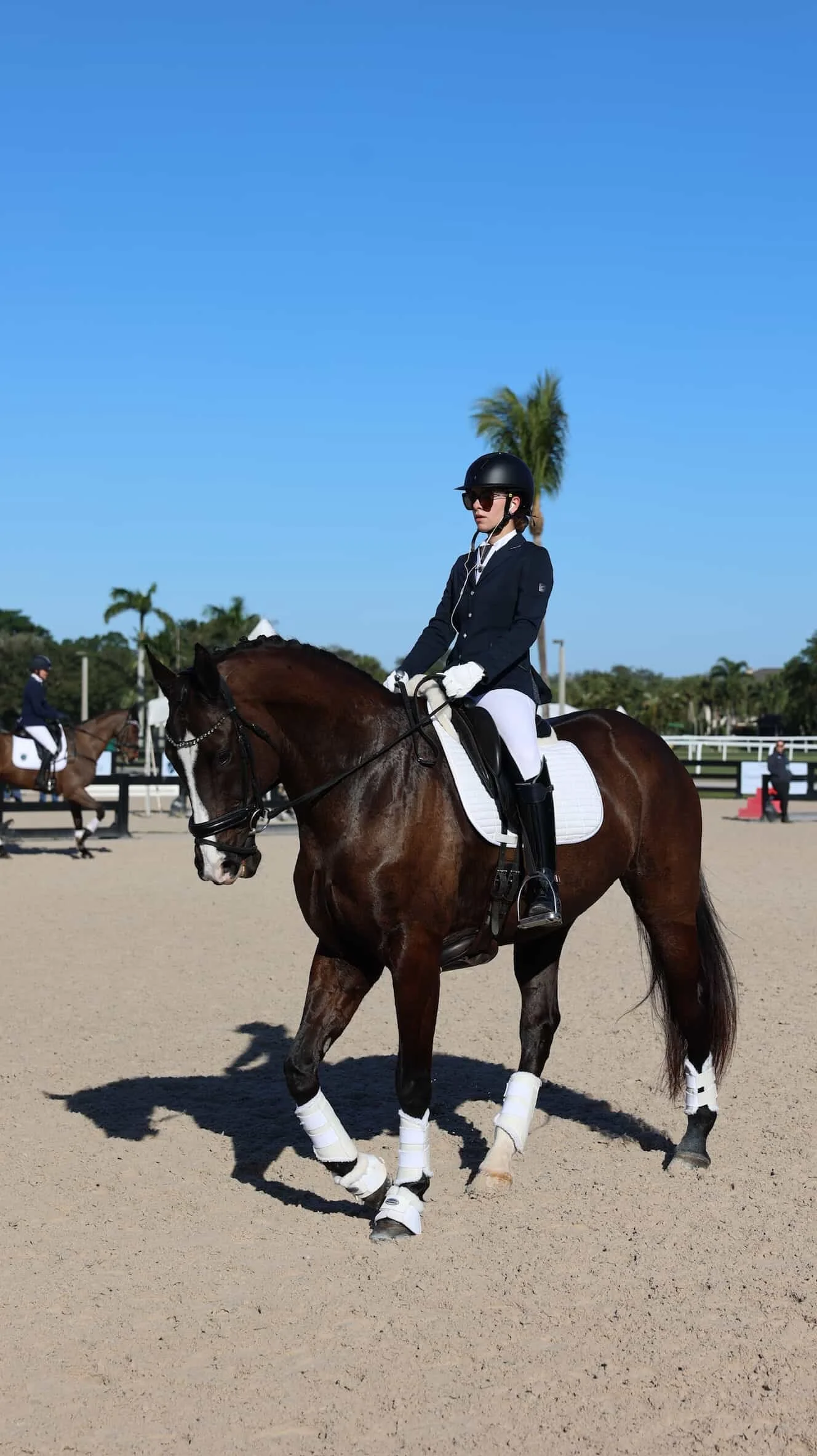
And yet, I still share the beautiful moments at Global Dressage Festival, because they’re part of MY story too. I think what shapes riders today isn’t one type of content, but the balance of both. The ambition we’re all reaching for and the honesty that keeps us grounded. We need both to see ourselves clearly in this sport.
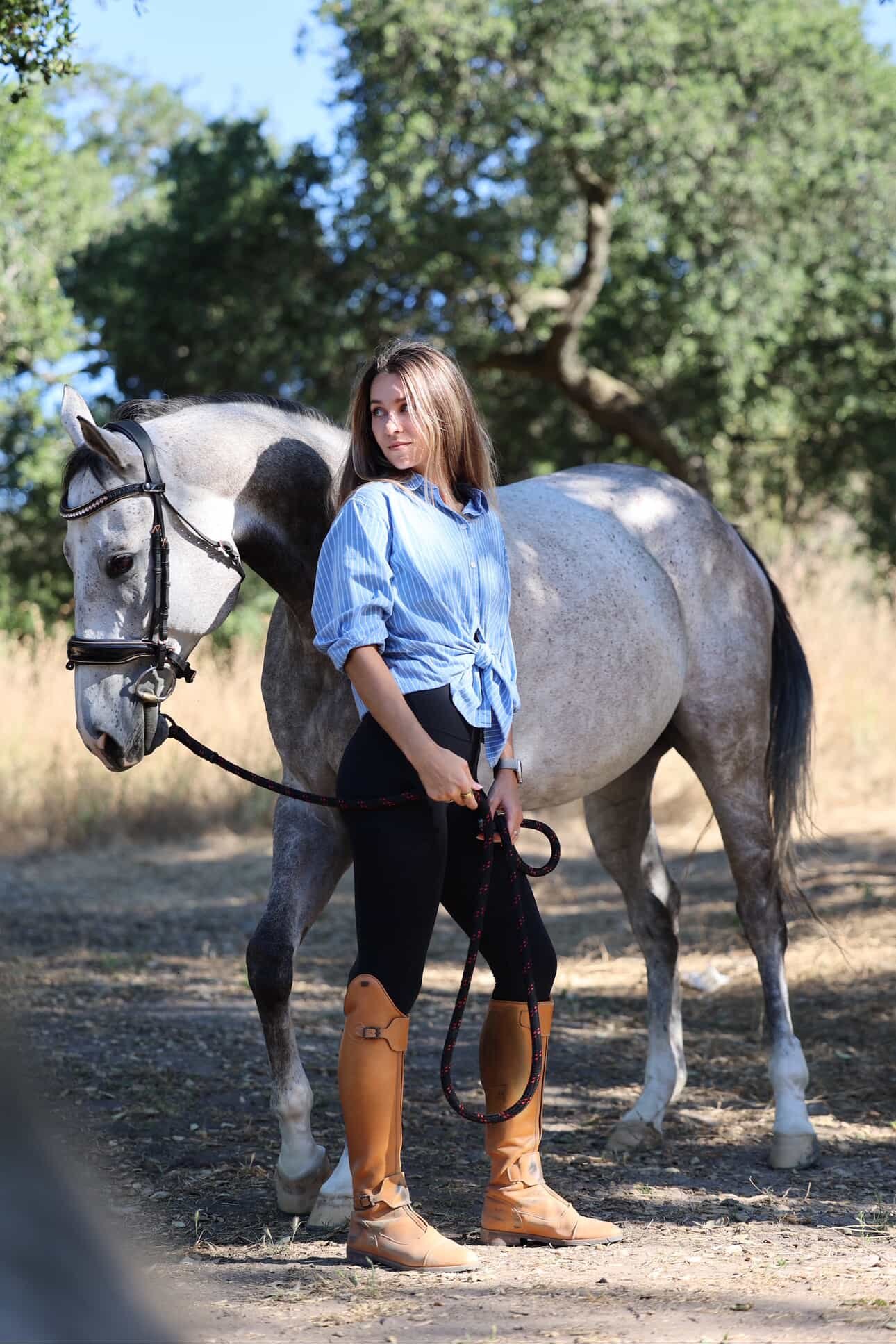
Lana and Mousse. Image: Private.
3. What does the equestrian internet tend to reward, and what kinds of honesty does it tend to overlook?
When I started my blog, I was very careful about what I shared. In those early days, negative comments hit harder than I expected, especially when they came from people who didn’t ride or understand the
reality of horse life. I don’t carry those comments with me anymore, but they did teach me how quickly the internet can judge without really seeing you.
People online only get a tiny glimpse of anyone’s world. They don’t see the late-night vet updates, the hard conversations with trainers, or the moments we’re still processing privately. With so much unseen, it’s easy for others to form assumptions that miss the truth entirely.
The internet loves the polished moments: the beautiful rides, the effortless clips, the illusion that progress is always forward. What often gets overlooked is the emotional side most riders live through quietly: the setbacks, the financial sacrifices, the deep responsibility we feel for the horses we love.
I wish the focus shifted away from nitpicking someone’s heel or hand and toward what truly matters, the horse’s comfort, the rider’s intention, the partnership at the center of it all.
I’m grateful that more riders are showing the unfiltered parts of their journey now. And I try to do the same with Mousse. Sharing the real moments makes this world feel more human. It reminds us that we’re all doing our best for the horses who mean everything to us.
4. How do you think online equestrian culture has influenced how young riders form identity and belonging within the sport?
I can’t speak for every young rider, mostly because I didn’t grow up riding. I started when I was twenty, which already felt late by equestrian standards, so my perspective comes from being an adult trying to find my place in this world.
“What I do notice, though, is how much your algorithm shapes your experience. If your feed is full of Grand Prix riders with perfect highlight reels and media teams, it’s easy to feel like you’re always behind. I’ve felt that myself. There’s always someone who rides better, scores higher, or looks more effortless, and some days it absolutely gets in your head. “
For me, identity in this sport didn’t come from trying to keep up with any of that. It came from experience. Boarding horses, grooming, cleaning stalls, learning vet care, helping my trainer ride different horses, getting to know different breeds and personalities. All those moments built my confidence in a way that competing alone never could. Being involved in every part of horsemanship made me feel like I truly belonged, even more than showing in Wellington ever did.
So while I can’t say exactly how young riders shape their identities today, I know what grounded me: being hands-on, learning constantly, and becoming part of the horse’s world beyond the saddle.
5. Do you think your experience online has changed your own relationship with riding, and how you portray this online?
I think it’s human nature that when you share your progress with others, whether it’s online, at competitions, or even with family, you naturally want to do better. So yes, being online has definitely influenced my relationship with riding, but in a mostly positive way. It’s made me feel more driven, more curious, and more eager to grow.
There are so many beautiful riders out there, and seeing them pushes me in a healthy way. At the same time, I also see riding that doesn’t always highlight the connection with the horse, and that motivates me even more to show what I value most: the bond, the harmony and the relationship behind the training. I think being online has sharpened my focus. Sharing my journey keeps me inspired to keep learning and improving. A little bit of motivation, even a healthy dose of competition, can be a good thing when it comes from the right place.
6. When you made the decision for Mousse not to continue under saddle or in sport, what did that experience teach you about shifting a horse’s purpose beyond performance? And do you hope it gives other riders permission to value their horses for who they are?
This topic means a lot to me, and even writing about it now makes me emotional. When Mousse was diagnosed with kissing spines at five, I tried everything but I realized pretty quickly that pushing him toward competition wasn’t fair. So I retired him and sent him to a pasture in Pennsylvania for six months (under my trainer’s amazing care). It felt like grieving a future I had already imagined. All my goals shifted overnight, and I truly didn’t know if I would ever ride him again. But looking back, I couldn’t see then how many new doors were about to open for us.
Letting go of performance created space for something deeper. I started liberty work, took all the pressure off, and just enjoyed him. That’s when we bonded more than we ever had in the saddle. And that’s also when I began making videos of him, sharing our journey online, and realizing people connected to him far beyond the idea of a sport horse. In a strange way, this felt like our new purpose.
For riders going through something similar, it’s okay to grieve. But it doesn’t mean the journey is over. There is so much life left in the partnership when you shift the focus from results to connection.
The beautiful twist in our story is that Mousse is eight now, and I’m riding him again. His time living in a pasture, walking hills and simply being a horse, helped him strengthen naturally. And maybe because I let go of everything I once pushed for, our rides now feel softer and more honest.
You never know what the future holds. Sometimes the unexpected path ends up being the one that brings you closer to your horse than anything you originally planned.
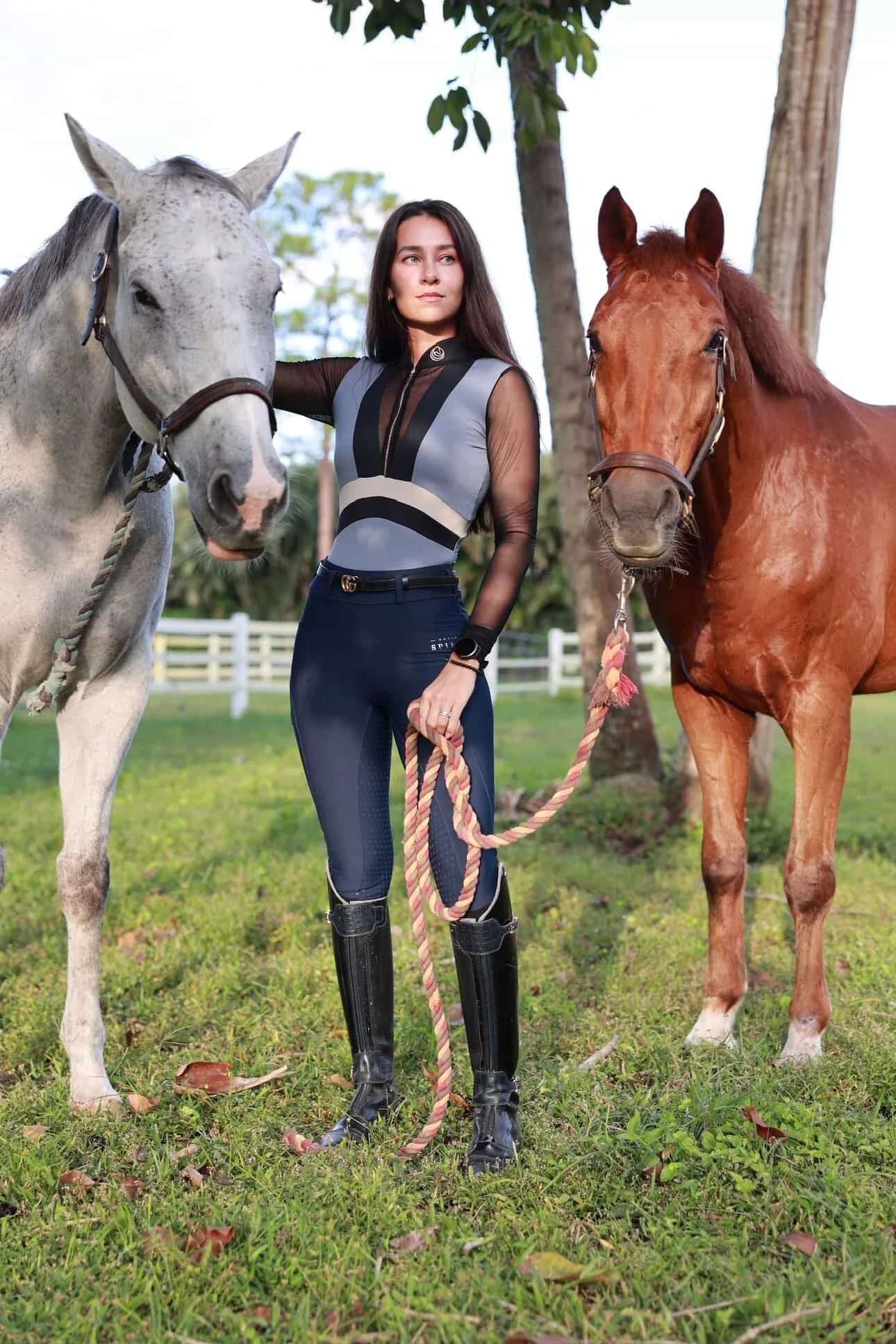
Image: Private.
7. If there was one assumption you could gently shift or evolve within the online space, which would feel most meaningful to start with?
I think the thing I wish people understood better is that, for most responsible horse owners (and I’m lucky to know many!) our horses truly mean the world to us. They shape our routines, our budgets, our priorities, and honestly our whole hearts. Most riders I meet are doing everything they can to give their horses the best life possible, often putting their horses’ needs before their own without even thinking about it.
“Online, that devotion doesn’t always come through. And I wish we could soften that a little. I wish we were kinder to each other, and more willing to believe that most of us are trying our absolute best.
Because behind the screens, there’s a lot of love and care that never gets posted but it’s the part that matters most.”
8. What do you hope the next generation of horse girls and boys learn earlier than maybe you did?
I hope they learn not to compare themselves to anyone else. In this sport, you truly never know how the next season will unfold or what the future has planned for you and your horse. Progress can surprise you in the best ways when you stop measuring it against someone else’s timeline.
Patience, hard work, and humility go a long way. Trusting the process, even when it feels slow, is one of the most valuable lessons I had to learn later in life. As long as you show up for your horse, stay curious, and keep putting in the work, you’ll end up exactly where you’re meant to be.