
The Horses Who Heal and Bring Hope into Swedish Hospitals
There are horses who enter our world through sport, and there are horses who enter it through care. Animals, including horses, have long supported humans in therapy and wellbeing programmes worldwide, but horses rarely step directly into clinical environments. This Lusitano stallion, along with his smaller equine companions, does exactly that. Sjukhushästen, or “Hospital Horse,” is a Swedish initiative that brings horses to children and young people at every stage of illness, from new diagnosis to chronic conditions, to life-limiting disease, and at times, the final stages of life.
Sometimes the visits take place in hospital corridors under fluorescent light, and other times within the stillness of Sparreholms Castle, where nature, rest and animal companionship replace clinical routine. Occasionally, visits unfold in the quiet of family homes - not because the horse replaces medicine, but because he changes how the body and mind experience it: He horse softens fear, stabilises breath, and gives joy. And in these moments, the horses become not just a visitor, but a meaningful part of healing itself. We speak with Louise Chatteli, founder of Sjukhushästen, about how this extraordinary programme came to life and what it teaches us about the emotional needs of children, families and the horses who support them.
1. What made you believe a horse belonged inside a hospital environment for children?
The idea was never to disrupt the hospital environment or compromise the wellbeing of the children. My intention was to create a moment of comfort, joy and connection — to let them have a peaceful moment, to let them think about other things. However I fully recognize that such initiatives must always be carefully evaluated for safety, hygiene and emotional impact.
In many areas of paediatric healthcare, clinicians describe how animals can reach children emotionally in ways adults cannot — lowering stress hormones, easing fear, and restoring a sense of normality. Sjukhushästen witnesses this daily, especially in families navigating uncertainty or grief.
2. What emotional shift do you witness in children that conventional clinical care cannot produce on its own?
It’s a powerful shift. For a moment, the sadness in their eyes softens into curiosity. Their shoulders relax and you see a spark of who they are beyond the illness. Clinical care heals the body but sometimes a gentle, unexpected moment helps heal the spirit just enough for them to breathe a little easier and stay for a moment in harmony and collect some new memories together with their family. The horse also connects the children with other children at the hospital because they experience something together and they could naturally keep playing even when the horse has left the building.
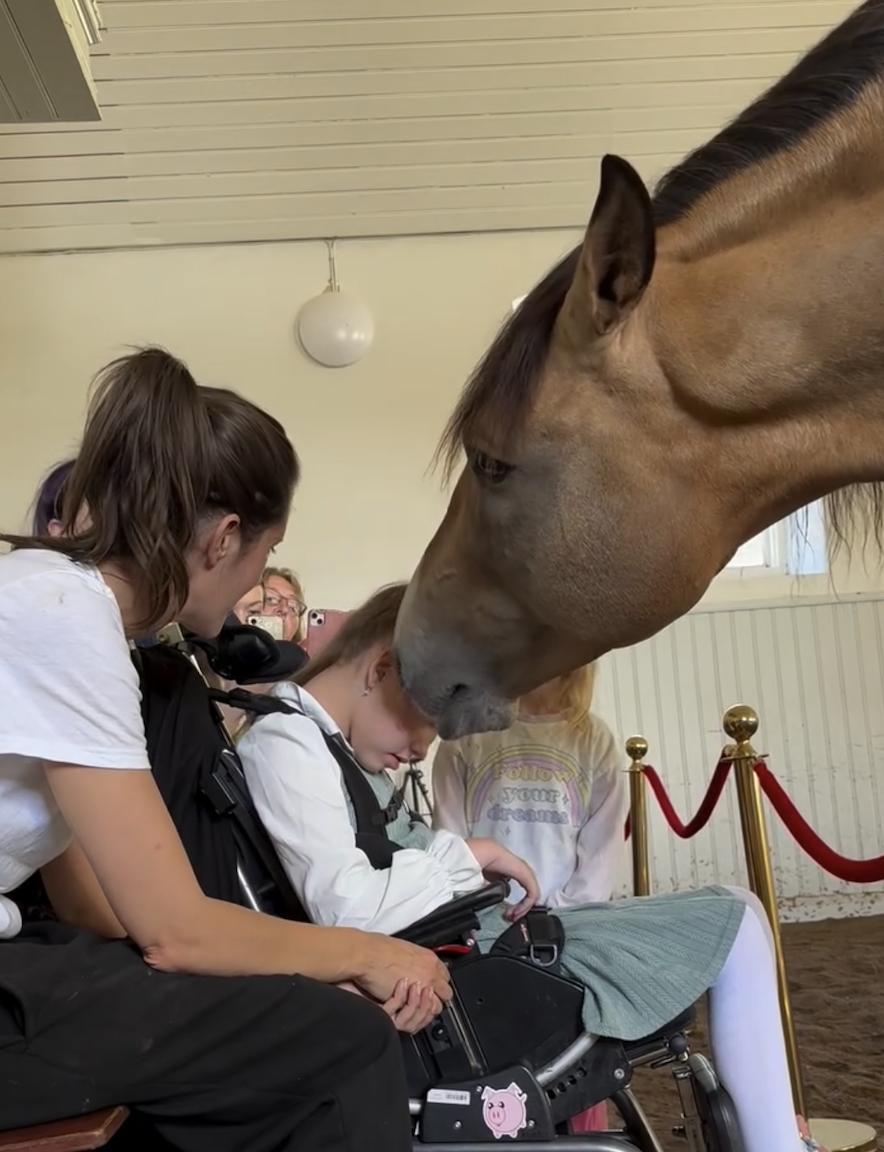
The Lusitano stallion Hannibal is an integral part of the Sjukhushästen concept. Image: Instagram @sjukhushasten.
3. What specific moment convinced you that this was necessary, not novelty?
The moment I understood this wasn’t a novelty but something truly needed was when I saw how a horse could reach someone in a way nothing else could. A patient who hadn’t spoken for days lifted their head, smiled and said a few words when we arrived. In that moment, I knew this was a real connection, something that gave comfort and dignity in a way medicine alone couldn’t.
It’s also very important to me that the right person meets the right person and that everything happens on both sides, the horse and the children terms. Every visit must feel safe, respectful and willing for everyone involved. When those conditions are in place, something meaningful and almost magic can happen.
Horses are highly attuned animals. Research shows they can mirror human tension, respond to micro-expressions and synchronise their behaviour with emotional shifts. This natural sensitivity is the foundation of Sjukhushästen’s work.
4. How do medical teams respond when they see his effect in real time?
Most children are honestly a little surprised at first, even if they know we are coming. But when they see the horse in real time, everything changes. They often stop for a moment, smile and watch quietly. Some doctors and also parents tell me they haven’t seen the person react like that in a long time.
Many describe it as a “softening” in the room. Stress goes down, breathing slows and the patient becomes more present. The medical staff usually say things like, “We needed this too” because the horse brings calm not only to the patients but also the whole team.
5. What does this reveal about how horses read human emotional states?
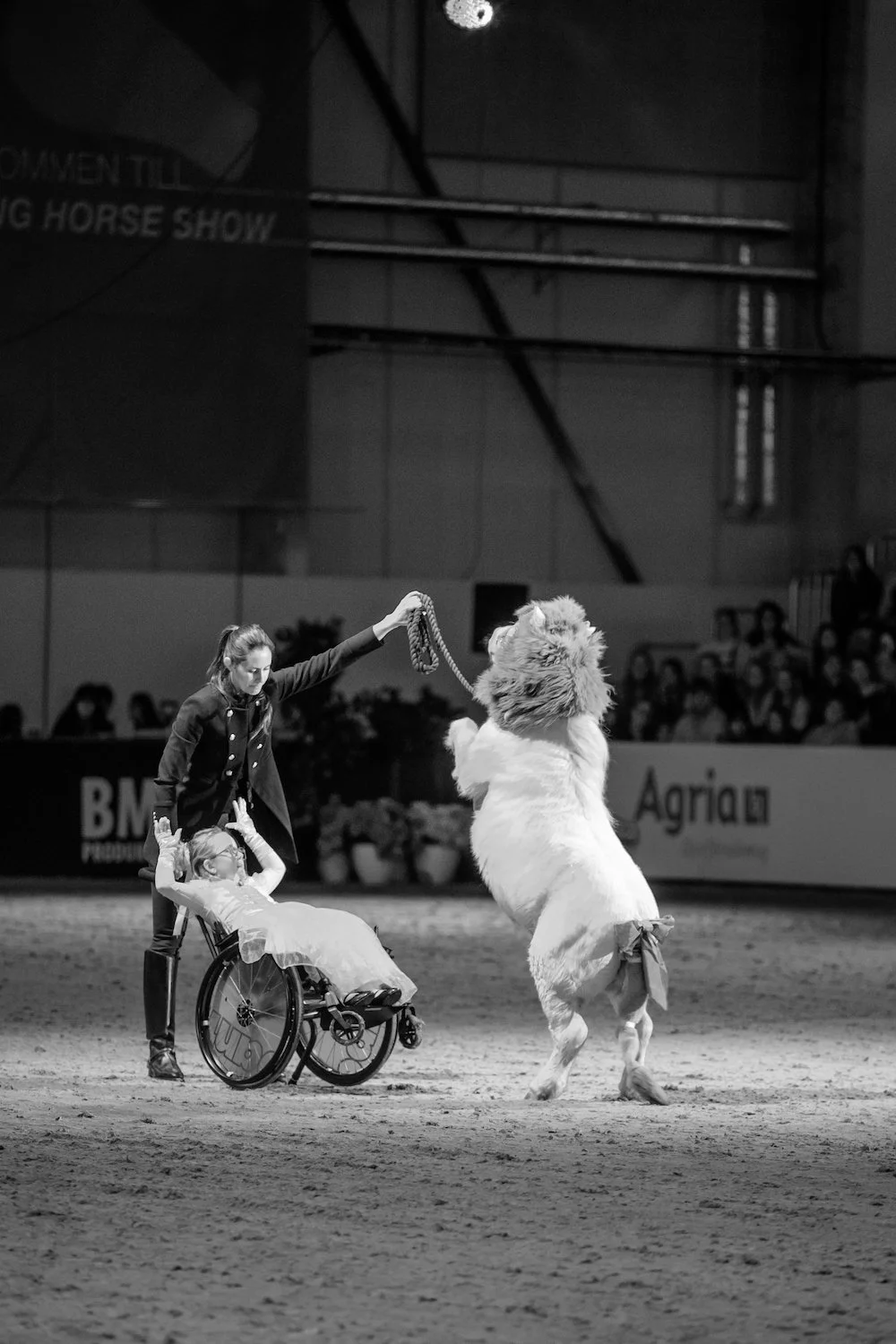
They respond to tension, to the smallest shifts in how we hold ourselves. When a child’s emotions soften, the horse often mirrors that change with stillness or gentle attention.
It isn’t mystical; it’s a kind of sensitivity honed by their nature as herd animals. They’re attuned to us in a way that is quiet and in moments like these, you can see that sensitivity works loud but with the sound of silence.
6. How do you balance the horse's welfare and emotional experience when he works in a hospital context?
His welfare is the first consideration, not the last.
Before any visit, I evaluate his temperament, energy level and stress signals. If he shows the slightest hesitation, the session simply doesn’t happen. During the visit, we keep the environment controlled by constantly watching his body language.
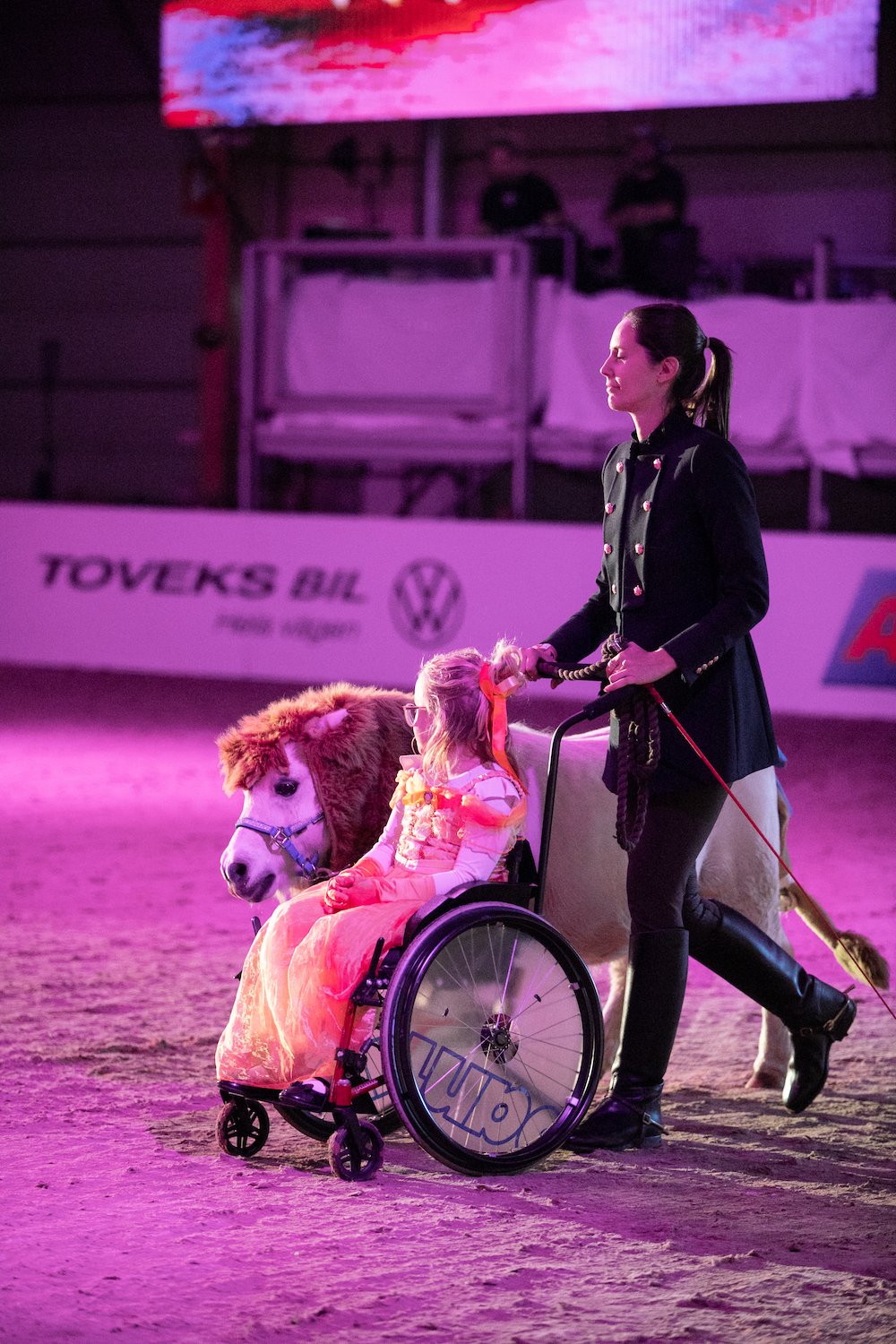
Images: Mia Nilsson
He is never asked to ‘perform’ or endure more than he can comfortably manage. The moment his comfort shifts, we step back.
Balancing his emotional experience with the child’s needs means recognizing that he is a partner, not a tool and his well being determines the boundaries of the work. I never expect anything specific from the horses, only that they are well prepared for the unusual environment and able to stay calm. Every interaction must happen on both terms, the horse’s and the person.
7. What do you think the sport world needs to learn from this about what horses are capable of beyond sport?
I would want them to begin by prioritizing understanding the individual, their history, temperament and what gives them comfort and confidence. It’s not about adding animals for novelty or distraction; it’s about creating intentional, cooperation, empathetic spaces where emotional wellbeing is supported. Starting with that foundation, respect for the person not just an animal.
And for me, the most important thing is that the horses also get to have their voice heard. For that spark of magic to happen is when the cooperation is complete.
8. What are you planning or hoping for next in this programme?
I believe one of the most important lessons is that we should never shut out animals and nature, especially when we are most vulnerable.
During illness or emotional strain, human connection is vital but so is the presence of the natural world. Animals and horses in particular, offer a form of nonjudgmental companionship that can reach us in ways words cannot. Keeping that connection alive allows children and indeed all of us, to access comfort, resilience and a sense of normalcy even in the most challenging circumstances. I believe this should be a natural part of healthcare to achieve complete well-being. We are all in this together.