
Learning To Return: Mattias Renberg and His Road Back to the Saddle After Injury
For most riders, injury is a temporary interruption. For others, it becomes a complete reorientation of identity and purpose. Mattias Renberg’s return to the saddle is not a comeback story - it is a reconstruction story. It is the rebuilding of confidence, agency, calm, and choice on entirely new terms. This chapter is not about what was lost, but about what is being rebuilt with more clarity, more self-respect, and a deeper alignment with the horse.
Nearly two years ago, Mattias was involved in a serious riding accident that changed everything. During what should have been a routine training session, the horse suddenly reared and fell directly on top of him. Crushed by the horse, he broke his back, and in a single moment he went from being a fully able rider to becoming wheelchair-dependent—facing a life transformation he could never have imagined.
Mattias found his way into the equestrian world as an adult, first as a groom and later as a rider. Horses became his profession, his passion, and a defining part of his identity. And even through the pain, grief, fear, and the slow, demanding process of rebuilding both body and self, he continues to look forward. The drive remains. The will remains. And the goal is clear: To represent Sweden at the Paralympics in Los Angeles 2028.
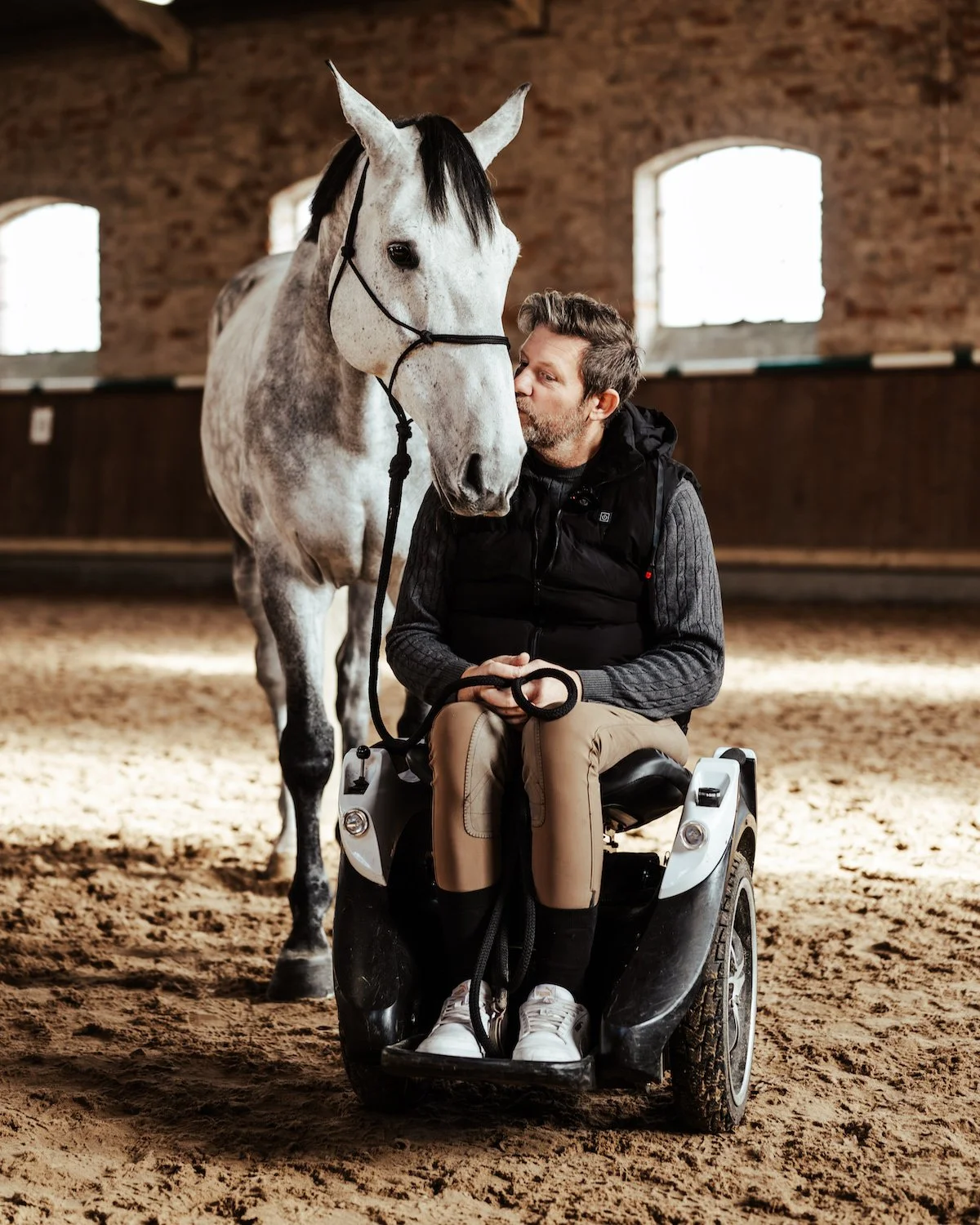
Image: Theresia Sandahl
1. What does returning to the saddle feel like on an emotional level, rather than a physical one.
Emotionally, it has been a complete rollercoaster—filled with fear that the joy I built my whole life around might be gone forever. Not fear of accidents, but fear that I wouldn’t recognise myself in riding anymore.
I’ve had to face grief over what was, break down each layer of fear, and rebuild my strength from the inside out. Returning isn’t just about sitting on a horse again; it’s about choosing every day to keep going, even when it hurts, and finding emotional strength through acceptance.
2. When you could not ride, was there a part of your connection to yourself that felt more distant or inaccessible?
Yes. I struggled to understand that I was still me, just a new version. It felt like “me” was so far away, physically and emotionally. Learning the new body, its balance, its limits… it felt as distant as trying to walk across the Milky Way. Regaining that connection to myself was one of the biggest challenges.
3. Now that you are rebuilding your way back, what identity is emerging differently than before.
A new identity—version 2.0—is emerging. Mentally, I’m both much stronger and more fragile. I no longer fear accidents, but I still fear losing joy.
The biggest shift is realising that this is my time now. I don’t have to give everything away. I’m allowed to care for myself, to keep some energy for my own growth. My determination is stronger than ever, even if I still have one vulnerable point I’m working on strengthening.
4. What qualities in your relationship with your horse have become more important to you now than they were previously.
Joy and genuine connection. I’ve always loved my horses deeply, but now I value the simple moments of trust, friendship, and play more than anything.
I want the horse to want to be with me, to see me as part of their world. I play more, create fun, explore what we can enjoy together, even using the wheelchair. Joy from both sides has become the cornerstone of our relationship.
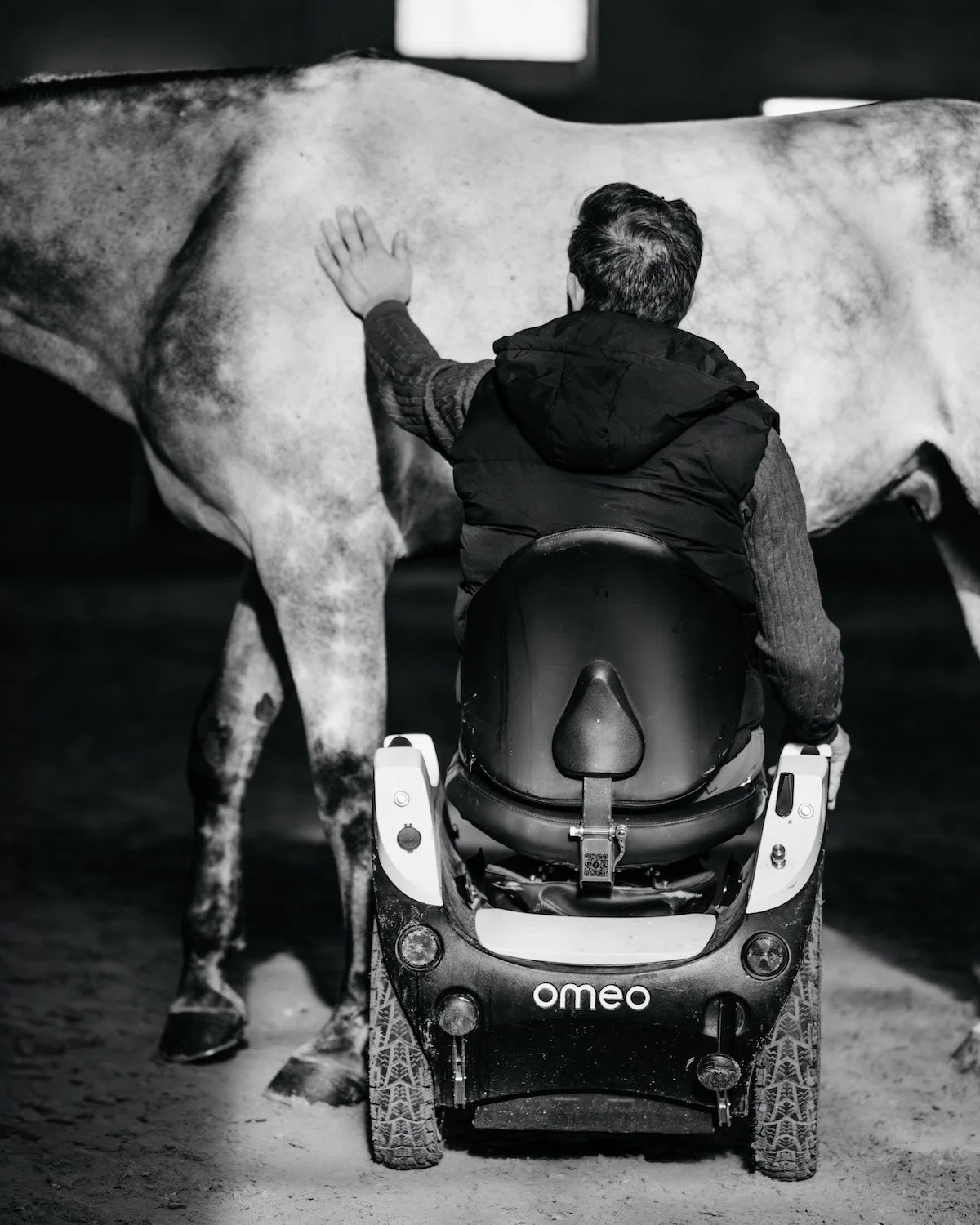
Image: Theresia Sandahl
5. How has your definition of ambition shifted throughout this process, and has this made you see equestrian sport in a new light?
My ambition used to live inside the performance system—the structure of teams, sponsors, money, networking… Now I question all of that.
I’ve realised we’ve lost the “why” behind the sport: Curiosity, communication, love for the horse. The sport feels colder than before, more pressured and transactional. My ambition now is rooted in rebuilding warmth, connection, and purpose rather than chasing external expectations.
6. Are there anything you are choosing to protect more fiercely this time around?
Yes—presence and relationship. Traditional “protection” equipment doesn’t matter to me personally, but being truly present with the horse does.
I protect the bond by teaching the horses to understand the wheelchair, by building trust so that nothing startles them. Because the moment I focus on protecting myself instead of being with the horse, I lose the connection—and that’s the real danger. My protection is communication and presence.
7. If you could speak to your past self before the injury, what would you tell him about what truly matters in riding.
I would say: joy. Absolutely joy.
The happiness, harmony, and lightness you feel when you and the horse are completely in sync, that is what matters. And you can achieve that even without your legs!
Do what the horse loves. Let go of pressure. Short sessions, lots of fun. If the horse is happy, everything becomes easier. Joy is the foundation of everything in riding.