Inside the Equine Athlete: Sweden’s First Equine Imagery Diagnostic Expert, on Welfare and the Future of Sport Horses
Diagnostic imaging has moved from the margins of equine practice to the centre of performance medicine. As the first equine imaging specialist in Sweden, Ellen has built her career at the forefront of this shift. With a background in orthopaedics and a deep passion for sport horses, she offers a perspective that bridges science, training culture and welfare. In a conversation with us, she reflects on how imaging has reshaped our understanding of pain and performance, and why the next chapter for the horse world must place welfare more firmly at its core.
A Career Shaped by Curiosity and a Love for Sport Horses
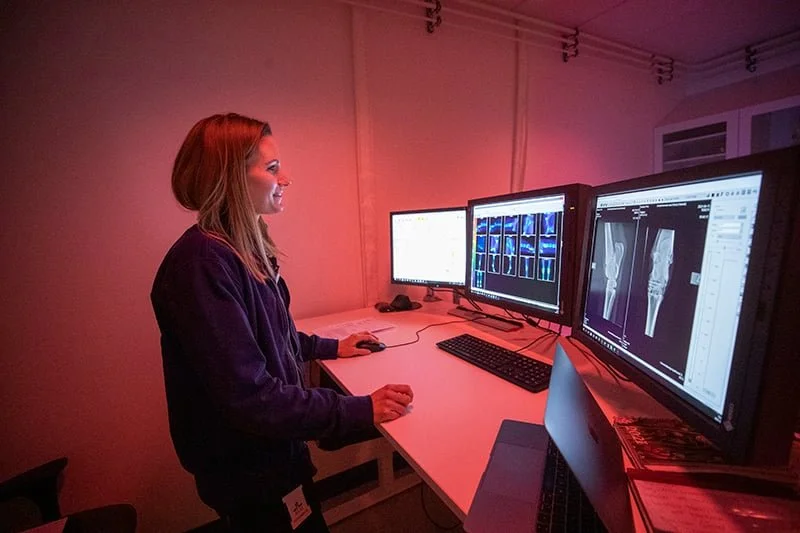
Ellen at work. Image: Ronald Tuholm.
Ellen’s decision to become a vet was made long before she understood what the profession truly involved. She recalls being three or four years old when she first declared that she would work with animals. She did not grow up in a horsey family, but her determination never wavered. After graduating from Copenhagen University, she followed her passion for sport horses into orthopaedics, spending nearly a decade working as an equine orthopaedic vet before specialising in diagnostic imaging.
Those early years were defined by curiosity and a desire to see the whole horse. Alongside her orthopaedic work, she undertook further education in chiropractic care and dentistry, and became closely involved in saddle and tack fitting. She embraced objective gait analysis systems as they began to emerge, combining data with her clinical assessment and an understanding of riders’ expectations. For her, performance medicine was never about isolating one structure. It was about understanding how multiple systems interact under the demands of sport.
Imaging had always held a particular fascination. It was, and still is, one of the fastest-evolving areas of veterinary medicine. During her time in practice, new modalities expanded rapidly, allowing clinicians to image parts of the horse that had previously been inaccessible. What drew her in was the sense of being at the beginning of something significant. In Scandinavia, imaging specialists remain relatively few, meaning that specialising required working on a European stage and engaging with an international professional community.
The intellectual challenge, combined with the flexibility that teleradiology can offer, made the decision clear.
From Ellen’s perspective, advanced diagnostic imaging has fundamentally changed how we understand pain, injury and performance in horses. She uses the example of the equine spine to illustrate this shift. When spinal radiography became more widespread, many cases of back pain were quickly attributed to kissing spines. The presence of impinging dorsal spinous processes appeared to provide a straightforward explanation. However, as more sophisticated imaging became available, it became clear that the spine is far more complex than that early narrative suggested. Nerve roots, intervertebral discs, facet joints, ligament attachments and surrounding musculature can all contribute to back pain. What was once considered a single diagnosis is now recognised as a spectrum of possible pathologies.
This greater precision has significant welfare implications. Horses are more likely to receive an accurate diagnosis earlier in the course of a problem, leading to more targeted treatment and fewer prolonged periods of discomfort. Rather than treating broadly based on assumption, clinicians can work with clearer evidence. For Ellen, this is one of the most important advances of her career.
Rethinking Pain and Performance Through Imaging
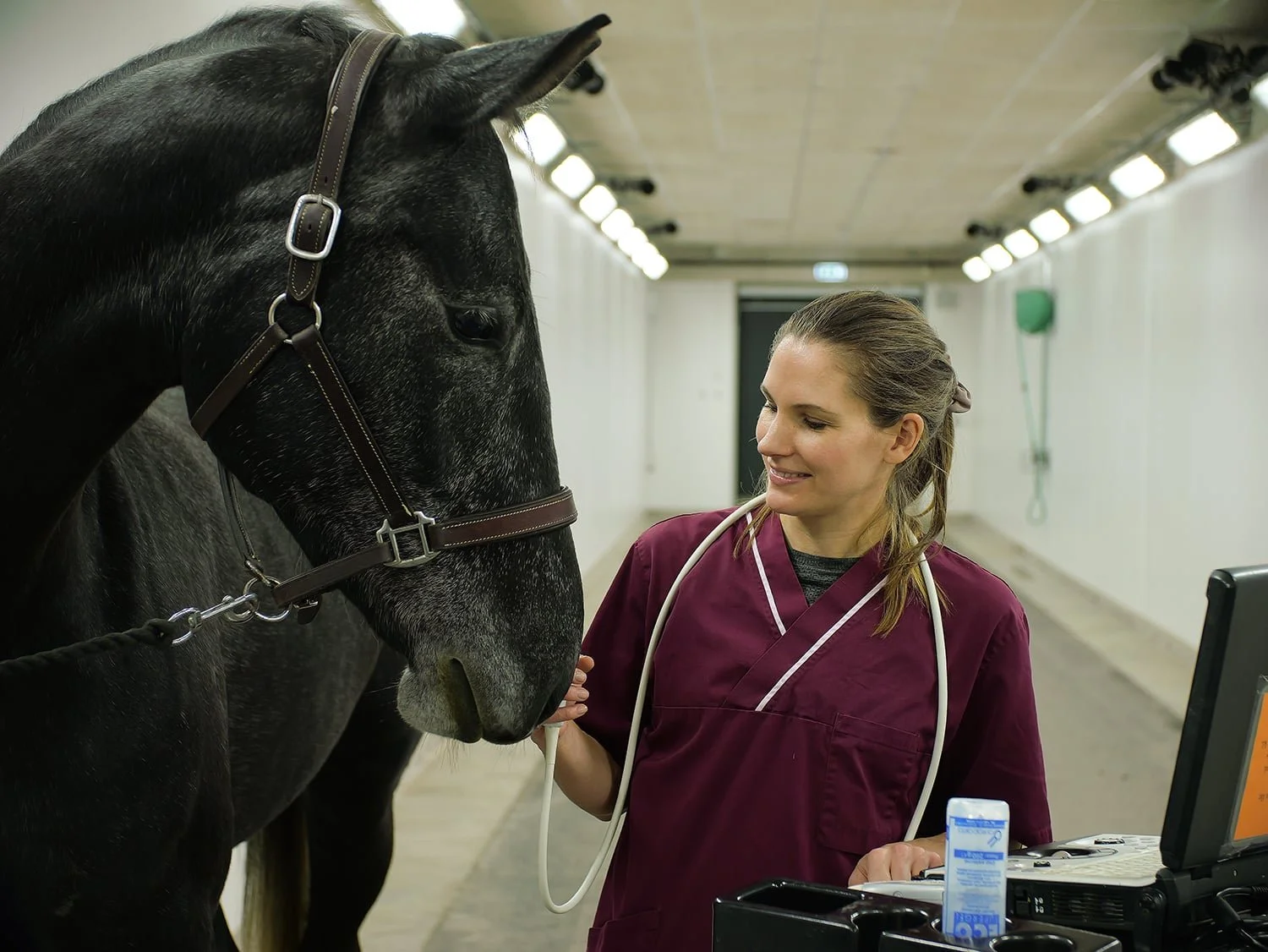
Her current role at the university clinic in Uppsala, outside Stockholm, has exposed her to a wide range of horses, most of them hobby or leisure animals. These are horses that hack, school and perhaps jump occasionally. In this population, injuries are often subtle. Owners describe a feeling that something is not quite right, perhaps a reluctance or a slight unevenness, and imaging reveals mild to moderate changes. The picture is very different in her teleradiology work for a major European company, where she reviews images from high-level sport horses across the continent. In those cases, lesions can be far more pronounced. The structural changes reflect the intensity and repetition inherent in elite training programmes.
The contrast between these populations is striking. It highlights how workload, training intensity and competition level manifest diagnostically. Ellen has often reflected that many Swedish horses appear to have comparatively lighter workloads than some of their continental counterparts. While she acknowledges the remarkable athleticism of top-level sport horses, imaging can also reveal how the body adapts to sustained performance demands over time.
How Workload and Training Influence What We See in Imaging
Breed and discipline patterns are evident as well. At the university, she sees a notable number of Icelandic horses alongside general riding horses. Leisure horses and elite athletes do not present in the same way. In lower intensity settings, findings tend to be less severe and more localised, whilst in high-performance environments, repetitive strain and more marked structural change are more common. This does not imply inevitability, but it does reinforce the importance of aligning ambition with responsible management.
When it comes to young horses, imaging remains a routine part of pre-purchase examinations, particularly for those destined for higher levels of sport. Ellen views this as reasonable. Knowing what a young horse already carries, such as fragments or other radiographic findings, allows for informed decisions. Interestingly, many findings in young horses are likely longstanding and may never become clinically relevant. However, context matters. A minor irregularity in a leisure horse may remain insignificant, whereas the same finding in a horse expected to progress to advanced sport may warrant closer consideration.
From Pre-Purchase Tool to Preventive Strategy
mage: Ronald Tuholm.
The broader question is whether imaging could become more preventative rather than reactive. Ellen believes this is realistic, particularly for modalities that do not expose staff to ionising radiation. She is clear that imaging healthy horses with radiography, thereby exposing personnel unnecessarily, is difficult to justify. However, where safe alternatives exist, preventive imaging could reduce injury rates in higher-risk populations. She notes that in thoroughbred racing, horses are already imaged preventatively ahead of major races in Australia. Extending similar approaches to other areas of equestrian sport could help identify potential risk factors earlier, allowing for more informed management before problems develop.
Looking back over her 15-year career, Ellen is struck by the speed of change. When she began practising, equine CT was rare and largely inaccessible. Now, advanced cross-sectional imaging is steadily expanding. She suspects that the next 10 to 20 years will bring developments that are currently difficult to imagine. What continues to fascinate her is how much horses can adapt. They compensate, adjust and perform at extraordinary levels despite structural change. Yet imaging also reveals the point at which adaptation fails. Understanding that threshold is central to responsible sport.
Welfare, Responsibility and the Future of Equestrian Sport
Difficult conversations are an inevitable part of this work. When imaging reveals significant or unexpected pathology, owners and riders may be confronted with uncomfortable realities. Ellen approaches these discussions with welfare as the primary lens. She also works as an official veterinarian, and equine welfare is deeply important to her. She believes that in the complexity of modern sport, it is sometimes possible to forget the horse itself. Economic pressures, competition schedules and tradition can sometimes influence how decisions are made within the sport. For her, maintaining a clear focus on the horse is essential within that complexity.
Her advice to aspiring equine vets is candid. Veterinary medicine is demanding. Long hours, high stress and challenges around work-life balance are real concerns within the profession. Mental well-being is an issue that cannot be ignored. Yet for those who are genuinely passionate, it remains an immensely rewarding career. The veterinary community is supportive and committed, but the path is not an easy one.
If she could change one thing about the horse world, it would be the pace of progress in equine welfare. She believes that many improvements could be implemented without significant financial cost. Often, the barrier is tradition rather than practicality. While she recognises that progress is being made, she finds it frustratingly slow. For the sake of the horses, and for the long-term sustainability of equestrian sport, she would like to see more decisive movement towards welfare-led decision-making.
Imaging has given the industry clearer insight into what is happening beneath the surface of the equine athlete. For Ellen, that clarity brings responsibility. The technology is advancing rapidly. The real question is whether the culture of the sport will evolve at the same pace.