Amanda Bond on How Asia is Redefining the Future of Equestrian Sport
When we caught up with Amanda Bond at the 2025 FEI Asian Championships, the energy of the event was unmistakable. Riders from across the region moved through the arenas with a quiet intensity, and what struck us most was not simply the scale of participation - it was the confidence of a region no longer “emerging” but actively reshaping its own equestrian identity. Bond, who has spent more than a decade shaping the sport’s development through the Hong Kong Jockey Club and the FEI, described a landscape undergoing rapid, meaningful transformation.
Amanda Bond at the FEI Asian Championships 2025. Interviewed by Morgan Froment for EQuerry.
What follows is not just analysis - it’s a snapshot of a continent in motion.
Where the Acceleration Is Coming From
The story of Asian equestrian growth is often framed around government funding or private investment, but as Bond explained to us, the real engine sits elsewhere: Professionalised, collaborative development pathways.
Nations are learning from one another, sharing structures, pooling knowledge and building systems that support athletes and horses with increasing sophistication. It is a model of progress that is both regional and relational - proof that cooperation still can (and does) drive performance.
Yes, government policy matters. Yes, private investment matters. But the connective tissue - the part that binds all of this into forward momentum - is the willingness of Asian federations to work side by side rather than in silos.
The Ground Has Shifted: Asia’s Evolution in 3-5 Years
Walking around the Championships this year, it was impossible not to notice the diversity of disciplines, something Bond highlighted as one of the biggest shifts since 2019. Dressage, once overshadowed by jumping, now commands the largest entries - and with impressive quality. Para-dressage and endurance have appeared for the first time. Eventing is building a deeper foundation than ever.
But the most notable change? Horsepower. The calibre of horses competing today, compared to the previous Asian Championships, is “phenomenal,” Bond told us. And that leap hasn’t come from a single source - it’s come from owners, corporations, federations and governments all investing with intention. But Asia is no longer dabbling in equestrian sport, it is building it.
Where Asia Diverges From Europe: A Different Way of Doing Sport
Bond shared a sentiment that lingered with us long after the interview: Asia has retained a sense of collective spirit that more mature equestrian regions sometimes lose.
In Europe, competition is fierce, history is long, and professionalism runs deep. But in Asia, the eagerness to celebrate each other’s victories - to quite literally cheer for the success of a neighbouring nation - is alive and visible.
It’s a reminder that high-performance pathways don’t have to be cutthroat. Progress need not cost community. In fact, Asia may now offer a model worth adapting in Europe, not the other way around: structured youth development, shared knowledge systems, and an unwavering commitment to collective growth.
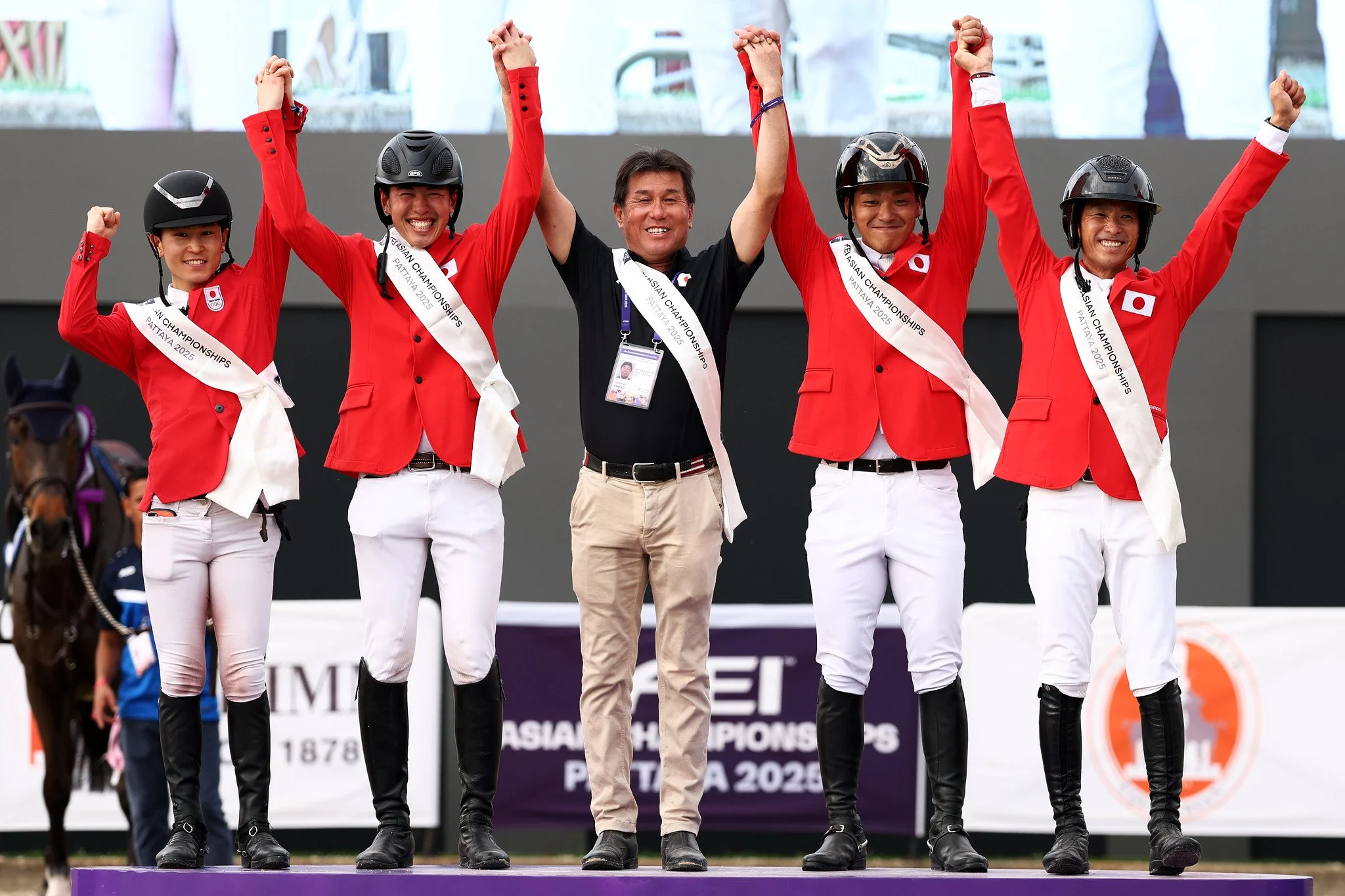
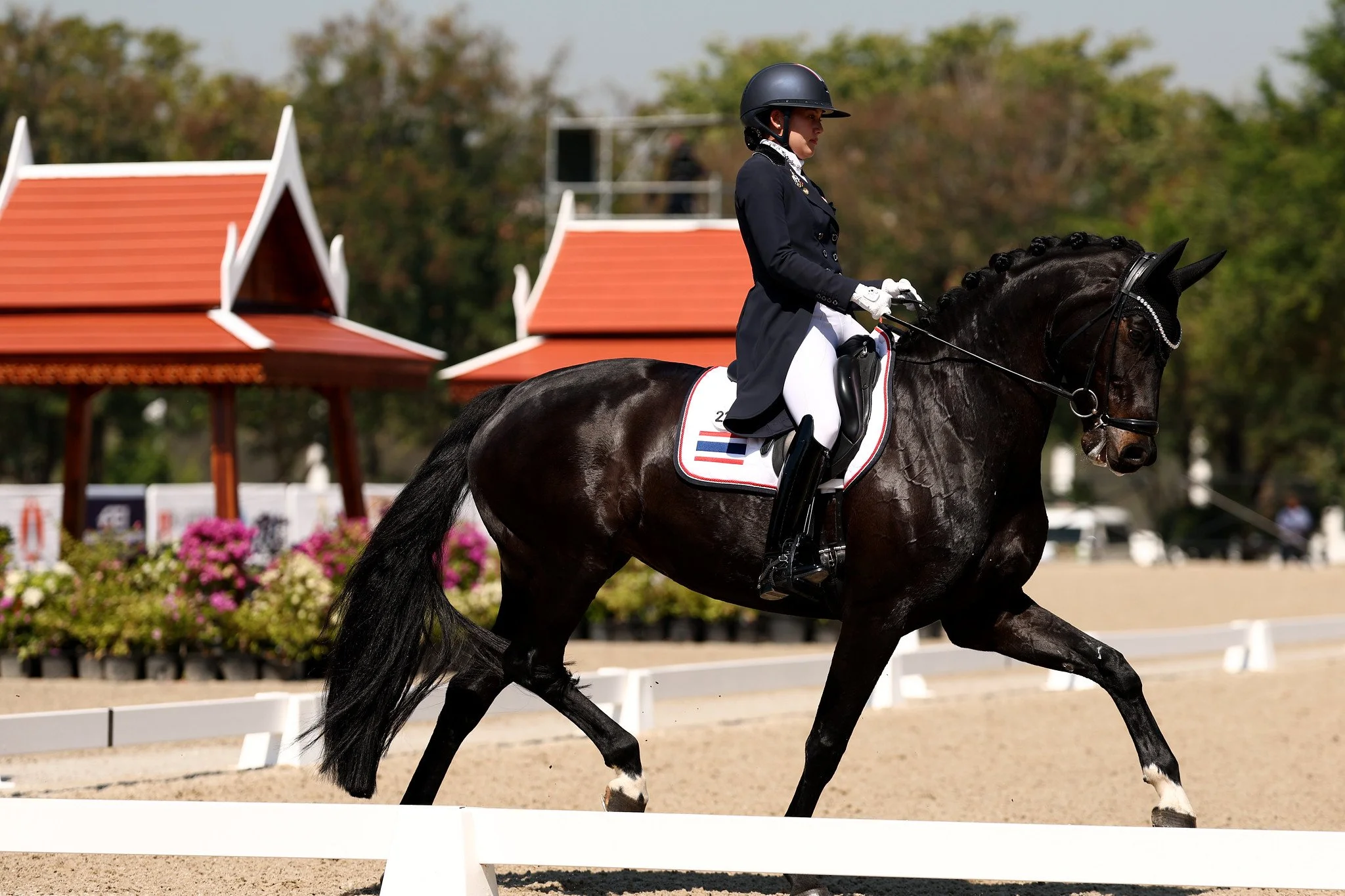
Images Left to right: 1. Ashish Limaye of India riding Willy Be Dun during the eventing cross-country test at the Thai Polo Club on December 2nd. 2. Kei Okubo, Kazuki Takizawa, chef d'Equipe Yoshihiro Nakano, Tomoki Koshidaka and Taizo Sugitani of Japan celebrate winning jumping team gold on December 5th. 3. Pakjira Thongpakdi of Thailand riding Samira O during the dressage freestyle individual championship at the Thai Polo Club on November 30th, 2025 in Pattaya, Thailand. ©FEI/Yong Teck Lim
The Rise of Asia on the World Stage
Bond is unequivocal: The next five years will see greater Asian presence - and greater Asian competitiveness - on the global stage. With nations like China, Thailand and Japan already making Olympic appearances and even reaching the podium, the trendline is unmistakable. But the momentum doesn’t rest solely on elite sport.
Asia’s federations are heavily investing in youth, widening the base of the pyramid and creating space for more riders to develop earlier and with better support. Combine that with the ongoing push to improve intra-Asian horse movement - currently restricted by complex protocols - and the region has the potential to create its own robust competitive circuit.
And that matters. If Asia can host more Olympic qualifying events, develop strong domestic circuits and keep athletes based closer to home, a new fan base grows, local industries strengthen, and the sport embeds itself culturally in ways Europe has enjoyed for decades. This isn’t a prediction - it’s the direction of travel.
Why the World Should Be Paying Attention
Asia is no longer “up and coming.” Asia is arriving - disciplined, collaborative and increasingly influential. For brands, investors, governing bodies and stakeholders seeking alignment with the future of equestrian sport, the message is simple: Watch Asia. Engage with Asia. Learn from Asia.
The rest of the world may soon find itself taking cues from a region that, as Amanda Bond reminded us at the Championships, has not lost sight of the value of unity, progress and community - all while chasing world class performance.