Moody Lifts the Roof Off the Dickies Stadium in the Zen Elite FEI Dressage World Cup™ Final Title
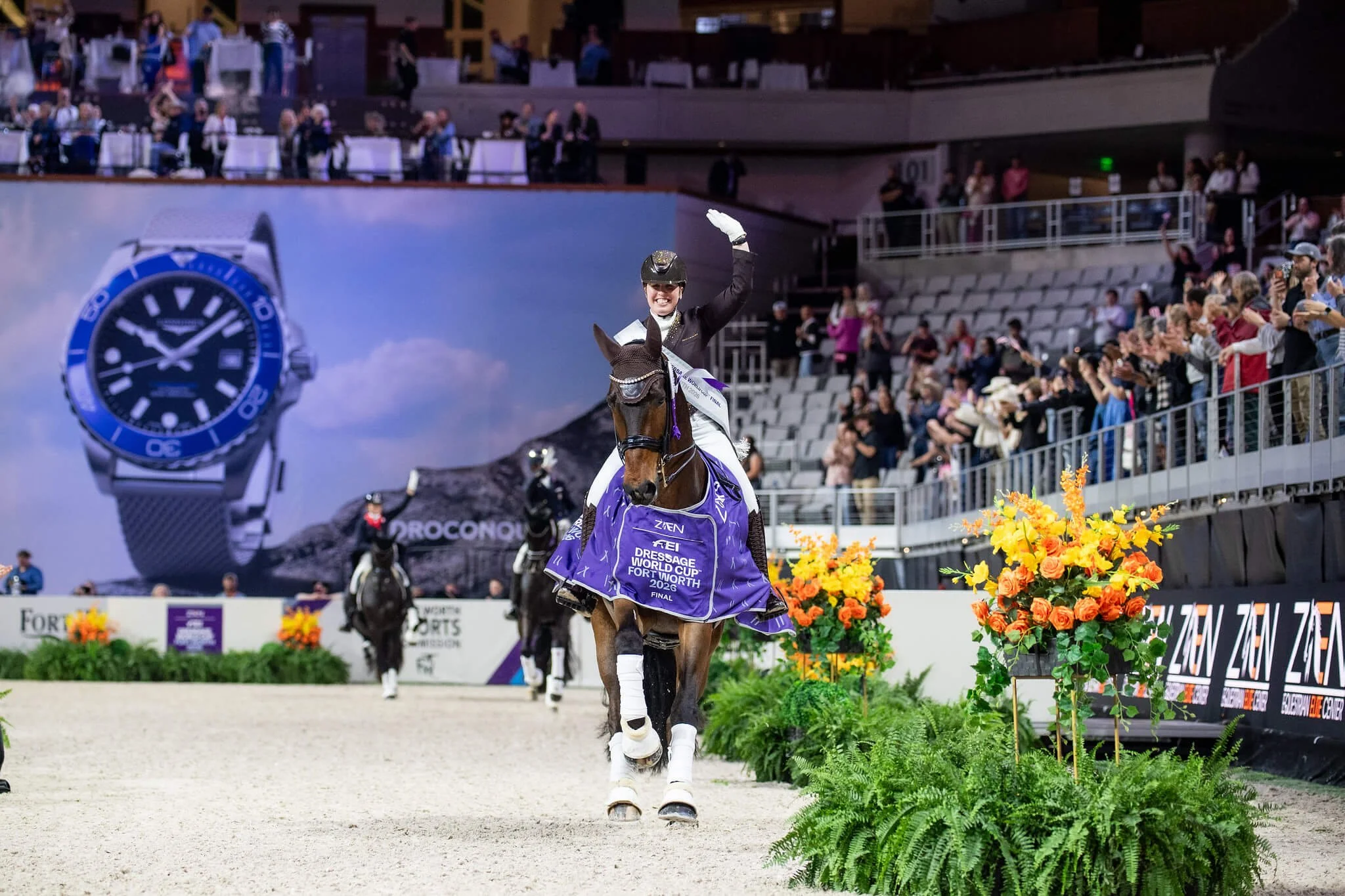
After setting the standard in the Grand Prix, Becky Moody (GBR) and Jagerbomb returned in the Grand Prix Freestyle with a performance that did not alter their approach but extended it. Where the opening day required control, the final phase required the ability to add expression without compromising finesse and harmony. The result was a personal best score of 88.830%, securing the title at their first World Cup Final appearance.
The distinction across the class was not in technical difficulty, but in how that difficulty was presented. A freestyle offers the opportunity to choreograph around strengths, but it does not remove the requirement for accuracy. Moody’s test maintained the same clarity seen earlier in the week, with the added dimension of power and elasticity carried more consistently through the work.
The atmosphere inside Dickies Arena played a visible role. A crowd of over 6,000 created an environment that could influence focus as much as performance, yet the partnership remained unaffected. Moody acknowledged the scale of the occasion, describing the experience as overwhelming in front of a full crowd, and pointing to the energy inside the arena as a defining part of the week. The same qualities that placed them at the top after the Grand Prix, control, consistency, and clarity, were carried forward, with the freestyle allowing those elements to be expressed at a higher level.
Behind her was USA’s Christian Simonson and Indian Rock, who produced a performance that reinforced the trajectory already established on day one. Scoring 83.810%, the combination secured second place in what was both a personal best and a defining result for a first senior championship.
The structure of the test reflected a deliberate narrative, built around the horse’s power and presence, while maintaining the same level of technical clarity that had placed them in contention from the outset. Simonson described the moment in terms that reflected both the result and the context, pointing to the atmosphere and the reception from the home crowd as something that would remain with him beyond the competition itself.
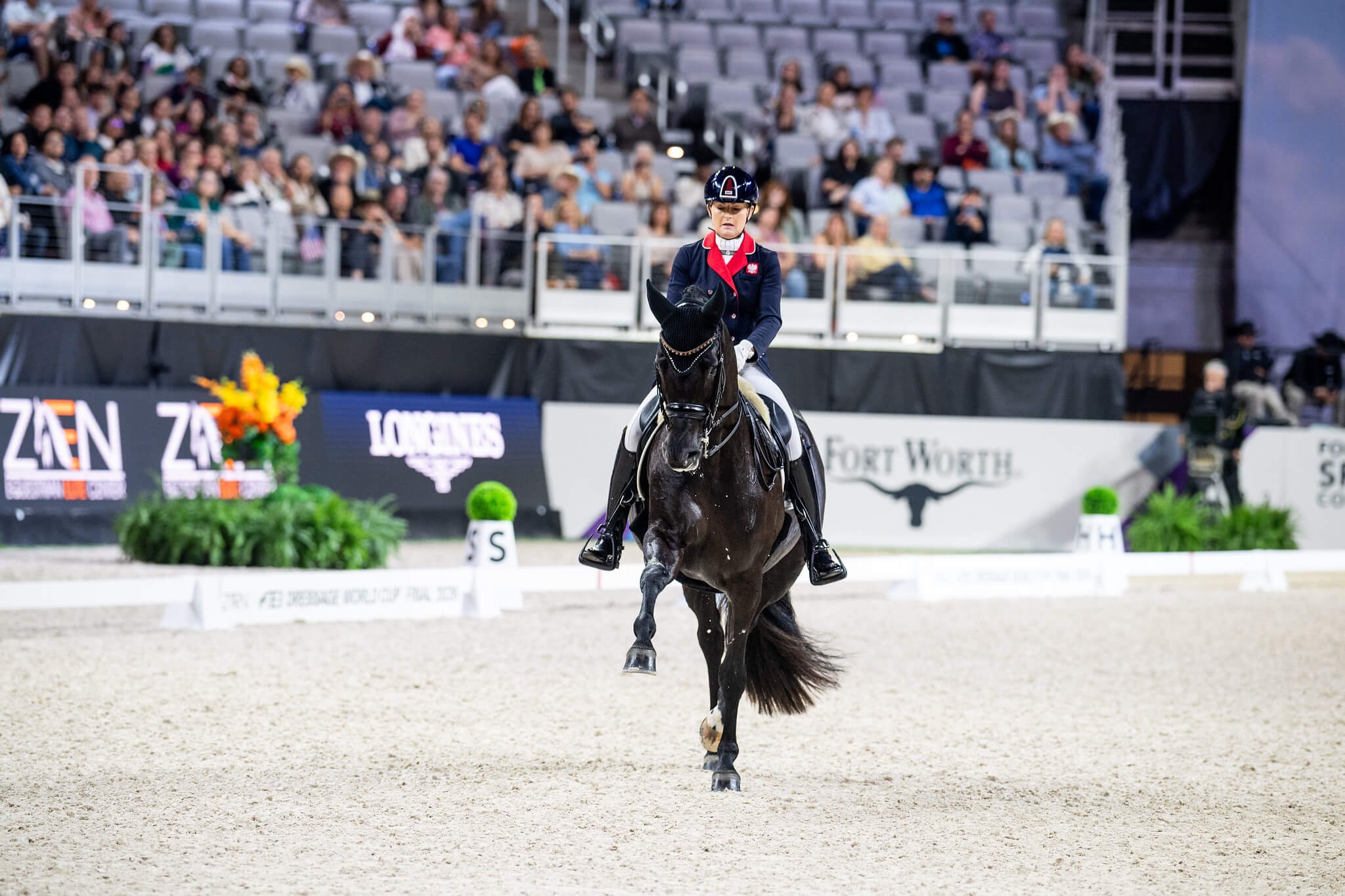
In third, Sandra Sysojeva (POL) and Maxima Bella scored 80.770%, delivering a test that balanced expression with control, though without quite matching the consistency of the leading two combinations. Patrik Kittel (SWE) and Touchdown, who had remained within reach after the Grand Prix, finished just outside the podium on 80.260%, reinforcing how narrow the margins remained across the leading group.

Images: © FEI/Shannon Brinkman
A Final Defined Early
The structure of the World Cup Final ensures that the freestyle resets the scores, but it does not reset the context. What was established on the opening day in Fort Worth carried through to the final phase, and combinations that were able to maintain calm under pressure in the Grand Prix were those that were able to build on it in the freestyle. The difference was not created in a single movement or moment, but across the ability to sustain quality as the demands of the test increased.
For Moody and Jagerbomb, the result reflects more than a single performance and confirms a progression that has been built through consistency rather than reliance on peak moments. The partnership, developed over time and grounded in familiarity, with Jagerbomb being bred by Becky and her family, allowed for a level of control that remained unchanged as the stakes increased. For the wider field, the pattern is equally clear. The World Cup Final remains a competition where position is established early, even if the format suggests otherwise.
Beyond the Result
The outcome in Fort Worth closes one phase, but it also establishes the next.
For Moody, the focus now shifts towards future championship selection, with this result reinforcing her position within the British system. For Simonson, the week represents a transition point, from emerging contender to established presence at international championship level.
More broadly, the final reflects the direction of the sport itself, with a continued emphasis on partnerships that combine technical accuracy with visible harmony, and on performances that can sustain both under pressure. From a communications perspective, and in line with ongoing industry discussions, there has been a noticeable shift in sentiment throughout the week. EQuerry Co’s tracking of digital and media sentiment during the Final indicates an increase in positive engagement around dressage, particularly in relation to clarity of training, partnership, and presentation.
This is a relevant change, as perception does not shift in isolation but follows what is consistently shown and understood. Fort Worth did not redefine the sport, but it has absolutely contributed to defining how modern dressage is interpreted by its audience.

Images: © FEI/Shannon Brinkman