A New Rhythm: Dressage Under Lights at Jumping International de Bordeaux 2026
For years, the Jumping International de Bordeaux has been defined by its prime-time Jumping and late-night Driving spectacles. But in 2026 something more subtle, and potentially more strategic, unfolded beneath the arena lights as dressage made its way into the programme. Not as a sideshow, nor as a filler between jumping classes, but as a prestigious CDI4* integrated into the core of Bordeaux, signalling a deliberate claim on the indoor season’s cultural territory. In one season, Bordeaux moved from being a world-class jumping stop with compelling extras to a genuine multi-discipline equestrian weekend where the three Olympic disciplines, Jumping, Dressage, and Eventing, now have high-level competitive homes.
A Strategic Statement, Not a Novelty Add-On
Organisers and the FEI’s own listings were intentional with language from the start - “very first time”, “prestigious CDI4*”, “three Olympic disciplines”. That is not the phrasing of a footnote; it signals institutional intent. By placing a CDI4* Grand Prix and Freestyle inside the main arena schedule, Bordeaux has given dressage a stage it never had here before. Rather than presenting it as an occasional feature wrapped around Jumping, the event now treats dressage as a headline discipline in its own right, afforded comparable production values and competitive prominence.
Crucially, the debut arrived with immediate sporting meaning. The CDI4* was built around a deliberately compact, hand-picked field of internationally active combinations rather than a broad open entry. Twelve riders contested Thursday’s Grand Prix, representing France, Australia, Brazil, Portugal, Belgium, the Netherlands, Denmark, Spain and Poland, underlining Bordeaux’s intent to attract genuine international dressage profiles rather than treat the class as domestic filler.
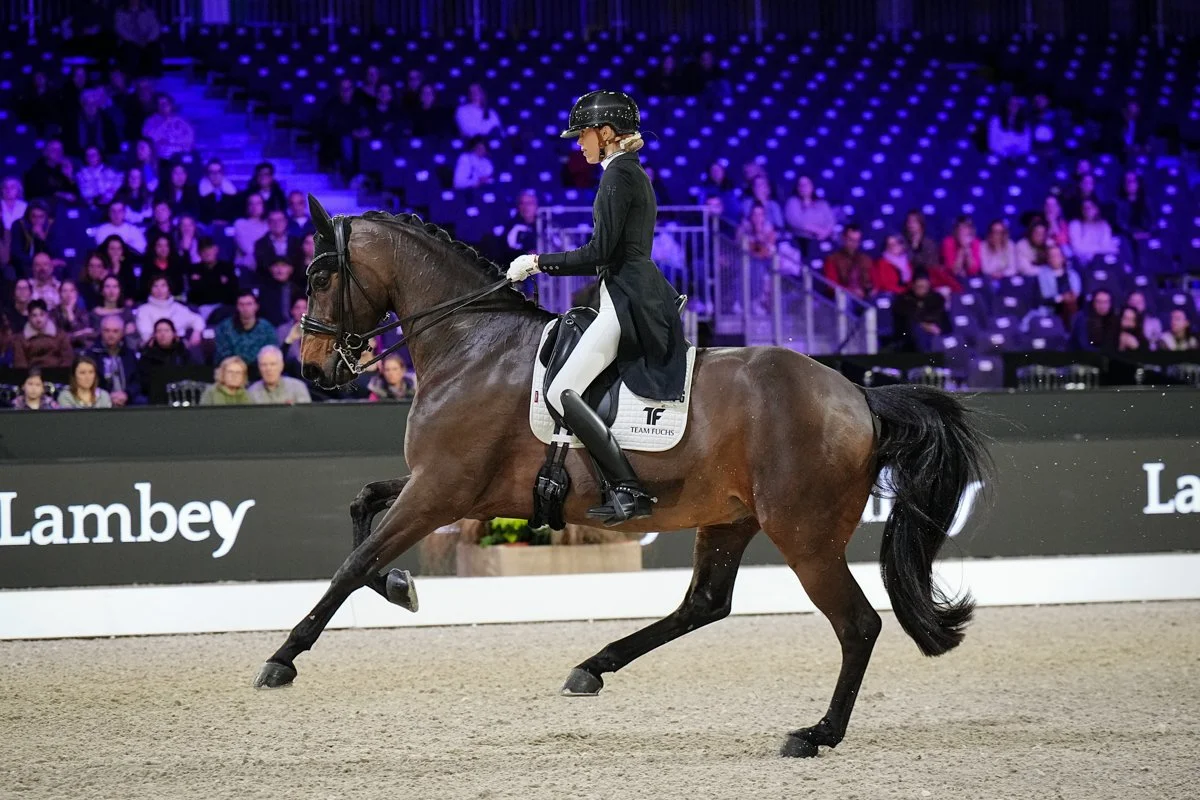
Simone Pearce claimed the opening victory aboard Will Marq. Image: ©Artiste Associe
Thursday’s Grand Prix set the tone straight away, and the margins at the top were tight, reinforcing that this was a performance-driven class rather than a ceremonial debut. Australia’s Simone Pearce claimed the opening victory aboard Will Marq with 71.130 percent, narrowly edging France’s Pauline Basquin on Sertorius de Rima Z Ifce on 71.065, while Brazil’s João Victor Marcari Oliva placed third with Feel Good VO NRW on 70.522.
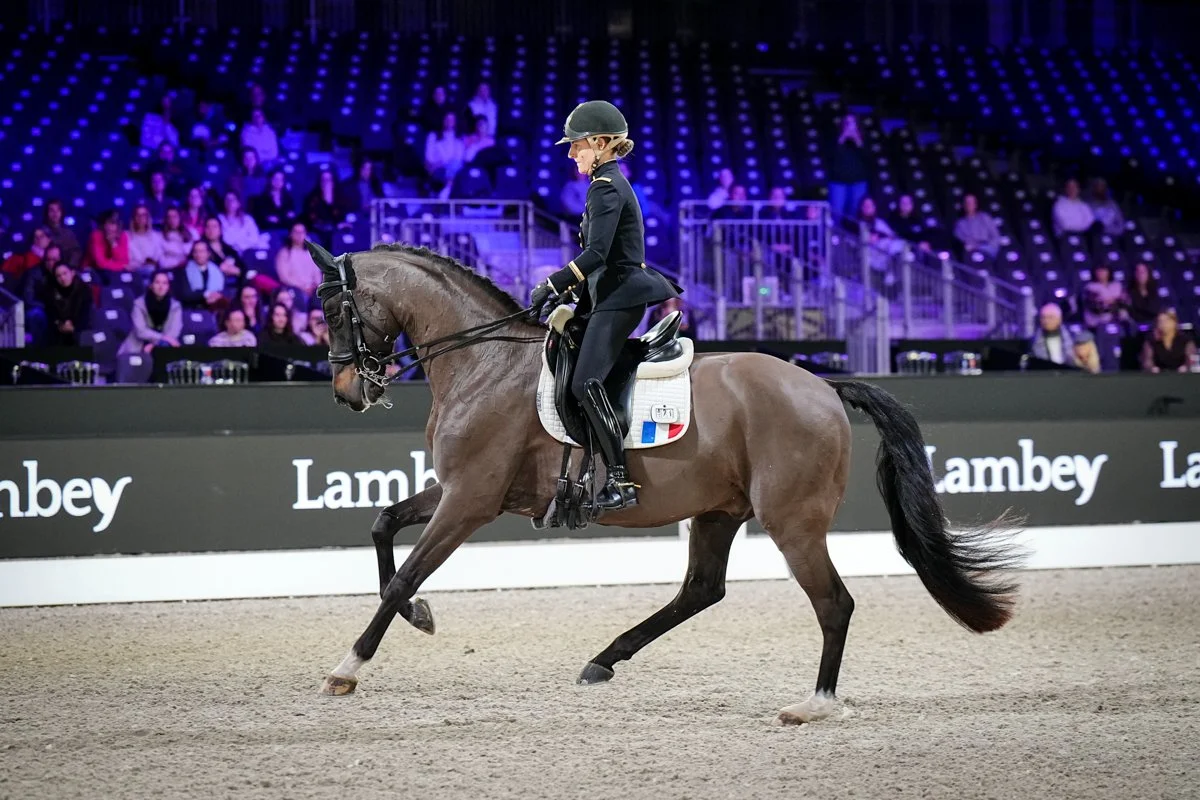
Pauline Basquin and Sertorius de Rima Z Ifce. Image: ©Artiste Associe
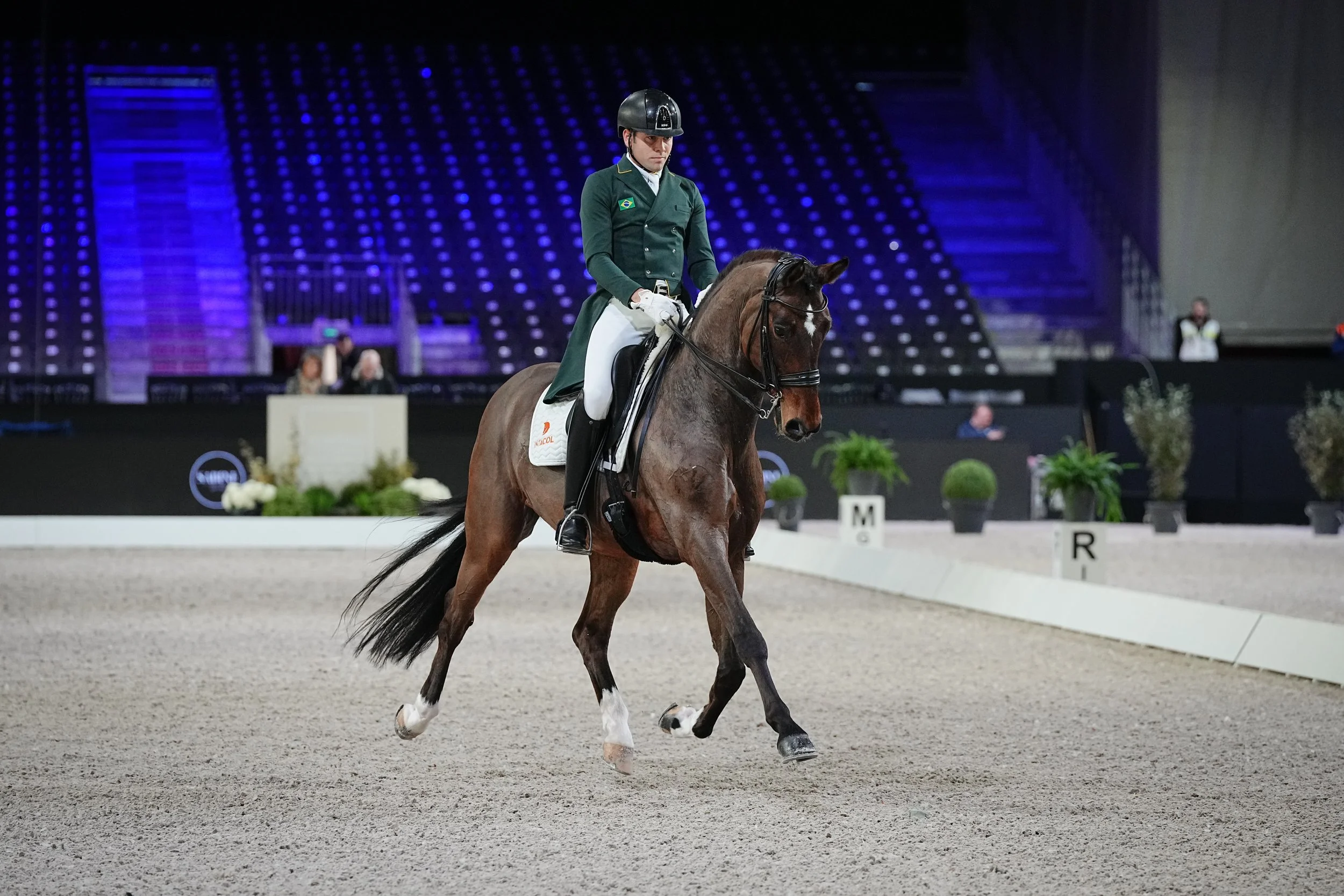
João Victor Marcari Oliva and Feel Good VO NRW. Image: ©Artiste Associe
Friday’s Freestyle reshuffled the order again. Basquin returned to take victory on Sertorius de Rima Z Ifce with 80.465 percent, followed by Portugal’s Maria Caetano on Hit Plus with 77.530, while Oliva once more finished third on Feel Good VO NRW with 76.900. Across the two tests, Pearce, Basquin, Oliva and Caetano traded podium places, highlighting both consistency and competitive volatility within the field.
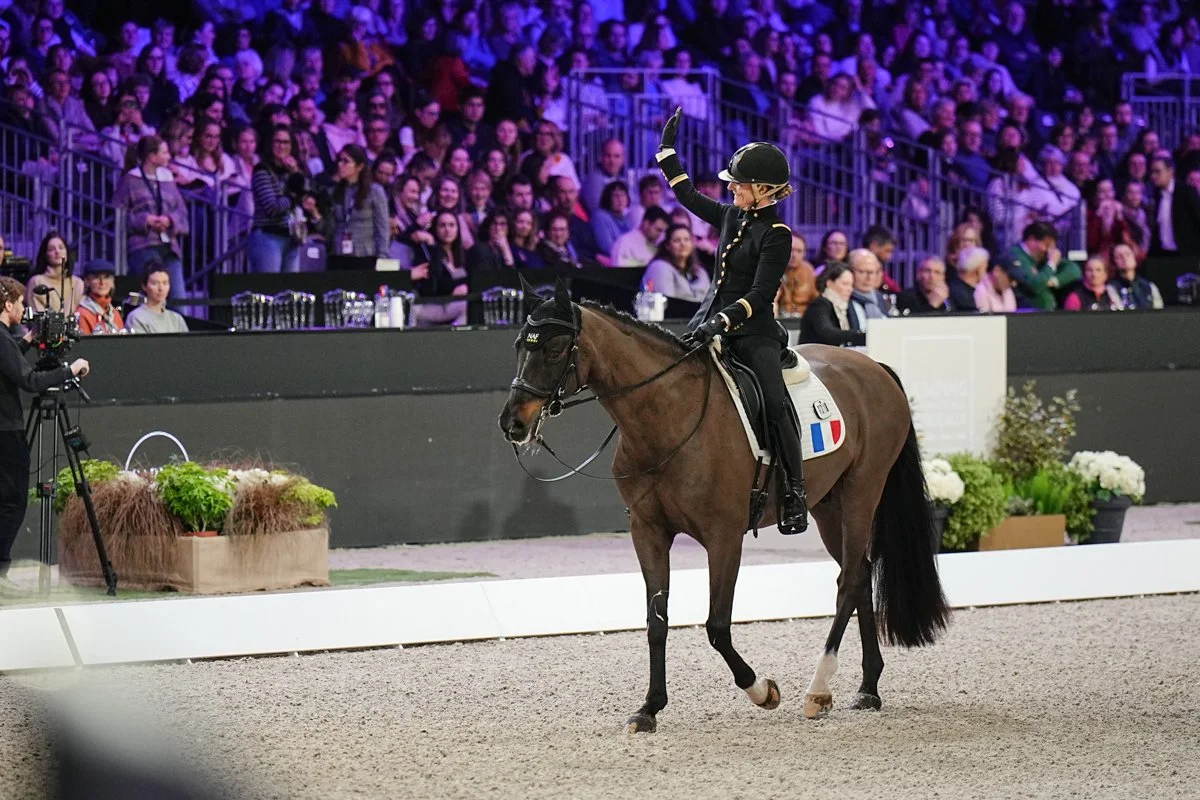
Basquin returned to take the victory on Sertorius de Rima Z in Fridays Freestyle. Image: ©Artiste Associe
Beyond the headline placings, the start lists revealed a blend of established Grand Prix campaigners and developing partnerships. Riders such as Jorinde Verwimp (BEL), Milou Dees (FRA), Mathilde Koefoed-Nielsen (DEN) and Alexandre Ayache (FRA) brought horses with established international mileage, while others used Bordeaux as a strategic indoor outing ahead of the outdoor season. Ten combinations returned for Friday’s Freestyle, reinforcing the organisers’ hand-picked field approach and confirming that Bordeaux was positioning dressage as a serious competitive pillar rather than a high-volume showcase.
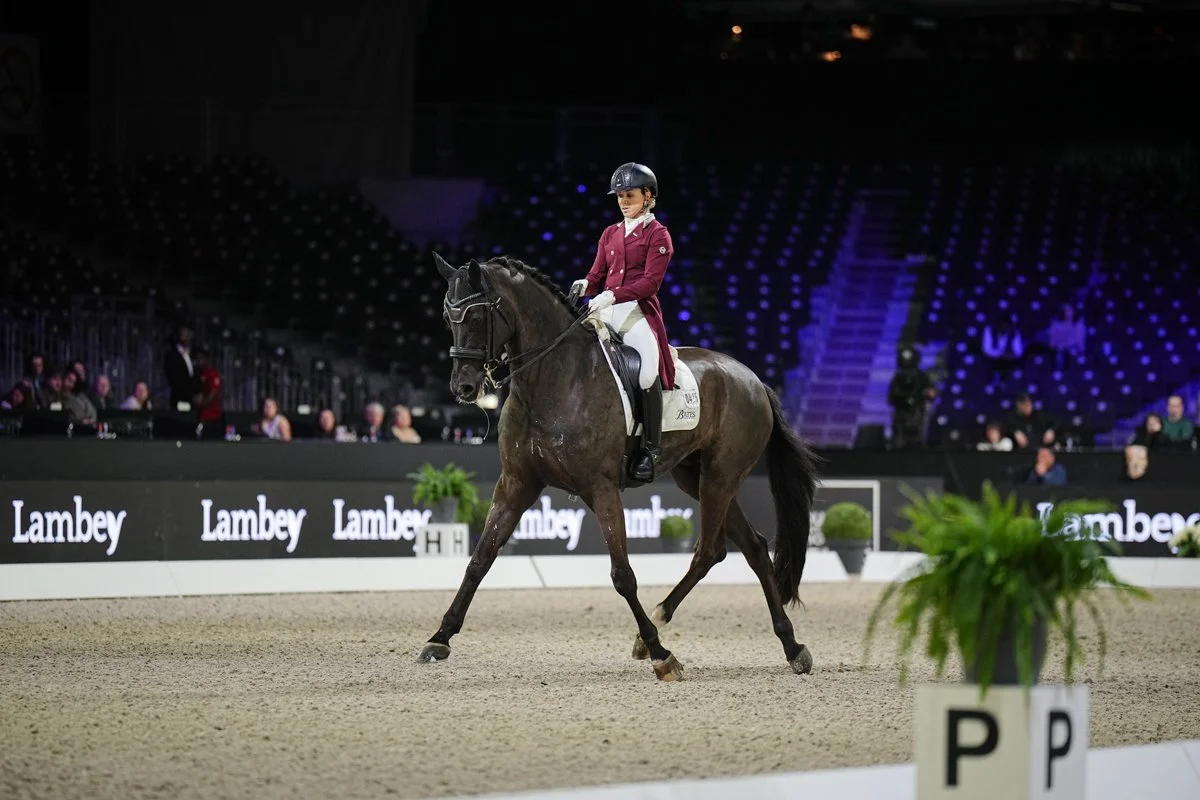
Maria Caetano and Hit Plus took second place in the Freestyle, ahead of Brazil’s Oliva. Image: ©Artiste Associe
Taken together, the two days of results made the direction clear: A small, high-quality field, tight scoring at the top, and repeat podium contenders across nations. For Bordeaux’s first international dressage edition, it delivered exactly what the organisers had signalled from the outset - elite sport with immediate relevance to the wider indoor season.
Bordeaux’s Three-Discipline Milestone
On the surface, the addition of a CDI4* might read like a scheduling detail. In practice, it changes how Bordeaux functions as a sporting event.
Jumping has long been the headline, capped by a prime-time Longines FEI Jumping World Cup™ class that defines Saturday night. Now dressage introduces a formal competitive arc of its own, from Grand Prix to Freestyle, at a level that matters in rankings and careers.
And then there is eventing. Bordeaux’s Devoucoux Indoor Derby offers a distinct indoor interpretation of cross-country, stretching roughly one kilometre and using not just the main arena but adjoining spaces. It has been part of the programme for years, demonstrating that eventing too can be reshaped for an indoor audience without losing its sporting integrity.
Taken together, Jumping, Dressage and Eventing now sit side by side on the Bordeaux programme for the first time, completing the trio of Olympic equestrian disciplines under one roof. Driving, with its own World Cup Final, adds a fourth elite pillar, reinforcing Bordeaux’s broader identity as a multi-sport indoor showcase.
The result is a show no longer positioned simply as a stop on a circuit, but increasingly framed as an indoor equestrian multi-sport weekend.
Why Bordeaux is Bigger than its Classes
Part of what allows this transition to land is Bordeaux’s broader structure. The show operates less like a single sporting fixture and more like an equestrian festival, with large attendance numbers, extensive exhibitor space, multiple arenas and hundreds of horses, ponies and riders across the site. Elite sport unfolds alongside consumer, education and entertainment programming, creating a setting where disciplines naturally intersect.
That wider framework allows Bordeaux to act as an industry barometer, connecting top-level competition with the horse-business marketplace, from equipment and care to transport and education. It also functions as an access point, where elite sport, amateur finals and youth competition coexist across the same weekend, shaping crowd composition and widening engagement.
Atmosphere plays its part too. Bordeaux is repeatedly described as a venue where crowds elevate the sport, where noise builds as performances peak, and that energy was carried into the dressage as much as it always is for the Jumping or Driving. This is not a quiet afternoon class tucked between bigger moments - it is dressage staged inside the same vibrant, festival-scale environment.
This, in turn, made dressage a statement, not a footnote, as part of the Bordeaux programme. Because the way it was integrated was not marginal, secondary or complementary; it was positioned, presented and contested at a level that gave it equal weight within the programme. Bordeaux knows its place in the indoor season, and it is making room for every Olympic discipline on its own terms.