
How Advanced Reproductive Technologies are Reshaping Equine Value
Across the global sport-horse sector, demand for high-quality young horses is rising while foal crops in major breeding regions continue to contract. At the same time, emerging buyer groups - particularly across Asia and the Middle East - are entering the market earlier and with notable purchasing power.
Advances in reproductive technologies offer breeders timely ways to meet this shifting demand. These tools expand access to elite genetics, support more flexible breeding strategies, and are reshaping where economic value begins. Increasingly, value is established at the genetic stage, long before a horse ever enters training.
The coming years present a meaningful upside for breeders who understand and adapt to these converging trends.
The Global Demand Shift
International buyers are reshaping auction dynamics. Recent European and American auctions illustrate a pattern of international buyers driving momentum.
Recently, buyers from China and the Gulf states have played an increasingly visible role in achieving near-record totals at high-profile sales. Their interest spans foals, yearlings, young riding horses, as well as embryos and frozen genetics.
In the U.S., the presence of Chinese buyers at major sales such as Keeneland continues to grow and auction data shows that buyers from China and other emerging horse nations are increasingly participating in European sport-horse sales. This activity signals a broader, long-term investment in developing their competitive equestrian sport. These buyers are not easing in - they are committing early and decisively.
China’s market expansion signals durable demand. Between 2015 and 2020, China experienced rapid growth in riding clubs and imported horses, with its broader horse industry now valued at approximately $1.58 billion. The country continues to expand infrastructure, coaching, and competitive opportunities, suggesting sustained demand over the long term.
This influx of motivated, international buyers strengthens overall market resilience and broadens the opportunities available to breeders worldwide. While global markets naturally fluctuate, the multi-year growth trajectory in these emerging equestrian nations stands out as a meaningful long-term signal.
The Shrinking Traditional Supply Pipeline
While global demand grows, foal registrations in key breeding regions have been trending downward. The breeding department of the German Equestrian Federation reported a steep decline in breeding statistics. The number of broodmares fell from 52,276 to 50,195 (-4%), while the number of newly registered foals went down from 28,600 (in 2023) to 25,549 (2024). Taking into account that the total amount of coverings registered in 2024 is 23,809, this will entail a 20% drop in foals born in two years.
In Sweden, a significant decline in mares covered was reported. In the Netherlands, KWPN reports a “systemic drop” in breeding participation with 10,500 foals registered in 2024, down from around 11,500 in 2022. Despite small fluctuations in in some breeds, the downward long-term trend reflects a meaningful contraction in the supply of future young horses.
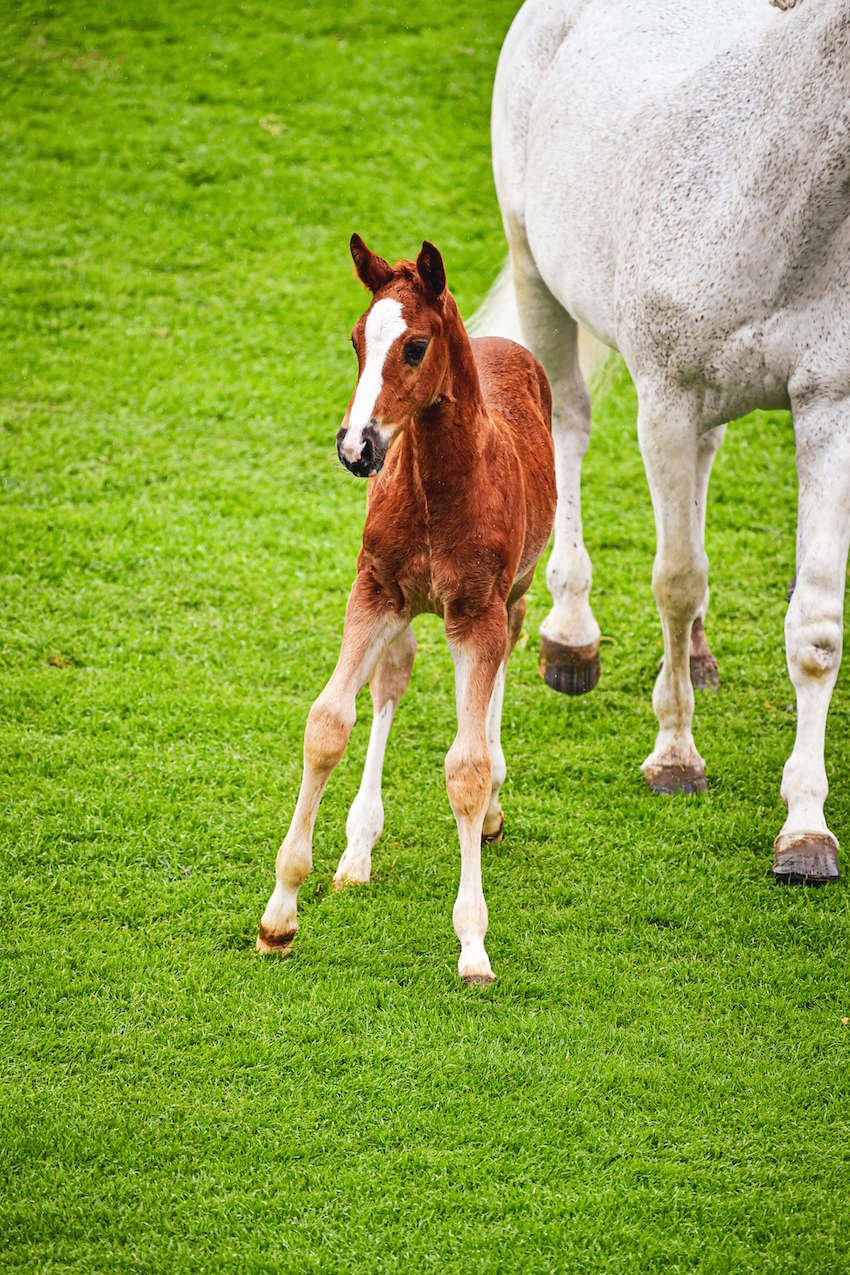
Image: Morgan Froment for EQuerry / Co
A smaller foal crop supports stronger future valuations. Foals born between 2020 and 2024 become the 4- to 7-year-old sport prospects of 2025–2031. That cohort is already smaller. If demand continues to rise - as current indicators suggest - competition for young performance horses will tighten. With fewer young horses available, quality prospects are positioned to command stronger prices.
This anticipated supply-demand imbalance creates a favorable environment for breeders producing well-bred young stock.
Technology Steps Into the Gap: ART redefines “Equine Assets”
Advanced reproductive technologies expand what breeders can produce. Embryo transfer, ICSI, oocyte harvesting and storing, frozen embryos, and cloned genetics have moved from niche uses into more mainstream breeding strategies. (It should be highlighted that ethical considerations relating to ART are important, but outside the scope of this market-focused analysis.)
Breeders use these tools to maximize elite mare lines, preserve genetics, and increase production flexibility. Online platforms now list frozen embryos and genetics alongside foals and started horses, underscoring that genetic material has become a commercially accepted, legitimate and competitive category.
A rapidly expanding ART market strengthens long-term opportunity. The global equine AI/ART sector was valued at approximately $648 million in 2024 and is projected to exceed $1 billion by 2033. Improving technology and rising success rates make ART increasingly efficient and economically attractive.
From an equine appraiser standpoint, the shift is already evident. Assignments involving frozen embryos, oocytes or clones have been increasing rapidly in the last couple of years. This is already shaping valuation methods, as frozen embryos or oocytes require different valuation criteria compared to live foals. Value is being established earlier in the lifecycle. Where value once depended on physical development and early performance, it is now created at the genetic stage. This evolution rewards breeders who integrate ART effectively as they can scale their programs and access international buyers without expanding herd size.
Ripple Effects: What the Industry Hasn’t Fully Addressed Yet
Recipient mare and infrastructure capacity will shape growth. Demand for embryo transfer and ICSI is likely rising faster than access to quality recipient mares and specialized reproduction teams. While this creates short-term logistical pressure, it also opens new opportunities for breeding centers capable of scaling recipient herds as well as regions with strong reproductive infrastructure. Early partnerships with reliable repro facilities will be an advantage.
Genetic concentration creates opportunity for differentiation. As ART amplifies the influence of elite sire and dam lines, breed populations inevitably become more concentrated. Economically, this heightens the future value of underrepresented mare lines. Breeders who protect or develop these dam lines may hold uniquely valuable assets as the market continues to globalize.
This shift is not replacing traditional breeding but rather expanding the commercial tools available to breeders in a global marketplace. The growing international trade of frozen embryos and genetics points to a more investment-oriented, sophisticated and data-driven sport-horse economy. With consistent documentation and transparency, breeders can confidently participate in these expanding segments.
What Breeders Should Prepare For (3–5 year Horizon)
Stronger prices for 4- to 7-year-old horses: Shrinking foal crops paired with expanding demand create favorable conditions for sellers. Particularly for high-quality, well-started prospects, the tightening pipeline is likely to support stronger pricing.
Growing access to international buyers: Breeding decisions should consider a global marketplace, not just domestic demand.
Efficient use of ART to meet demand: Advanced reproduction provides scalability and flexibility for breeders positioned to take advantage of market momentum.
Strategic focus on mare lines: Even with studbooks managing diversity through selection criteria, economic concentration still increases demand for distinctive or underrepresented mare lines.
Early partnership with reproduction facilities: Securing access to recipient mares and skilled reproductive teams will influence how effectively breeders can expand.
Overall, the sport-horse breeding industry is entering a period defined by opportunity, innovation and strong commercial potential. Global demand is rising, supply is tightening, and reproductive technologies are reshaping how value is created and traded. Breeders who combine traditional breeding with modern tools and strategic planning will likely be well-positioned to benefit.
Looking at current market trends, the future of equine value is dynamic, technology-driven, and increasingly global. Breeders who adapt early will be in the strongest position to help shape and profit from this next era of sport-horse breeding.