Breeding for the Future: A Conversation on Data, Resilience and the Modern Sport Horse
In modern horse breeding, the conversation around success is increasingly shifting beyond results alone. Breeding decisions, long-term strategy, and the ability to produce horses for a changing global sport are becoming just as important as what happens in the ring.
In this conversation, we speak with Johanna Catani on her perspectives, as she reflects on the realities of building a breeding programme, the impact of globalisation on sport horses, and why resilience, observation, and better use of information will be central to producing the next generation of elite horses. Originally from Finland and now based in the Netherlands, she has built her approach around careful breeding, long-term thinking, and a deep understanding of how the sport is evolving. Working from a base in what many consider the epicentre of sport horse breeding, she combines practical experience with a strong interest in data, systems, and the future direction of breeding.
To begin, tell us a little bit about yourself, your background, and how you came to be based in the Netherlands.
“I originally come from Finland, and my background is in trotting horses. My great-uncle and grandfather were both passionate horsemen, but breeding has always been more of a side pursuit in our family. I have followed the same path and family philosophy: earn your living elsewhere so you can afford the luxury of patience, something essential when aiming to breed quality horses.
As the first person in my family to become involved in show jumping, I wanted to come to the Netherlands to learn about quality sport horses and good breeding. My first trip was about twenty years ago, and the first village I arrived in was Asten in North Brabant. We bought a pony for our daughter through Piet Rijmakers. During that trip, we built relationships with horse owners, veterinarians, and riders, connections we still maintain today.
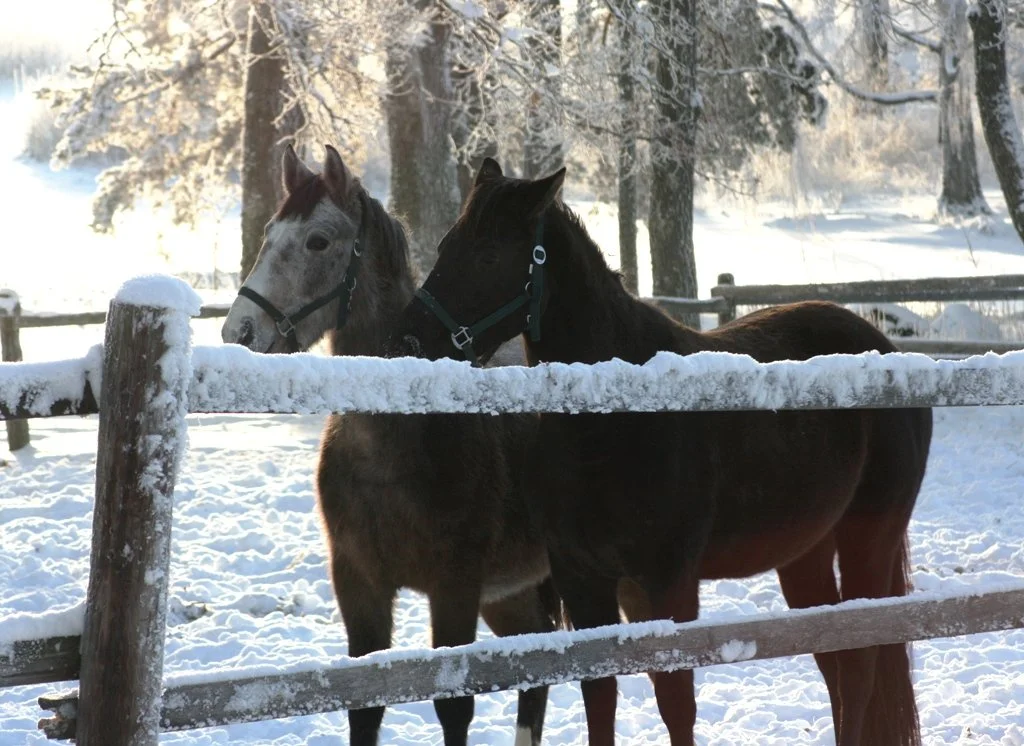
Horses being horses - young mares at turnout. Image: Catani Sporthorses
Over the years, we continued returning to the area to buy horses, meet breeders, and attend shows. I still remember my first visit to Nijhof. Jeanette Nijhof let me take Concorde out of his stall and took a picture of us. It felt like meeting Bruce Springsteen, only better.
Little by little, we began buying foals and keeping our young horses mainly here in the Netherlands. Our goal was to start breeding from one of our top sport mares, Ruby B Z (Rubert R, Cuby Z, Cordano Z), who came from a proven damline and whom we knew well from competition.
The final decision came during Covid, when commuting between two countries became difficult. So we bought a small farm in Asten, settled here, and brought all our horses home.”
Breeding for a Changing Olympic Future
When you think about the future Olympics and the direction elite sport is moving toward, how do we need to breed and produce horses differently than we do today.
“In today’s business landscape, everything moves and changes rapidly, making long-term planning increasingly difficult. Yet in breeding, a true generational cycle spans roughly 25 years, so a long-term perspective is essential. It is important to shut out the surrounding noise and instead look closely at global megatrends and how they influence both the sport and breeding.
In my view, two major forces will shape the future of horse breeding: the global distribution of wealth and the increasingly international nature of our sport.
Wealth continues to concentrate among fewer individuals. From a sporting perspective, this means that only a limited number of very wealthy athletes can afford to reach the top. For small breeders like us, this requires adapting our breeding programmes and business models so that some of this capital flows towards us as well, ensuring our place in the global supply chain. Forming innovative partnerships with riders and owners is one promising route.
At the same time, the sport is becoming ever more global. Horses are now frequent flyers, expected to adapt quickly to new environments. This constant movement significantly affects their welfare and performance, and we need a deeper understanding of these impacts. How do we breed horses that thrive in a global sport, horses that can travel, cope with different climates, adjust to new riders, manage variations in water quality, and handle shifting time zones.
Given these realities, our assumption is that future top-level sport horses must be mentally strong and naturally resilient. By resilience, I mean stamina, the ability to recover quickly and to handle stress and challenges. These are key qualities we look for when choosing mares and stallions for our breeding programme.
Breeding is an exciting venture because you never truly know when success will come. But for me, it becomes even more interesting when guided by a clear framework and system. With that structure, I can continually evaluate the results and decide whether to adjust course or stay on track.”
Rethinking Stallion Selection
In terms of selecting stallions and bloodlines when breeding, what qualities do you prioritise that the industry perhaps undervalued ten years ago.
“When we evaluate stallions, we begin by studying the mares in their bloodlines. We try to gather as much information as possible about the mares going back three to four generations on both sides. We ask many questions. Did they compete in sport, and for how long. How healthy were they. What caused possible injuries. Why did some never enter the sport. How many riders did they have. How many top-level horses did they produce.
A few years ago, we began indexing these assessments. The insights are fascinating, but because our sample size is still small, it is too early to identify clear patterns.
When it comes to collecting and using data to support decision making, the equine industry still operates in a rather old-fashioned way. We should be gathering and analysing far more information, especially about our mares, who provide half of the genetics for every foal. Just recently, I spoke with the administration at my veterinary clinic, and they mentioned that their database does not even include a field for the mare’s name. It is astonishing how much potential insight is being lost.”
Production, Welfare, and Responsibility
Which part of young horse production do you believe must change first if we want longevity, sustainability, and welfare to hold the same value as performance.
“Most important thing is to our whole industry is to embrace the unique The partnership we share with horses is unlike anything we can have with another animal. It is something we should protect fiercely and take pride in. This applies across the entire equine world, from trotting and racing to dressage and show jumping. But to secure true longevity, sustainability, and welfare in our industry, we must first acknowledge that our partnership inevitably exposes horses to discomfort and pain, and we must hold ourselves accountable for that. From a breeder’s perspective, we need to ask how we can reduce or mitigate the discomfort our decisions create and develop the industry accordingly. Once again, better data is essential.
I also believe it is vital to ensure that small breeders and part-time breeders continue to thrive. They bring diversity to breeding by using a wide range of combinations. They are often patient, allowing young horses the time they need to mature. With only a few horses in their care, they can observe them closely from an early age, studying their character, courage, movement, and more, and in doing so, they provide valuable insights that benefit the entire breeding community.”
The Power of Data in Breeding
Image: Catani Sporthorses
Data within breeding have historically been fragmented and inconsistent. In your opinion, what would better, unified databases unlock for the future of sport horse development.
“I am a strong advocate for collecting more data so that our assumptions and arguments can be supported by facts. Data on its own is not particularly valuable. It becomes meaningful only when it is used. Creating open datasets on performance, health, character, and more would have an enormous positive impact on both breeding and sport. In today’s world, gathering data is inexpensive, and the breeding industry should place far greater emphasis on doing so. High-quality data creates value and should be accessible to as many people as possible. Open-access databases would fuel innovation, research, and new business opportunities for everyone. Guesswork, by contrast, is usually expensive.
To support breeding decisions, there are already several datasets available for stallions, and information from mare tests can also be useful. But what we truly need is far more qualitative and quantitative data on mares.
The equine community, studbooks, horse owners, show organisers, veterinary clinics, and the media, could start making simple improvements right away. First, we should call mares by their actual names rather than referring to them simply as a mare by a certain stallion. Second, the mare’s name should appear in every database, whether it is an article in a magazine, a show’s starting list, a clinic’s patient system, or World Cup TV coverage. In a very short time, this would create a comprehensive database of the mares who have produced the horses competing in our sport. This vital information would not only support breeders enormously, but also help bring our sport fully into the modern era.”
Technology, Genetics, and Responsibility
With modern breeding technologies, from artificial insemination to cloning, what are your thoughts around protecting genetic diversity while still selecting for elite suitability and modern demands in sport.
“I am naturally curious about new technologies, and I believe that combining innovation with fact-based reasoning is the way forward. When it comes to embryo transfer, ICSI, and cloning, however, I still need more data and research before I would consider using these methods.
First, I want to understand the actual risk of inbreeding when the same mares are used repeatedly, their descendants are used repeatedly, and no one keeps proper records of the exponential spread of identical bloodlines. Genetic diversity is essential if we want breeding to remain viable for generations to come.
Second, although some research already exists, I would like a clearer understanding of how much discomfort or pain we may be causing mares through procedures such as ICSI or through inducing estrus outside the natural breeding season.”
Reading Potential in Young Horses
From experience, what part of future suitability can you already see, or feel, early in a horse’s development before the sport pathway even begins.
“We all know that breeding a championship horse involves a degree of chance. This is simply because the allocation of genes from the mare and stallion is naturally random. We can try to improve the odds by using top bloodlines, but even then, success is never guaranteed.
Countless variables influence which horses ultimately reach the top. Genetics, environment, management, the right people, timing, and of course, luck.
However, once a foal is born, many early-life indicators can offer insight into its future potential. I believe we should study young horses far more closely during their early development. Systematically observing foals, their movement, behaviour within a group, eating habits, reactions to other horses, and responses to changes in their environment, can provide valuable information. Breeders have been observing their young stock for centuries as part of daily chores. This silent knowledge is incredibly valuable. In the past, it was passed down through generations by storytelling. Today, it would be beneficial to collect these stories more systematically and make them accessible to a wider audience.
In our breeding programme, we have already begun interviewing breeders and gathering observational data from our own foals. It is still too early to draw conclusions or identify patterns, but even now it offers a deeper understanding of the behaviour and unique characteristics of these remarkable animals.”