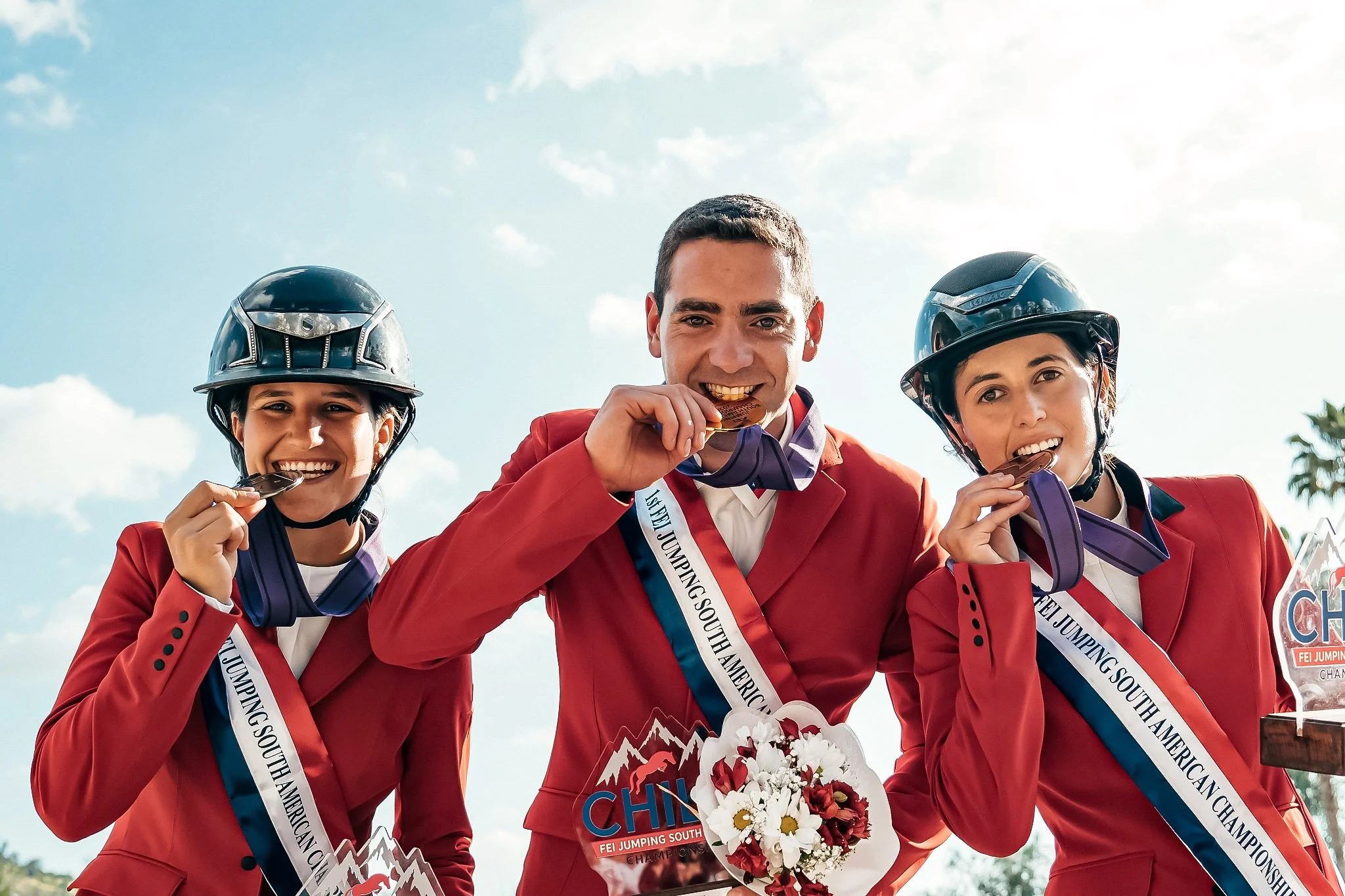
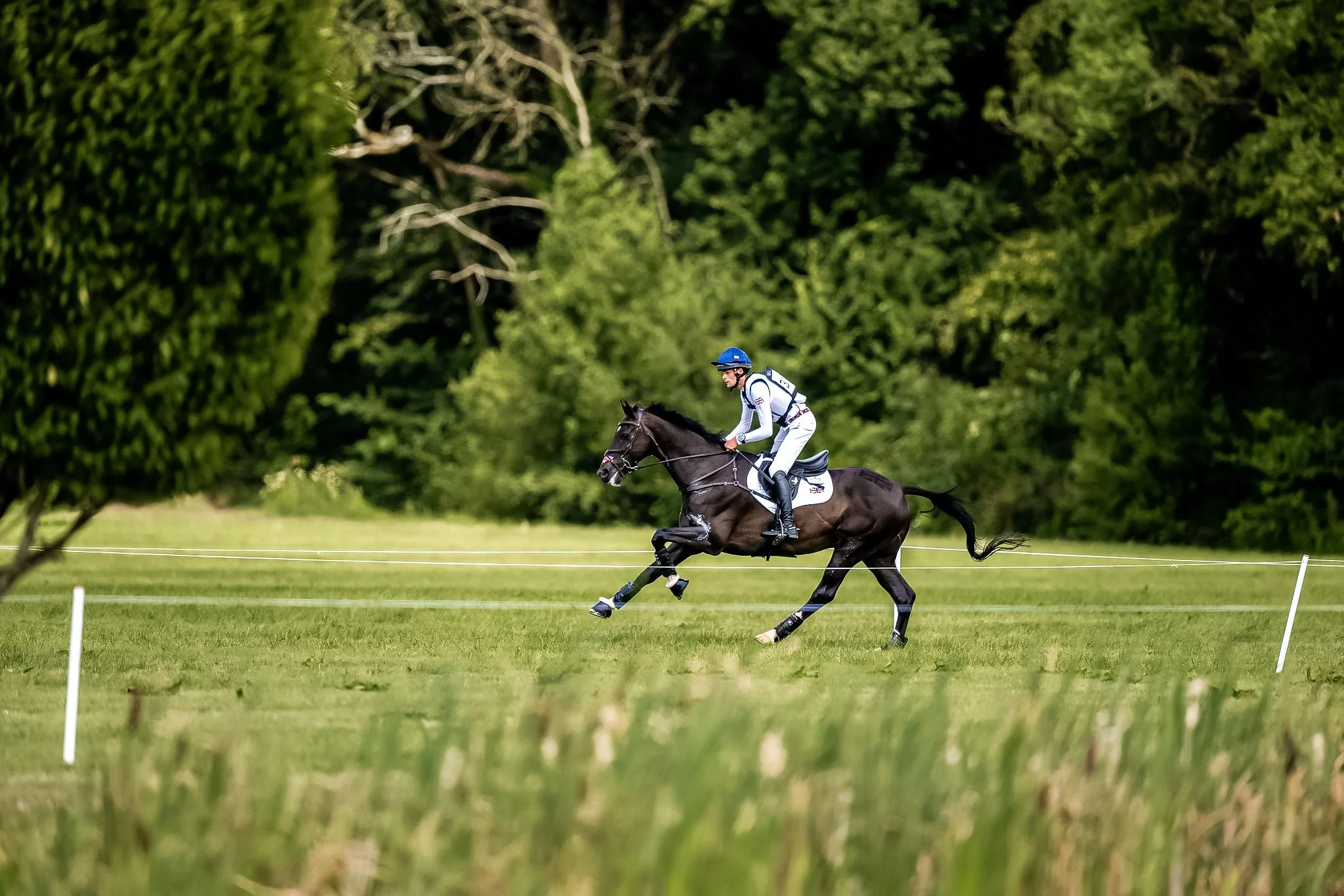
South America's best young jumping riders spent a week in Chile at the end of October, and by the time the final medal ceremony was over, Brazil had taken eleven of the medals on offer, five of them gold.
Individual titles were decided in all four age categories, with team medals awarded in the Pre-Junior and Children divisions only. Brazil won three of the four individual titles and both team championships.
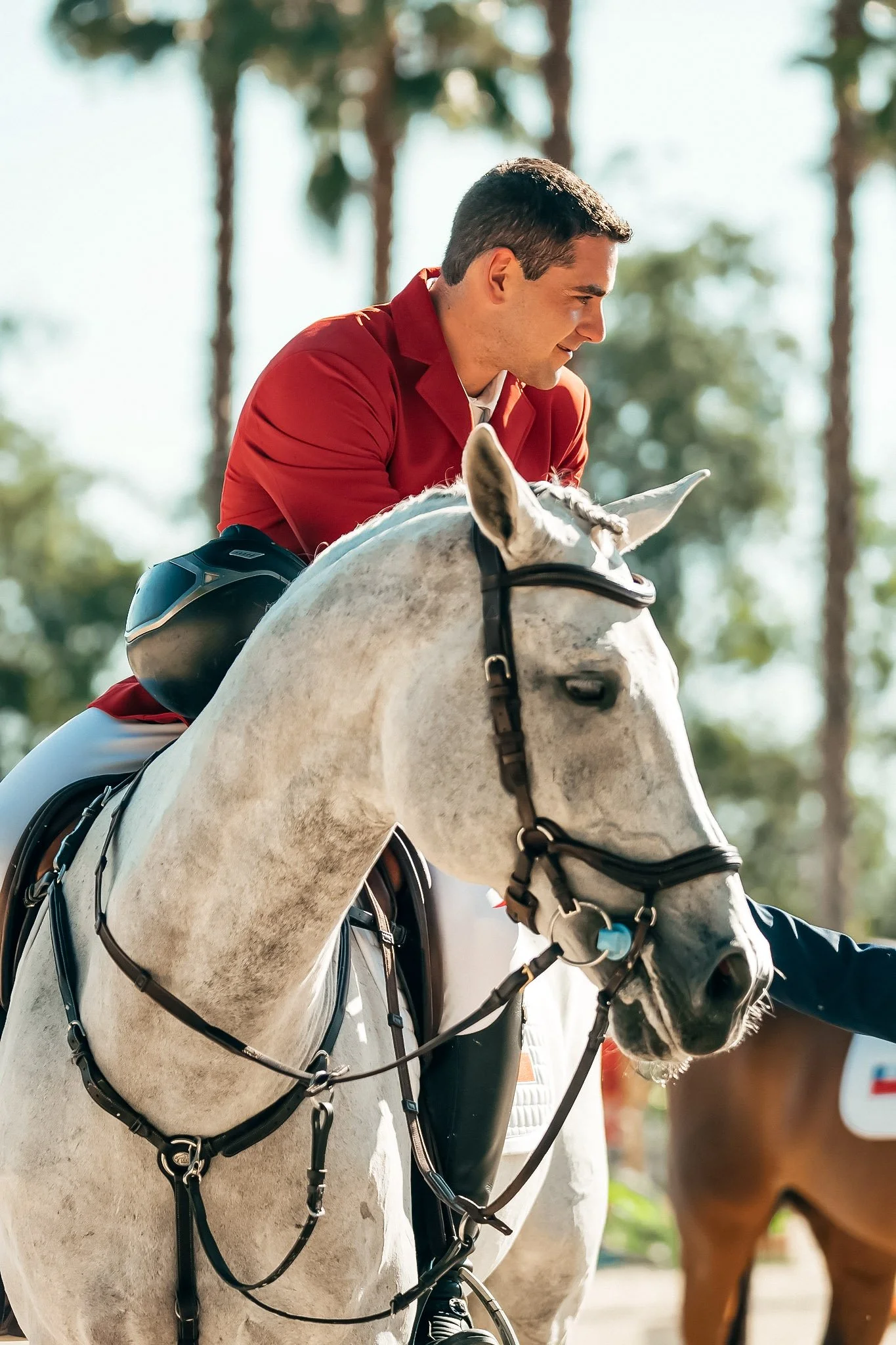
Benjamin Fuente-Alba Vignola and Wyn Dulys winner of the FEI Jumping South American Championship for U25 2026. Image: ©FEI
The Host Nation's Afternoon
The one gold that escaped Brazil went to the home crowd, and it went to a rider for whom this championship has become something of a fixture.
Benjamin Fuente-Alba Vignola and his ten-year-old stallion Wyn Dulys took the U25 title on eight penalties, in front of a Santiago audience that had been waiting for it. The Chilean, who turned twenty-four four days after the championship finished, has represented his country at senior level, including in the Nations Cup at Wellington in 2023, and his reaction was directed outwards rather than at himself. Winning at home was incredible, he said, and he was happy for the team behind the scenes who had supported the effort, before going on to congratulate the organisers.
Kraus Guerra, Fifteen, and a Clean Sweep
The Junior division produced the most emphatic result of the week. Brazil filled the entire individual podium, and the gold went to Bernardo Kraus Guerra, who is fifteen, riding Cehjur Diamoon for a final score of 1.74 penalties.
He was not a surprise package. Kraus Guerra had been part of the Brazilian side that won Junior team gold at this championship in 2025, and across the 2026 edition he was comfortably the strongest rider in the division rather than the narrowest winner of it.
Carlota Meneghel Vilela and Champ HR took the Pre-Junior individual title for Brazil, and Gabriela Nagy Kovalski Shoel won the Children's gold with No Limit Flores.
In the Pre-Junior team competition, Brazil Amarelo took gold, Argentina Blanco silver and Brazil Verde bronze, which is a podium that tells its own story about the depth available to one federation.
The System Behind the Medals
The most useful thing to come out of Santiago was not a result but an explanation, offered by the Brazilian camp, of how a nation turns up to a continental championship and wins almost everything.
Brazil runs five selection trials domestically across the year and then stages its national championship under the same rules that govern the South American Championship. The intention is specific. By the time the young riders arrive at a continental championship, the format is familiar, the rules are familiar, and nothing about the week is a novelty.
That is not an expensive innovation. It requires no new facilities and no additional funding beyond what a national championship already costs. It requires a federation to decide that its domestic competition should be a rehearsal for its international one, and then to write the rules accordingly.
British youth jumping had an outstanding summer, with Children's team gold and Junior team silver at the European Championships in Hagen in July and double gold at the Pony Europeans at Le Mans a fortnight later. The question for Britain is how closely its domestic age-group competition mirrors the championship formats those riders meet abroad, because Brazil has concluded that the answer matters.
Why This Championship Matters
In Europe, South American jumping tends to register only when a Brazilian rider wins something there, which happens more often than is generally recognised. Yuri Mansur won the Grand Prix at Valkenswaard on the Global Champions Tour in September and took two classes across the Morocco Royal Tour in October. Marlon Modolo Zanotelli has been a fixture of the Longines League of Nations.
Brazil finished the 2026 League of Nations season in a jump-off for the title in Barcelona, having returned to the series after a season away, with Rodrigo Pessoa second on the horse Major Tom at the venue where he made his Olympic debut in 1992.
Santiago is where the riders who will fill those teams in a decade's time are currently learning their trade, and on the evidence of eleven medals, Brazil has a clearer idea than most of how to produce them.
Our report from the European Championships at Hagen is here.