Switzerland's Mike Smits and Barentin de Rampan won individual jumping gold at the Dakar 2026 Youth Olympic Games on Friday, completing four competitive rounds without lowering a single fence. The sixteen-year-old crossed the jump-off finish in 37.81 seconds, ahead of the United States' Liza Tittle with Senji de Reaute on 38.51 and Colombia's Alejandro Gutierrez Alcocer with Villeroy van het Harteveld Z on 38.72.
All three medallists jumped clear in the final jump-off. Smits, last to go, had to beat Tittle's time to take gold and did so by seven-tenths of a second.
It was the conclusion of four days of equestrian competition at the first Olympic sporting event held on African soil, and a championship that placed an unusual demand on every rider: none had arrived with their own horse.
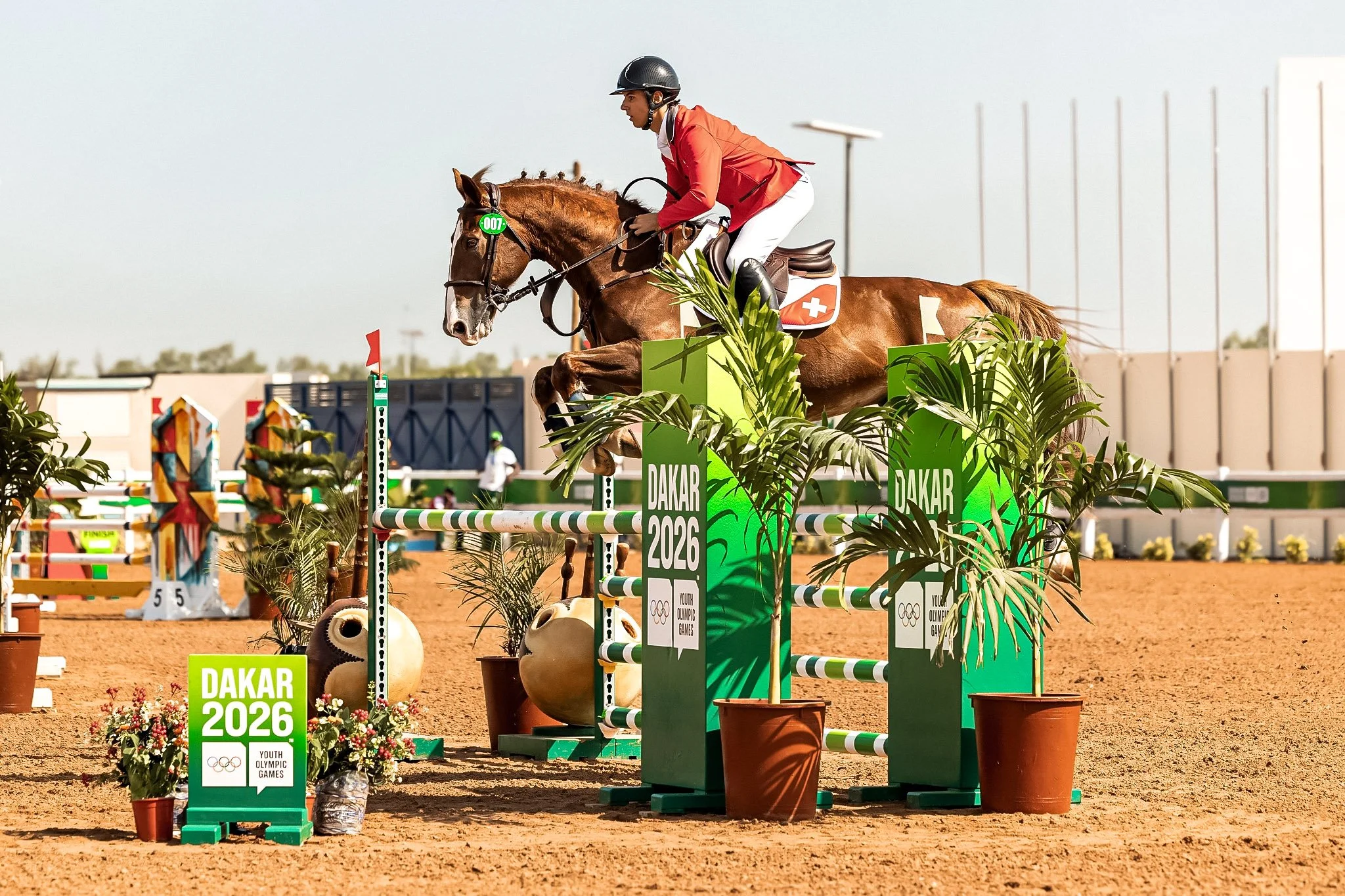
Mike Smits of Switzerland riding Barentin de Rampan during the Youth Olympic Games Dakar 2026. Image: © FEI/Kirsty Pasto
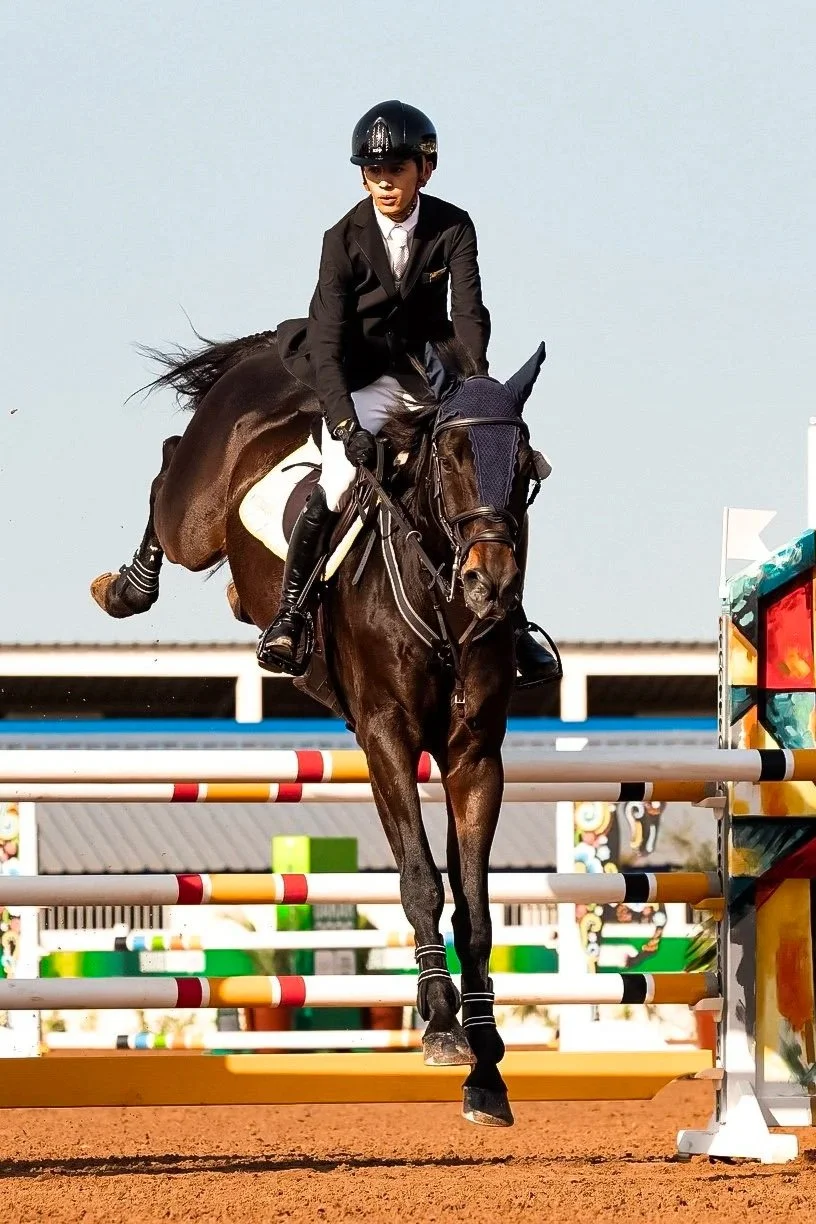
Joaquin Beltran of Ecuador riding Gambler Z during the Youth Olympic Games Dakar 2026. Image: © FEI/Kirsty Pasto
Twenty-Four Riders, Twenty-Four Borrowed Horses
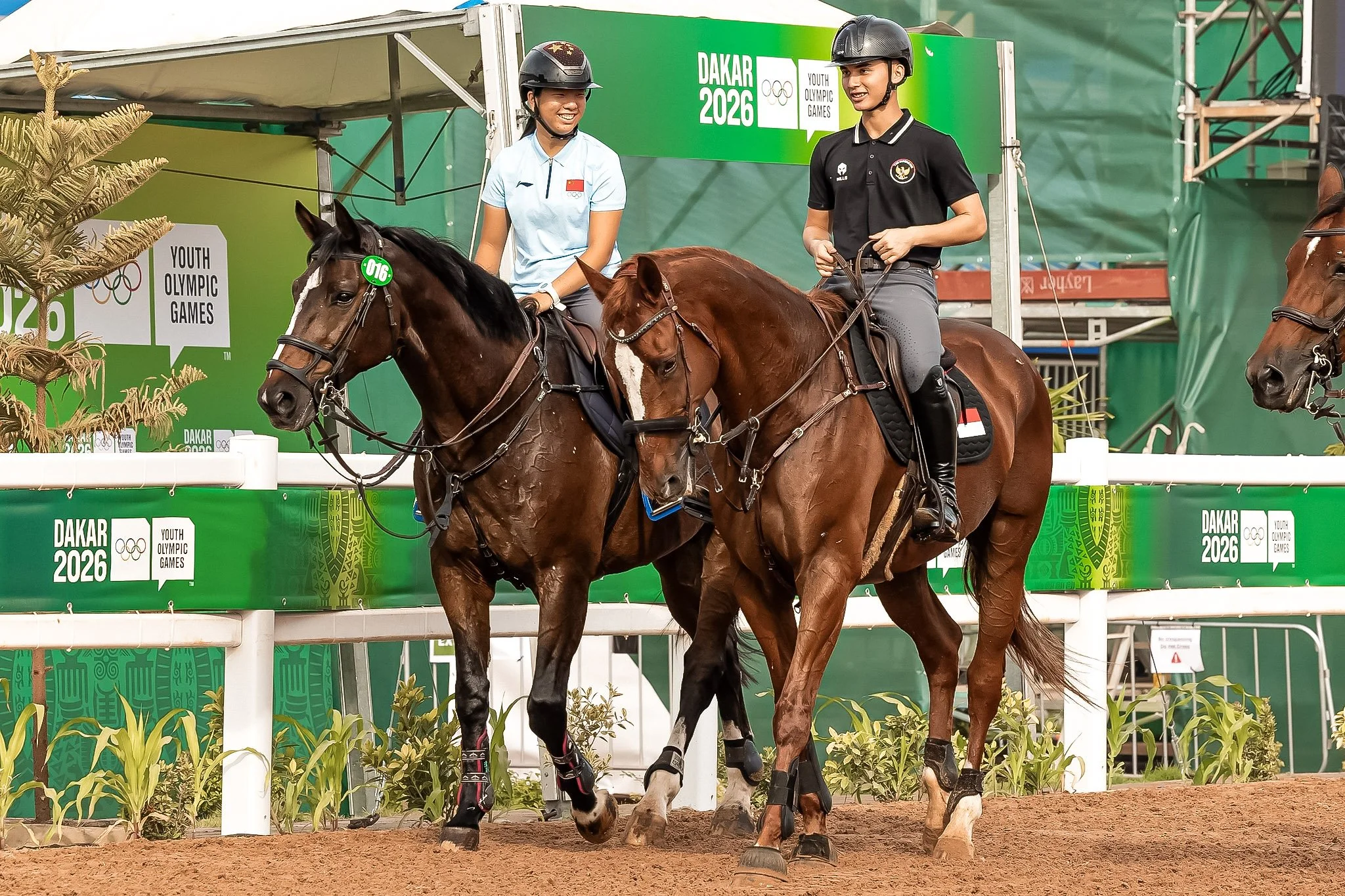
Jumping was the sole equestrian discipline at Dakar, with 24 athletes representing 24 nations and competing on horses loaned by Senegalese owners.
Following veterinary inspection, the horses were allocated through a draw. Riders then had a limited period to become familiar with their mounts before competition began at the Equestrian Centre in Diamniadio on 3 November.
Unlike a conventional championship, where combinations may have trained and competed together for years, Dakar asked riders to establish a working partnership almost immediately.
The format changes what success demands. Riders cannot rely on their usual horse's established responses, familiar stride or competition routine. They must assess the horse in front of them, adapt their riding and make decisions with considerably less information than they would normally have.
Smits proved particularly effective. He was among four riders to open the competition without penalties and maintained that standard through both qualifying rounds and the individual final.
Asia Claims the First Team Gold
The first equestrian medals were awarded on Thursday, when Team Asia secured continental team gold on 17 penalties.
The winning quartet comprised India's Sresht Raju Mantena riding Crazy Horse Boop, China's Ruirui Sun with Astral Z, the UAE's Alya Adnan Awadh Almheiri riding Karlista de Residal and Indonesia's Nusrtdinov Zayan Fatih with Ucaral de Beaujoir.
Inter America finished second on 21 penalties, with Africa taking bronze on 29.
Six continental teams contested the competition, each fielding four riders with the best three scores counting towards the team total.
The format brought together athletes from countries with very different competitive structures and levels of international experience. It also gave riders from developing equestrian nations an opportunity to contest an Olympic team medal without the expense and logistical demands of transporting their own horses internationally.
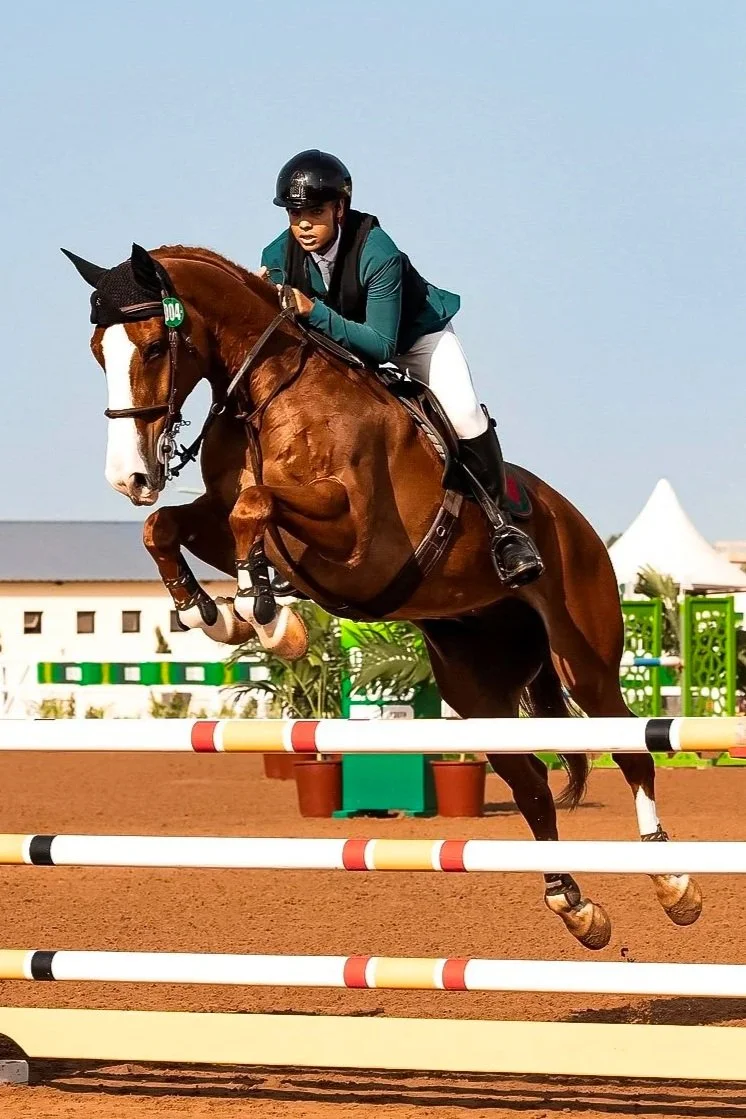
Ghali Bougja of Morocco riding Alato de la Cense during the Youth Olympic Games Dakar 2026. Image: © FEI/Kirsty Pasto
A Different Measure of Sporting Ability
Dakar's borrowed-horse format offers a useful distinction from senior championship jumping.
At the highest level, the development of an established horse-and-rider partnership is fundamental to performance. At Dakar, adaptability became a much more immediate measure of ability.
That does not make the formats interchangeable. Familiarity with a horse, long-term training and the responsibility of producing an animal for championship sport are skills in their own right.
What Dakar demonstrated is that young riders can also be tested on their capacity to assess, understand and work with an unfamiliar horse under competitive pressure.
There is an accessibility argument, too. A borrowed-horse competition removes the requirement to own or transport an internationally competitive horse, although the wider costs of training and qualifying remain.
For countries seeking to develop participation and international pathways, it is a format worth studying.
Smits leaves Senegal with individual gold and an unbeaten jumping record across the championship. Team Asia leaves with the first equestrian gold awarded at Dakar 2026.
Both results came from a competition in which the horses, rather than arriving as established international partnerships, were part of the challenge itself.