
Equestrian sport has spent four years discussing its social licence to operate, a phrase that has moved from the margins of welfare conferences into the opening paragraphs of federation strategy documents. What has been harder to establish is whether any of that activity has changed public opinion. The fifth annual YouGov survey commissioned by World Horse Welfare, released in June 2026, provides the clearest answer available, and it is not an encouraging one.
Key Findings from the Latest Survey
The survey reflects the views of 4,310 UK adults aged eighteen and over, and was presented at a briefing in London attended by media and horse sport leaders from Australia, Hong Kong, Canada and across Europe.
The principal findings were:
Welfare is regarded as non-negotiable. Seven in ten respondents, 70.3%, believe a horse's wellbeing should always take priority regardless of the effect on performance.
Discomfort for performance is broadly rejected. A larger proportion still, 77.3%, considered short-term pain or discomfort inflicted to improve performance either not very or not at all acceptable.
Trust in training practice is limited. More than half of all respondents either expressed concerns about, or said they did not trust at all, that most people in horse sport train in a way the public would consider acceptable.
The conditional supporters have not moved. The proportion who support horse sport only if welfare improves stands at just under 40%, which is approximately where it stood when the survey began in 2022.
Roly Owers, chief executive of World Horse Welfare, was explicit that the five-year dataset does not show a positive trend, and that addressing public scepticism requires more than what he characterised as snazzy videos or a social media presence. He also noted that some observers regard welfare initiatives launched in the name of social licence as all talk and no action.
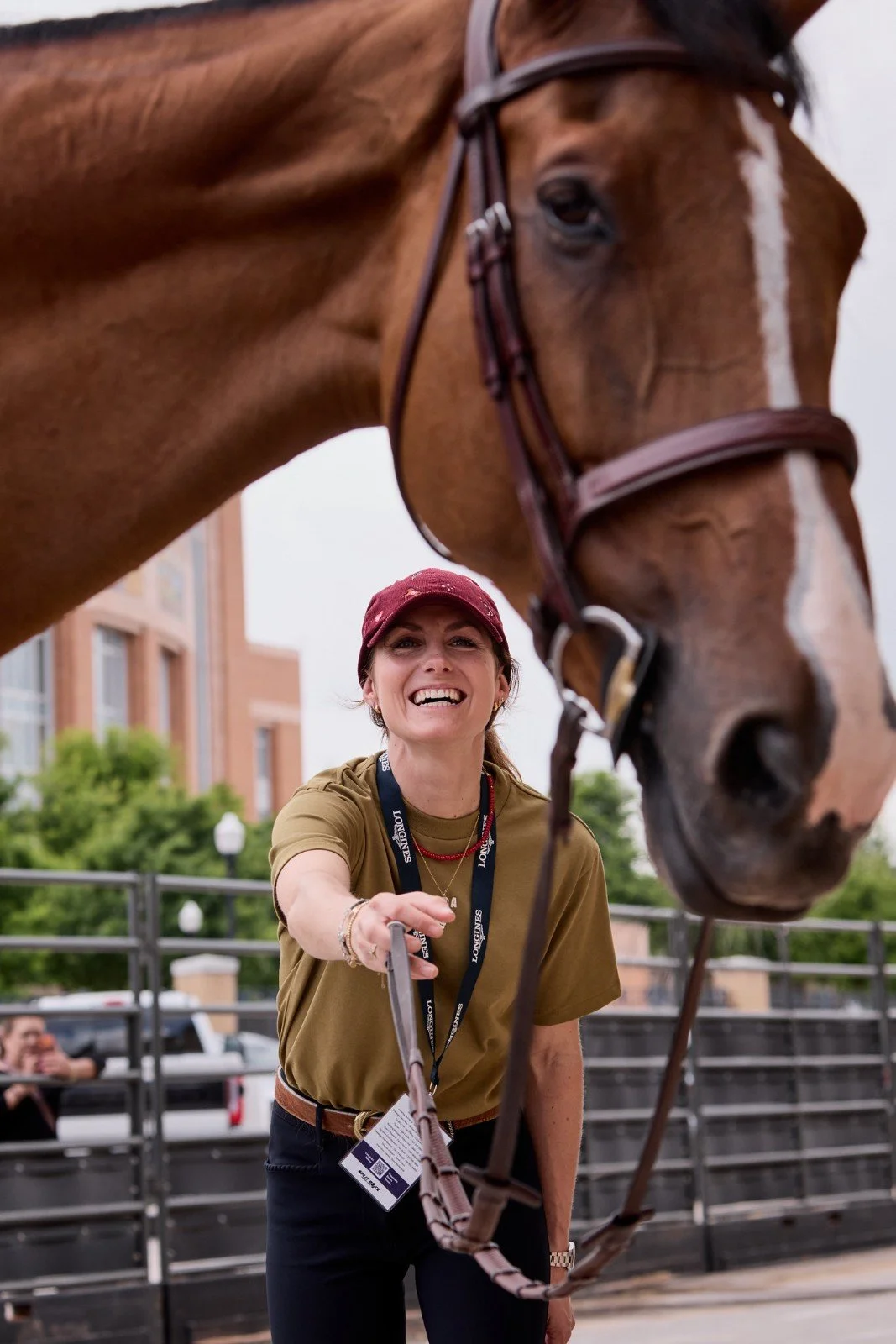
Oda Charlotte Lyngvaer (NOR) with Carabella vd Neyen Z at The FEI World Cup™ Finals Fort Worth. Image: © FEI / Liz Gregg.
How the Public Categorises the Horse
Respondents were asked what kind of animal they consider a horse to be, with multiple selections permitted, and the resulting hierarchy may be more significant than any single welfare figure.
Sixty-five per cent identified horses as pets and 64.9% as leisure animals. Smaller proportions selected working animals (56.1%) or livestock (54.3%). The lowest figure of all, 49.4%, was for horses as sport animals.
Fewer than half of the UK public instinctively categorises a horse as a sporting animal. That framing shapes how any welfare message is received, because an audience that conceptualises the horse primarily as a companion animal applies companion-animal expectations to what it sees in a competition arena.
Insights from the Wider Social Licence Evidence
This survey sits within a broader body of work on public attitudes to animals in sport, and several findings from earlier editions provide useful context.
Previous iterations of the poll examined the drivers of public trust and found a clear ranking. The single greatest influence was what riders and those directly involved in horse sport say and do, at 28%, followed by media coverage at 25%, what people involved with horses but not with horse sport say and do at 20%, and what governing bodies say and do at 18%.
Earlier work also established that the overwhelming majority of respondents, over 90% in one edition, had little or no recent contact with horses, meaning the sport is being assessed almost entirely by people whose impressions are formed at a distance.
A separate and considerably larger study, commissioned jointly by leading organisations across the British equine sector, found that the public recognised the social importance of horses to life in the UK and that this recognition was itself a key driver of trust. Taken together, the two bodies of evidence suggest that the public's reservations are specific to training and competition practice rather than to the keeping of horses generally.
Where the Evidence Could Be Stronger
The World Horse Welfare poll is the most consistent longitudinal dataset the sector possesses, and it has limitations.
Attitudes are not behaviour. The survey measures stated opinion. It does not measure whether respondents would attend an event, buy a ticket, take out a subscription or allow a child to ride, and the relationship between expressed concern and actual withdrawal of support is not established.
The sample is national rather than international. Findings relate to UK adults. The social licence conversation is global, and the FEI's regulatory response operates across more than 130 national federations with markedly different cultural relationships to horses.
Causation is not addressed. The survey records that opinion has not shifted. It does not establish why. Whether welfare initiatives have been ineffective, insufficiently communicated, offset by negative incidents, or simply too recent to register is not something an attitudinal poll can determine.
Discipline-level data is limited. Public attitudes to racing, dressage, eventing and showjumping are unlikely to be identical, and aggregate figures for horse sport may obscure meaningful variation.
Longitudinal qualitative work, running alongside the annual quantitative survey, would help establish what specifically drives the conditional supporters, and whether any intervention has moved individuals between categories.
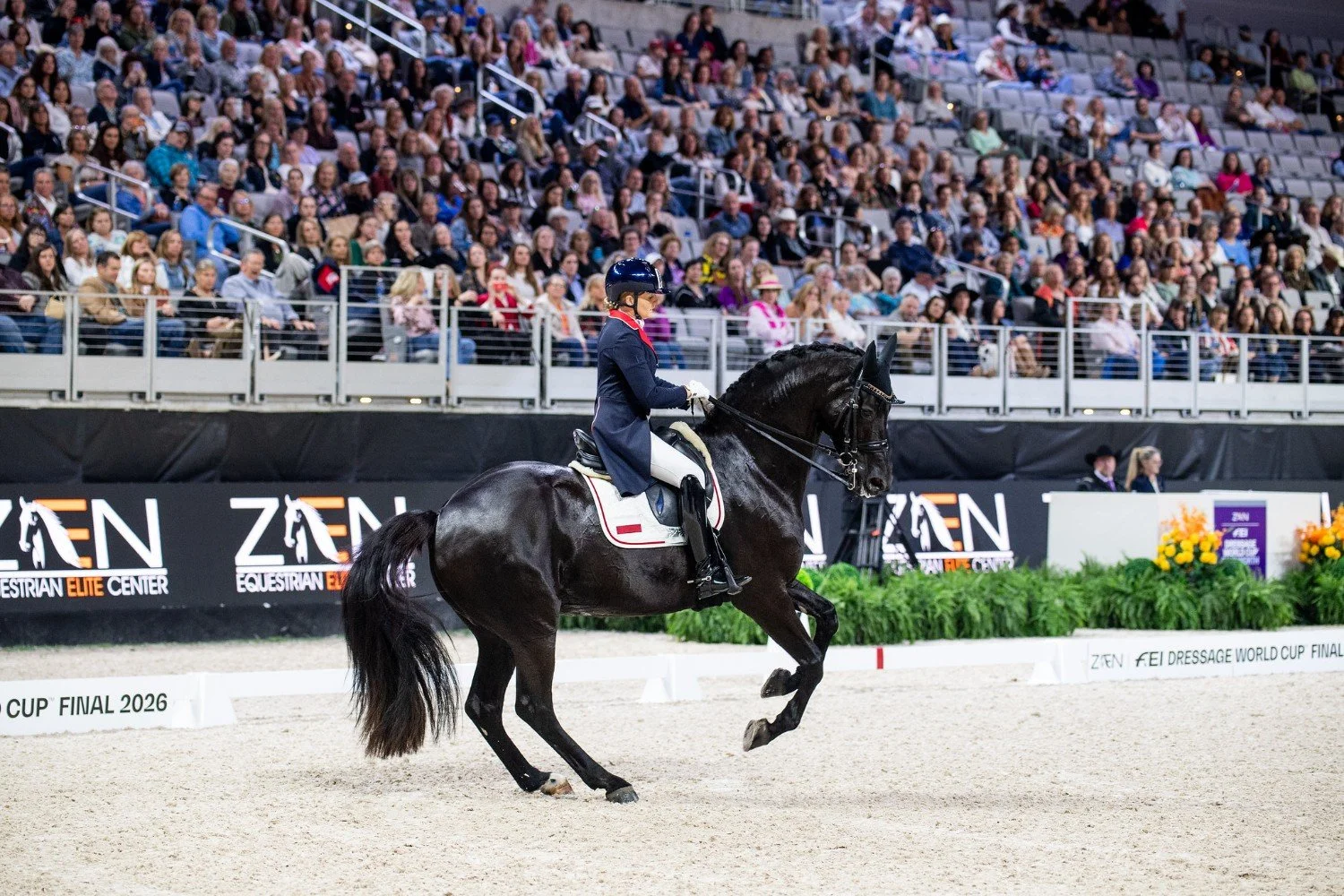
Sandra Sysojeva (POL) and Maxima Bella, during the dressage freestyle of The FEI World Cup™ Finals Fort Worth 2026. Image: © FEI/Shannon Brinkman
Practical Implications for the Equestrian Community
The most actionable finding in the dataset concerns where trust originates. The public forms its view primarily by watching riders, not by reading rulebooks, which means the behaviour visible in warm-up arenas, collecting rings and training yards carries greater weight than any regulatory change.
For officials, the implication is that enforcement which is visible to spectators is worth considerably more than enforcement which is not. For riders, it is that the sport's reputation is constructed from individual rounds rather than institutional statements.
There is also a positive case the evidence supports and the sector tends to underuse. Minette Batters, chair of British racing's Horse Welfare Board, raised Ros Canter's third Badminton victory with Lordships Graffalo in May 2026 at the briefing, describing it as probably the most exceptional performance she had seen from horse and rider. A public sceptical about methods it cannot observe is markedly less sceptical about partnerships it can, and demonstrating the latter remains the most effective available response.
The FEI General Assembly in Jiangyin from 2 to 5 December will vote on full revisions of the Veterinary Regulations and the Dressage, Para Dressage and Vaulting Rules, with a task force on horse condition harmonisation working in parallel. Those are appropriate mechanisms. The evidence from five years of polling suggests they will not, on their own, be sufficient, because the audience whose opinion they are intended to address is not reading them.
Our coverage of the rules revision going to Jiangyin is here and the horse condition task force is examined separately.