As national federations and organisers finalise their 2027 international fixtures, and the FEI prepares for its General Assembly in Jiangyin in December, the shape of next season's jumping calendar is starting to appear. It will be expressed, as always, in a string of letters and stars that most spectators read past without understanding.
CSI5*. CSIO4*-W. CSIYH. CHIO. This is what they mean.
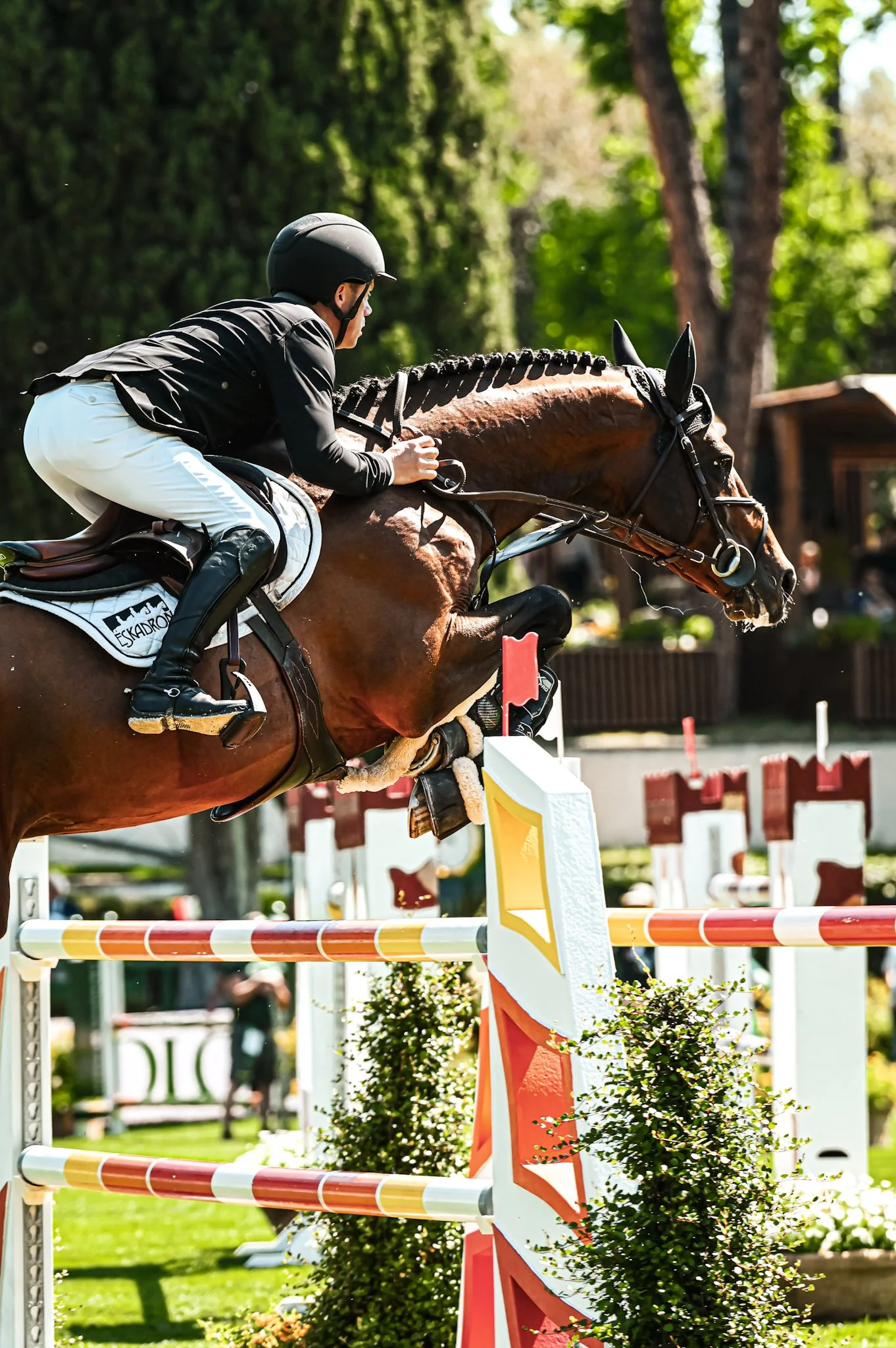
CSIO5* Piazza di Sienna, 2024. Image: © Morgan Froment
The Letters
Every international jumping show approved by the FEI carries a code, and the code is built from French words.
C stands for Concours, meaning competition or show.
S stands for Saut, meaning jumping.
I stands for International.
A CSI is therefore a Concours de Saut International: an international jumping show. It is the standard category for FEI-approved international jumping, and the majority of international shows on the calendar are CSIs.
What the O Adds
A CSIO adds an O, for Officiel. A CSIO is a nation's official international show, and the defining feature is that it can host a Nations Cup, the team competition in which nations rather than individual riders compete.
That is the practical difference. A CSI can be a five-star show with a Grand Prix worth over a million euros, but it cannot run a Nations Cup. A CSIO can.
Traditionally each nation had a single CSIO, which is why the official show of a country carries such prestige: the Dublin Horse Show, the Royal International at Hickstead, Piazza di Siena in Rome. Today several nations host more than one, with Spain and the United States among them.
CHIO: More than One Discipline
A CHIO replaces the S for jumping with H, for Hippique, meaning equestrian in a broader sense. A CHIO is an official international show running more than one discipline, each with its own Nations Cup or official competition.
CHIO Aachen, with jumping, dressage, eventing, driving and vaulting on one showground, is the best-known example. CHIO Rotterdam, running jumping and dressage together, is another.
The Stars
Every category carries a star rating, from one to five, which reflects the level of the show. Stars are determined principally by the total prize money offered, within bands set by the FEI, and they shape the height of the courses, the minimum age of horses and the number of ranking points available.
One star (CSI1*): the entry level of international competition, with courses up to 1.40m.
Two star (CSI2*): courses up to 1.45m.
Three star (CSI3*): the first level at which 1.60m Grands Prix appear, and the level of the Longines EEF Series qualifiers.
Four star (CSI4*): a significant step in prize money and field strength, and the level of many World Cup qualifiers.
Five star (CSI5*): the top of the sport, including the Rolex Series, the Longines Global Champions Tour and the Longines League of Nations.
Course heights are capped at 1.60m from three-star upwards, with a small allowance for the final competition of an FEI-approved series, and no cap for specialist competitions such as the puissance and six bar.
Stars matter because of the Longines Ranking. Riders earn ranking points from Grands Prix and major classes, and the points available rise steeply with the star level. A rider chasing a place in the world's top 30, or a nation chasing a League of Nations place, needs five-star results.
The Suffixes
After the stars, a suffix can add further information.
W indicates a Longines FEI Jumping World Cup qualifier. A CSI4*-W or CSI5*-W hosts a World Cup Grand Prix, counting towards qualification for the World Cup Final. The Morocco Royal Tour's 2026 legs ran as CSI4*-W, CSIO4*-W and, at El Jadida, CSI5*-W.
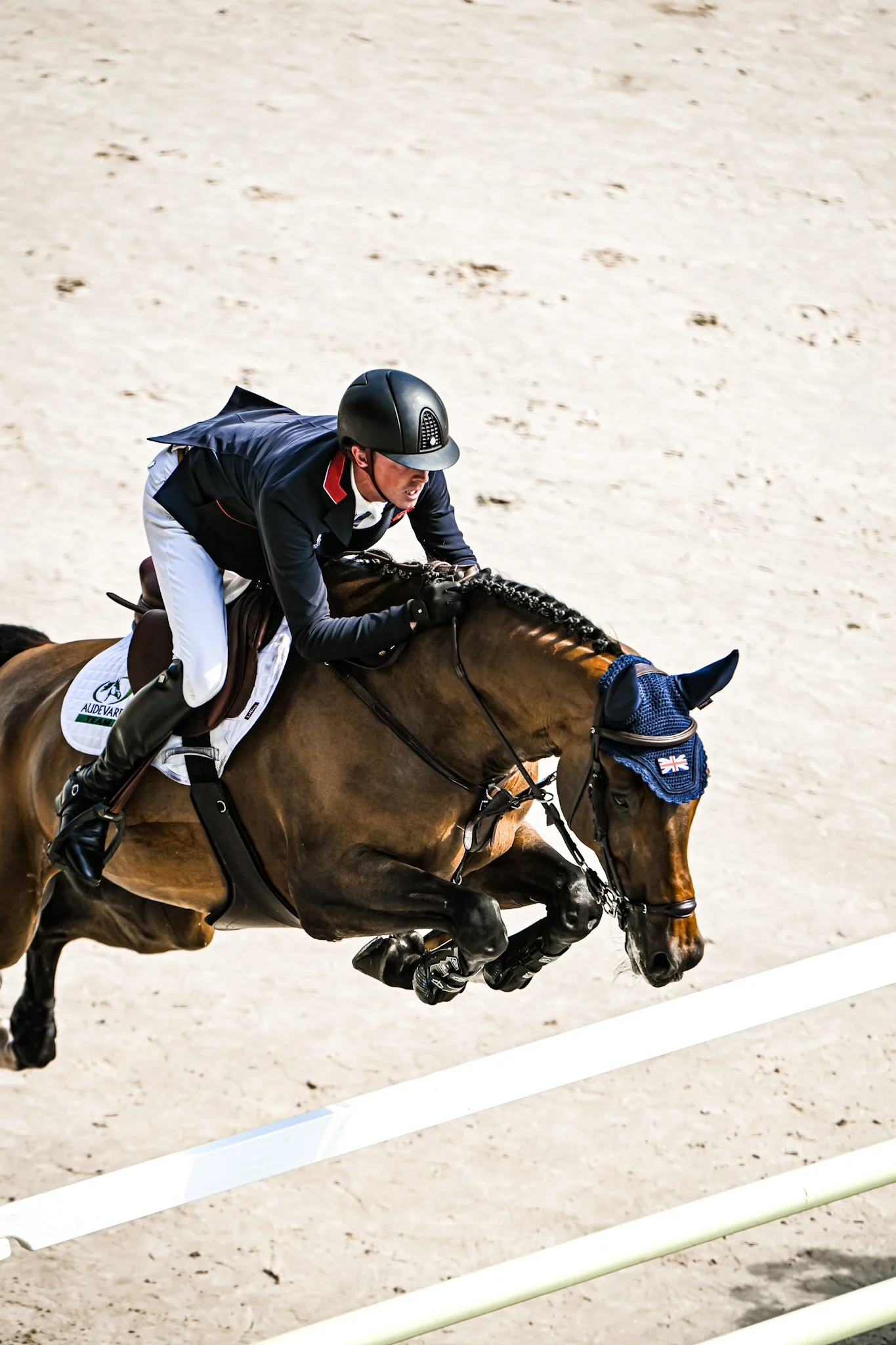
Ben Maher during CHIO Rotterdam 2026. Image: © Morgan Froment
The Age and Category Codes
A further set of letters identifies shows for particular groups of riders or horses. These sit after the CSI or CSIO.
CSIP / CSIOP: pony riders, aged 12 to 16
CSICh / CSIOCh: children on horses, aged 12 to 14
CSIJ / CSIOJ: juniors, aged 14 to 18
CSIY / CSIOY: young riders, aged 16 to 21
CSIU25: under-25 riders
CSIAm: amateurs
CSIV: veterans
CSIYH: young horses
These categories are where most international careers begin. The European Championships for Children, Juniors and Young Riders, held at Hagen in 2026 and at Brussels in July 2027, sit at the top of this structure.
Reading a 2027 Fixture
Put together, a code tells you a great deal before you have looked at an entry list. A CSIO5* is a nation's official five-star show with a Nations Cup. A CSI3*-W is a three-star show hosting a World Cup qualifier. A CSIOY is an official young riders' show with a Young Riders' Nations Cup.
The 2027 Calendar So Far
Several of the key 2027 jumping fixtures are already fixed, and they give the coming season its shape.
Longines FEI Jumping World Cup Final: Gothenburg, Sweden (March 2027), alongside the Dressage and Vaulting World Cup Finals
FEI Jumping European Championships: Waregem, Belgium (August 2027)
FEI Jumping European Championships for Young Riders, Juniors and Children: Brussels, Belgium (11 to 18 July 2027)
Pan American Games: Lima, Peru (July 2027)
Longines League of Nations: the 2027 season is the last under the current four-season allocation of qualifiers and Final
The European Championships and the Pan American Games carry particular weight in 2027, because both are qualifying events for the Los Angeles 2028 Olympic Games for nations that did not secure a team place at the World Championships in Aachen.
The CSIO calendar is also in flux. The FEI Board reviewed CSIO St Gallen's request to rejoin the Longines League of Nations in July, and decided that further work was needed before reconsidering it. Decisions of that kind, alongside the allocation of each nation's Nations Cup fixtures, shape where team jumping will be seen next season.
The FEI General Assembly takes place in Jiangyin, China, from 2 to 5 December, and the 2027 international calendar will continue to be confirmed through the winter, ahead of the World Cup's European indoor season resuming in the new year.