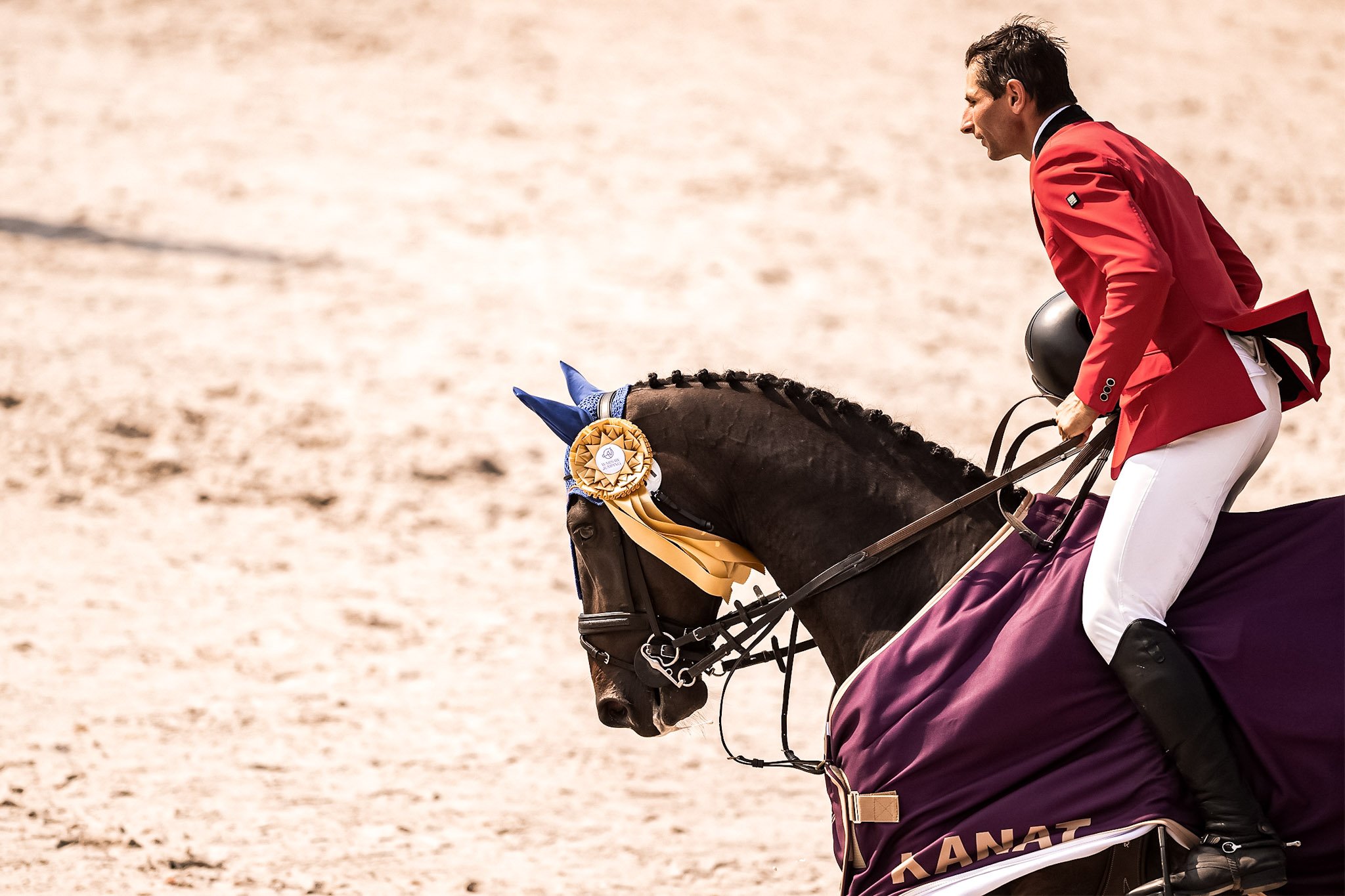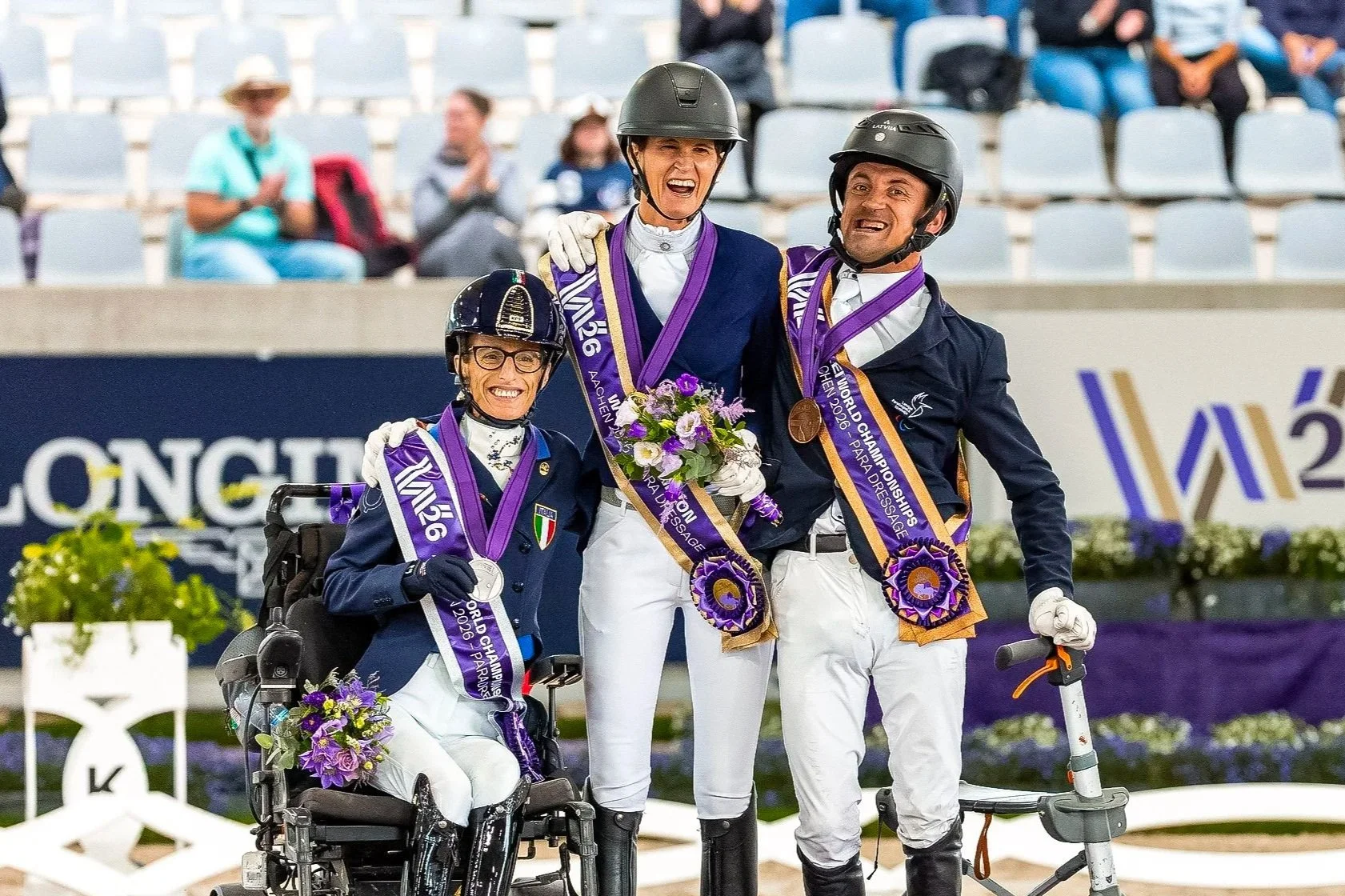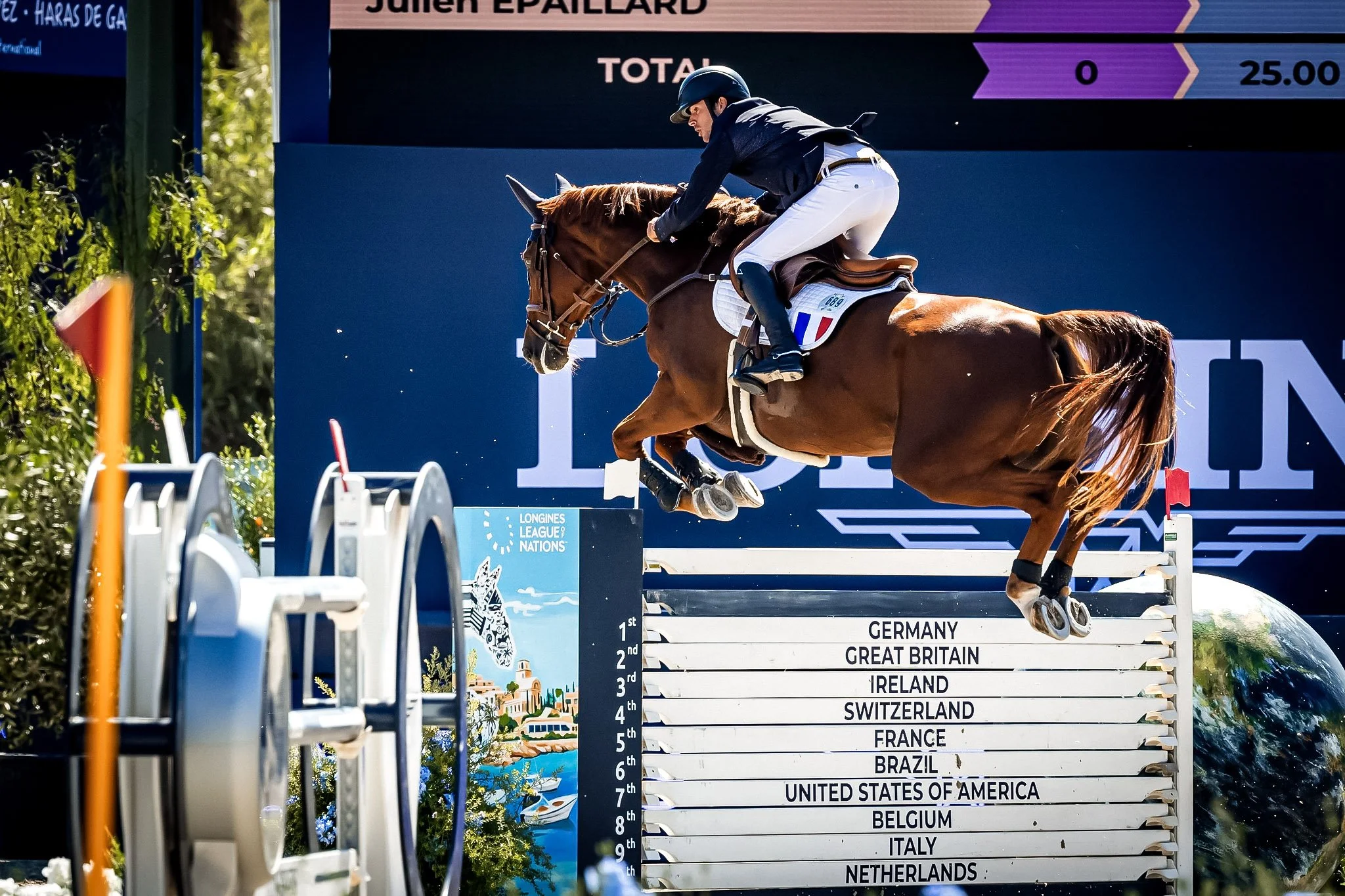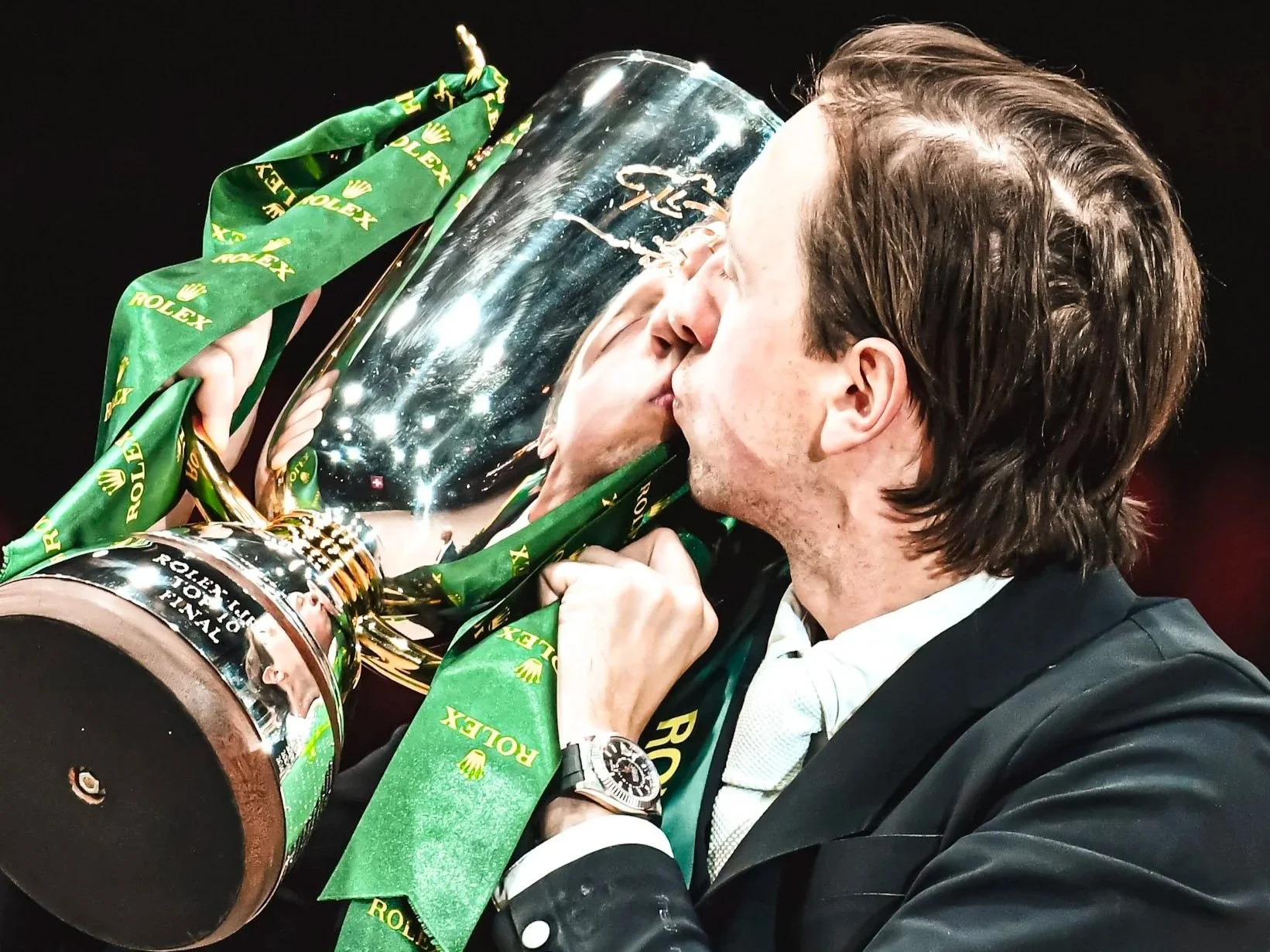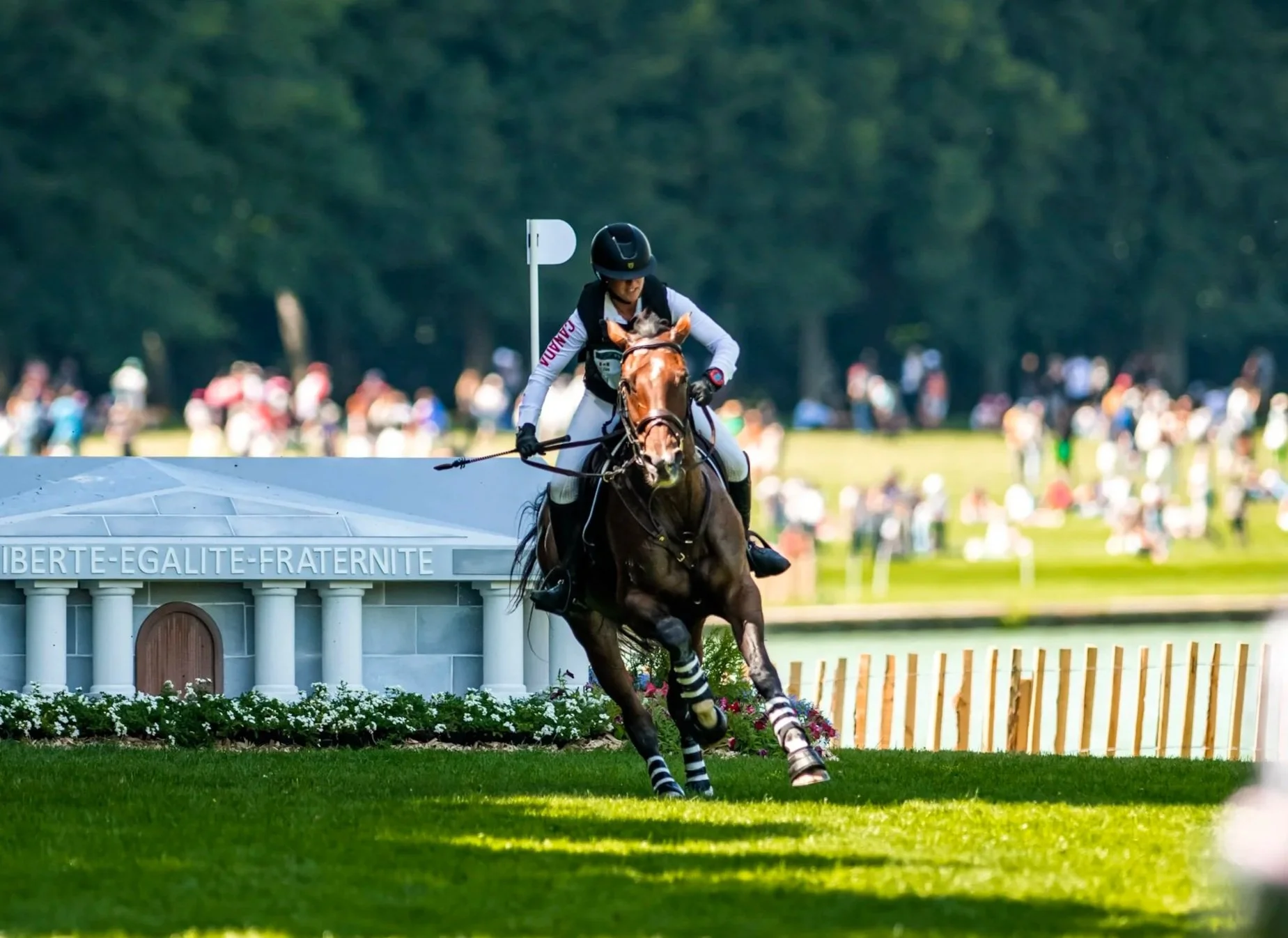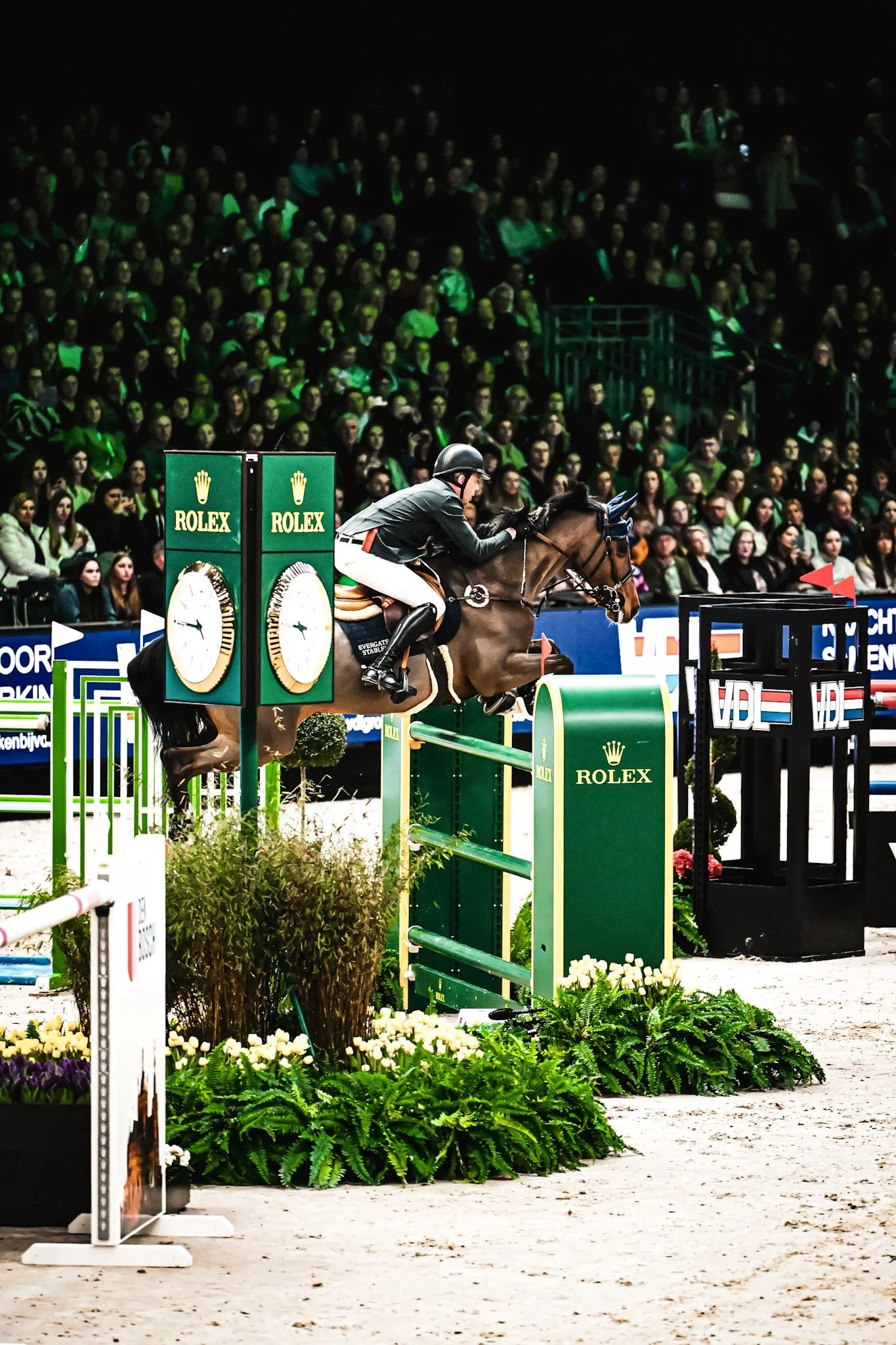
Simon Delestre and Cayman Jolly Jumper during the Rolex Grand Prix at the Dutch Masters 2025. Image: ©M. Forment for EquerryCo.
On Sunday at Spruce Meadows, Richard Vogel will ride into the $5 million CPKC 'International', presented by Rolex, as the live contender for the Rolex Grand Slam of Show Jumping. If he wins, he will become only the second rider in history to complete it, eleven years after Scott Brash did so at the same venue.
The Grand Slam is the most valuable bonus scheme in equestrian sport and one of the most often misunderstood. This is how it works.
The Four Majors
The Rolex Grand Slam is built on four Grands Prix, known as the Majors, which take place in a fixed annual sequence:
The Dutch Masters, 's-Hertogenbosch, the Netherlands (March)
CHIO Aachen, Germany (normally early summer; in 2026, 22 to 24 May)
CSIO Spruce Meadows 'Masters', Calgary, Canada (September)
CHI Geneva, Switzerland (December)
Each is a Rolex Grand Prix in its own right, and together they offer more than €5 million in prize money.
The Grand Slam was launched in 2013 with three Majors, Geneva, Aachen and Spruce Meadows. The Dutch Masters joined in 2018, making four.
The Bonus
The Grand Slam rewards consecutive wins. Prize money is paid as normal at each Major, and the bonus is paid on top:
2 successive Majors: €500,000
3 successive Majors: €1,000,000
4 successive Majors: €2,000,000
The word that matters is consecutive. A rider who wins two Majors with another rider's victory in between earns no bonus. The sequence has to be unbroken.
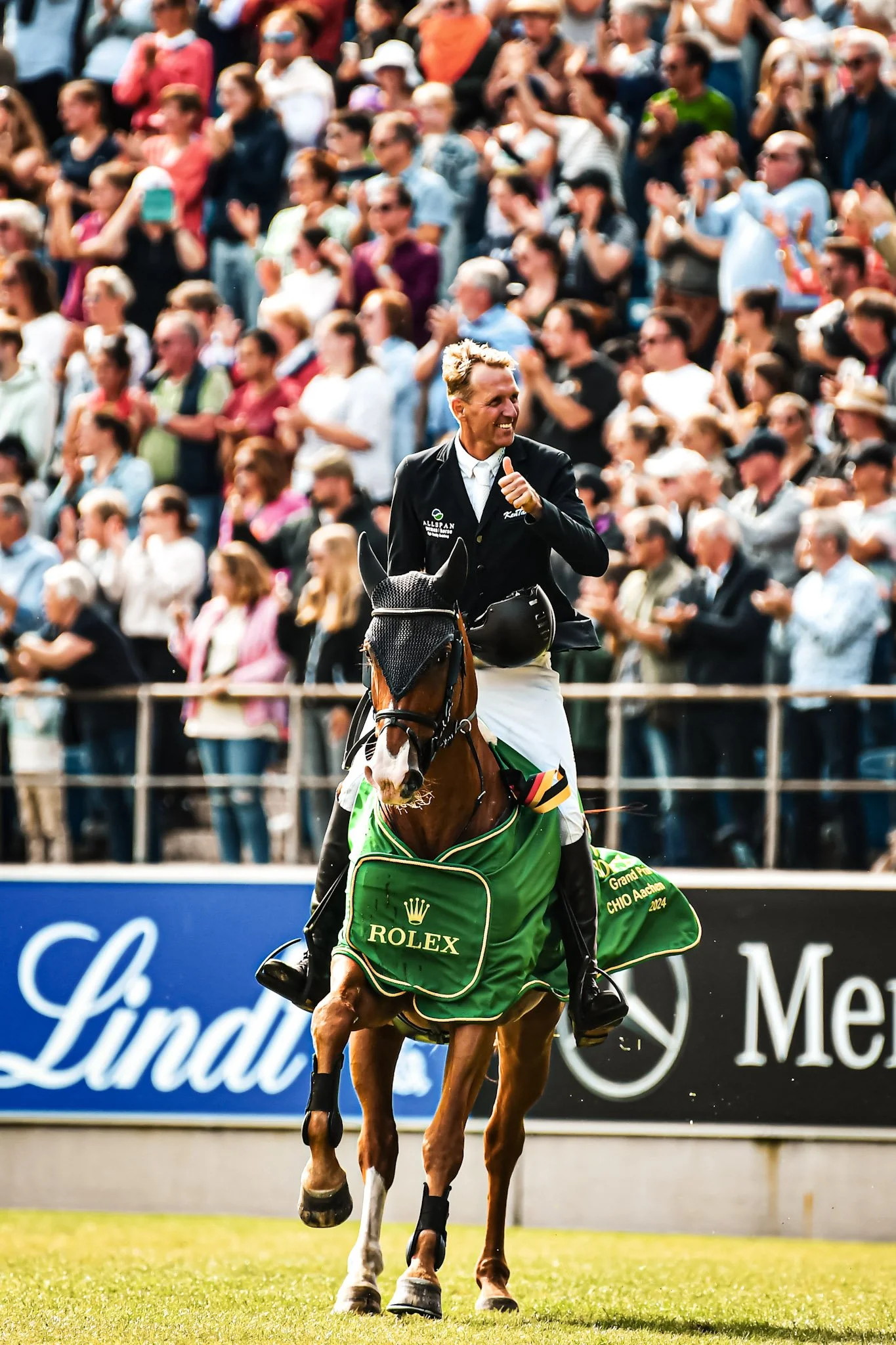
André Thieme and DSP Chakaria during the Rolex Grand Prix of Aachen at CHIO Aachen, 2024. Image: ©M. Forment for EquerryCo.
The Cycle Does Not Reset in January
This is the part that is most often misunderstood. The Grand Slam is a rolling cycle, not a calendar-year competition. Because the four Majors run in a continuous loop from March to December and back to March, a winning sequence can start at any of them.
A rider who wins at Geneva in December and then at The Dutch Masters the following March has won two consecutive Majors, even though they fall in different seasons. That is exactly how Scott Brash began his Grand Slam: he won at Geneva in December 2014, then at Aachen and Spruce Meadows in 2015, completing the sequence in Calgary in September of that year.
Riders, Not Horses
The bonus is paid to the rider, and the rider can win on different horses. A rider who wins one Major on one horse and the next on another remains in sequence.
In practice, the riders who have come closest have tended to do it with a single exceptional horse, because winning three or four of the hardest Grands Prix in the sport in succession requires a horse at the absolute peak of its career for the best part of a year.
The Live Contender
The rider who has won the most recent Major is described as the live contender. They go into the next Major with the sequence alive, and the bonus in play.
If somebody else wins that next Major, the sequence ends, and the new winner becomes the live contender instead. There is only ever one live contender at a time, which is what gives each Major its particular tension: the Grand Prix itself, and a second, parallel story about whether the sequence survives.
Why Spruce Meadows Matters This Year
Richard Vogel won The Dutch Masters in March and the Rolex Grand Prix at CHIO Aachen in May, both with United Touch S. The second of those wins earned him the €500,000 bonus for two consecutive Majors and made him the live contender going into Calgary.
The arithmetic for Sunday is straightforward. If Vogel wins the CPKC 'International', he completes three consecutive Majors, collects the €1 million bonus, and joins Scott Brash as a Rolex Grand Slam winner. He would then go to Geneva in December with the four-in-a-row bonus in play, something no rider has ever attempted.
If anybody else wins, the sequence ends, and the winner goes to Geneva as the new live contender.
Why It Is So Hard
In thirteen years, one rider has completed the Grand Slam. The reasons are not mysterious.
The Majors are four of the strongest Grands Prix of the season, each over courses built to the full 1.60m standard, with fields that include most of the world's top twenty. They take place in very different conditions: the indoor arena at 's-Hertogenbosch in March, the grass of the Aachen main stadium, the vast International Ring at Spruce Meadows, and the indoor Palexpo in Geneva in December. A horse capable of winning in all of them is rare. A horse capable of winning three of them in succession, with a season of travel and competition in between, is rarer still.
Spruce Meadows adds its own difficulty. The CPKC 'International' is the richest Grand Prix in show jumping and is jumped over two rounds on the vast grass of the International Ring, with natural obstacles and a level of scope required that few other courses demand.
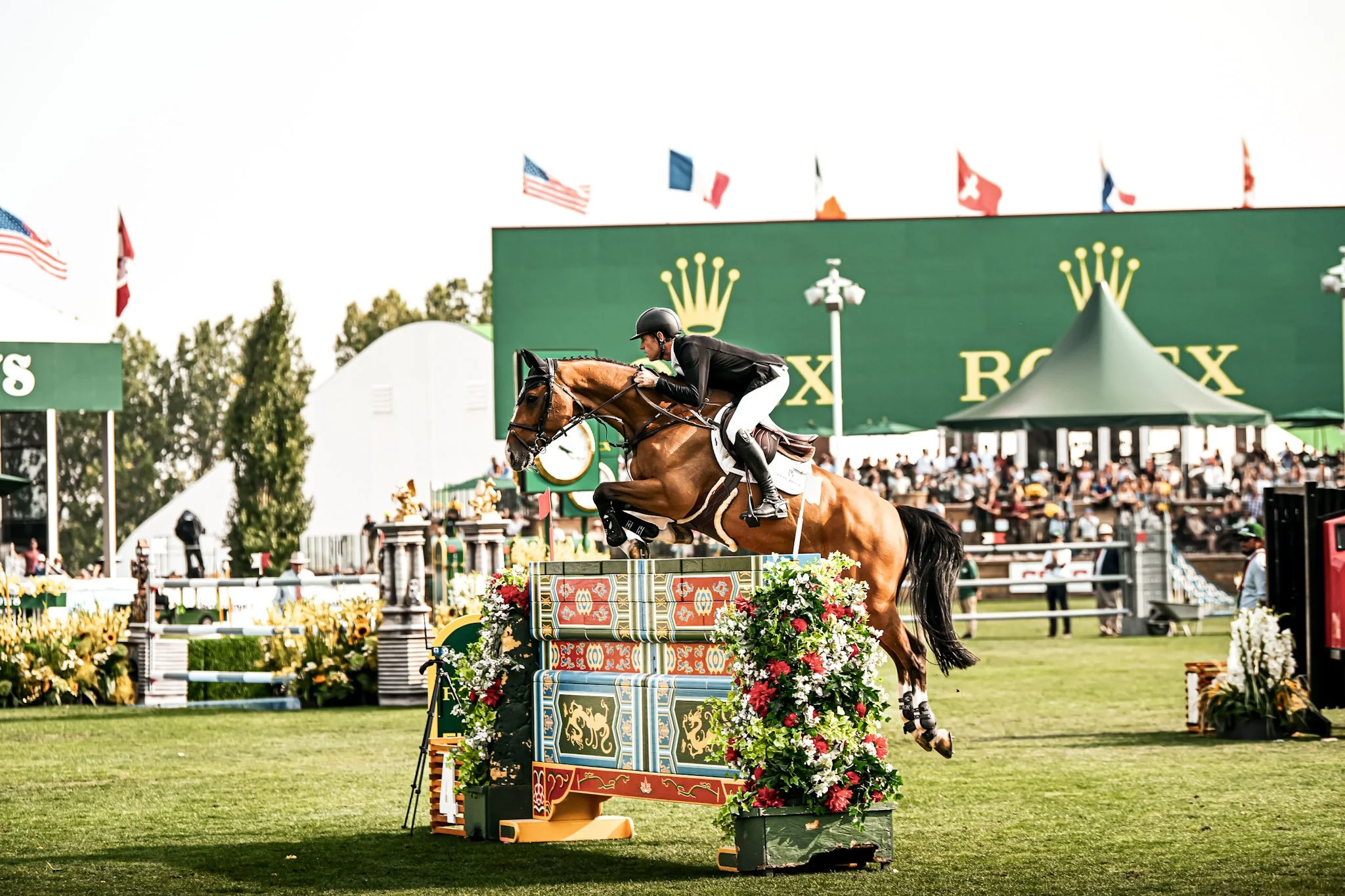
Scott Brash (GBR) & Hello Jefferson winners of the Rolex Grand Prix of Spruce Meadows, 2025. Image: ©M. Forment for EquerryCo.
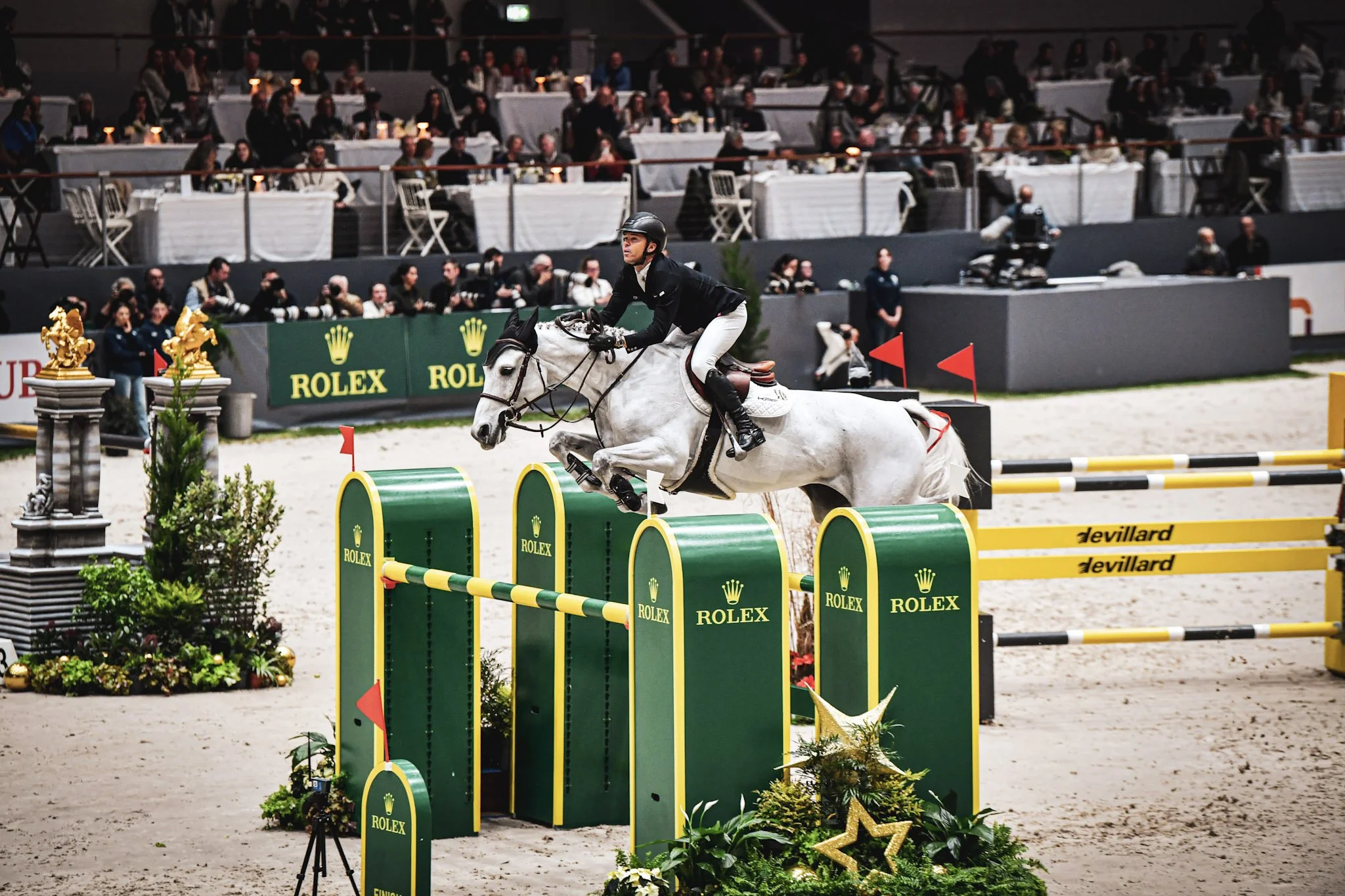
Kent Farrington and Greya durin the Grand Prix of Geneva, 2024. Image: ©M. Forment for EquerryCo.
More than a Bonus
The Grand Slam has become something larger than its prize money. It gives four otherwise separate shows a shared narrative, so that a result in March carries weight in September, and it has created a recognisable story for audiences who do not otherwise follow the sport.
Rolex also invites two young riders to each Major as part of the Grand Slam's commitment to the next generation, giving emerging athletes access to the atmosphere of the sport's biggest Grands Prix early in their careers.
What to Watch on Sunday
The CPKC 'International' is jumped on Sunday 13 September. Vogel's first round will tell you much of what you need to know: the International Ring punishes horses that are not travelling forward from the first fence, and a rider carrying the weight of a Grand Slam bid has to ride it as though nothing is at stake.
Scott Brash, who won the CPKC 'International' in 2025, will be among those trying to stop him.