On Sunday at the Real Club de Polo de Barcelona, the eight qualified nations will contest the Final of the 2026 Longines League of Nations for €1.6 million. It is the third season of the FEI's top-tier team jumping series, and the format is unlike any Nations Cup that came before it.
This is how the series works, and what to watch for on Sunday.
What the League of Nations Is
The Longines League of Nations is the FEI's premier team jumping competition, launched in 2024. It brings together ten of the world's strongest jumping nations across a series of qualifying legs, with the best eight progressing to a Final.
It sits at the top of the sport's team structure. Beneath it, traditional CSIO Nations Cups continue on the international calendar, and the Longines EEF Series provides a development tier for European nations.
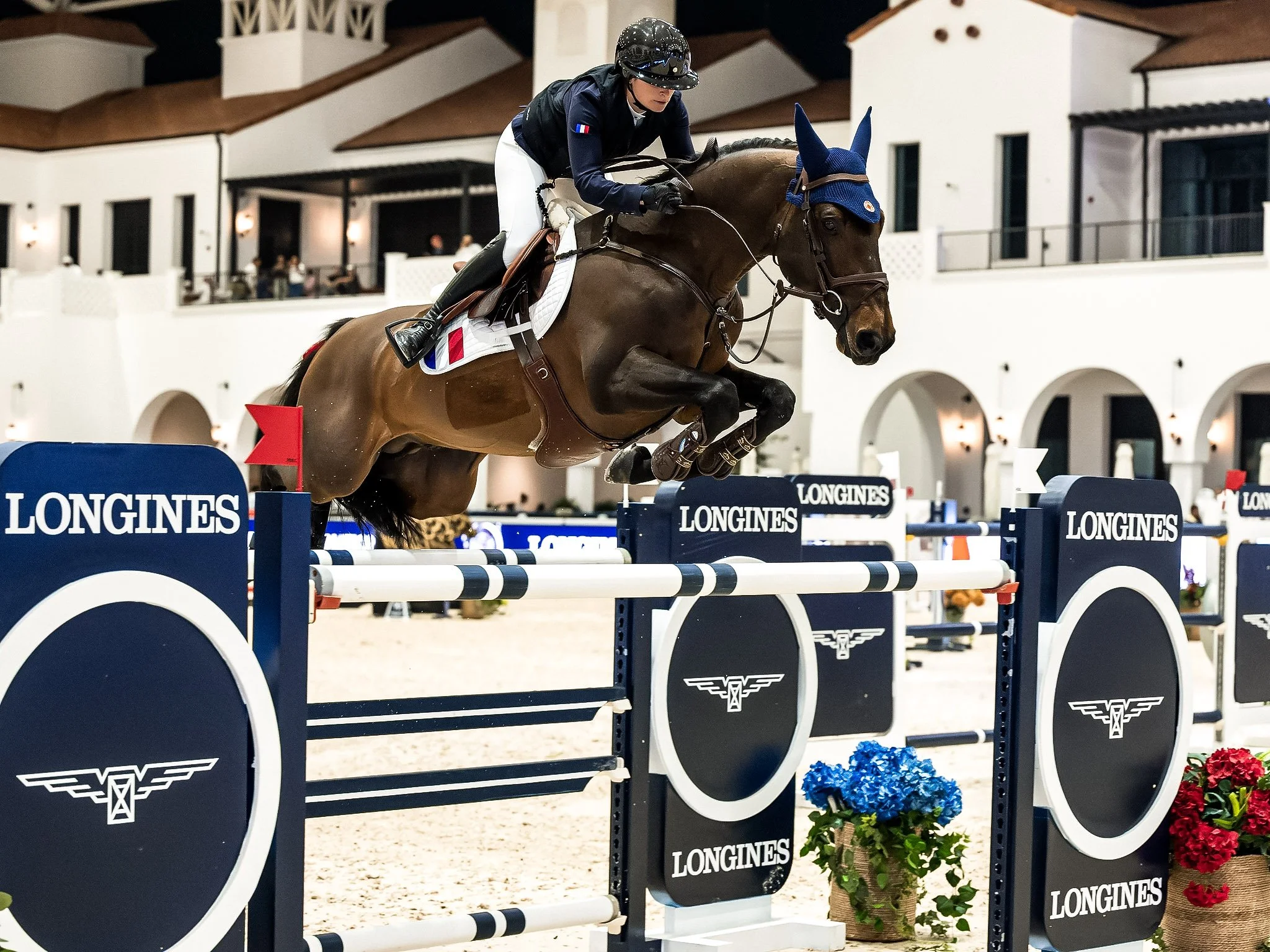
Jeanne Sadran and Dexter de Kerglenn during the Longines League of Nations™ in Abu Dhabi, 2026. Image: © FEI/Martin Dokoupil
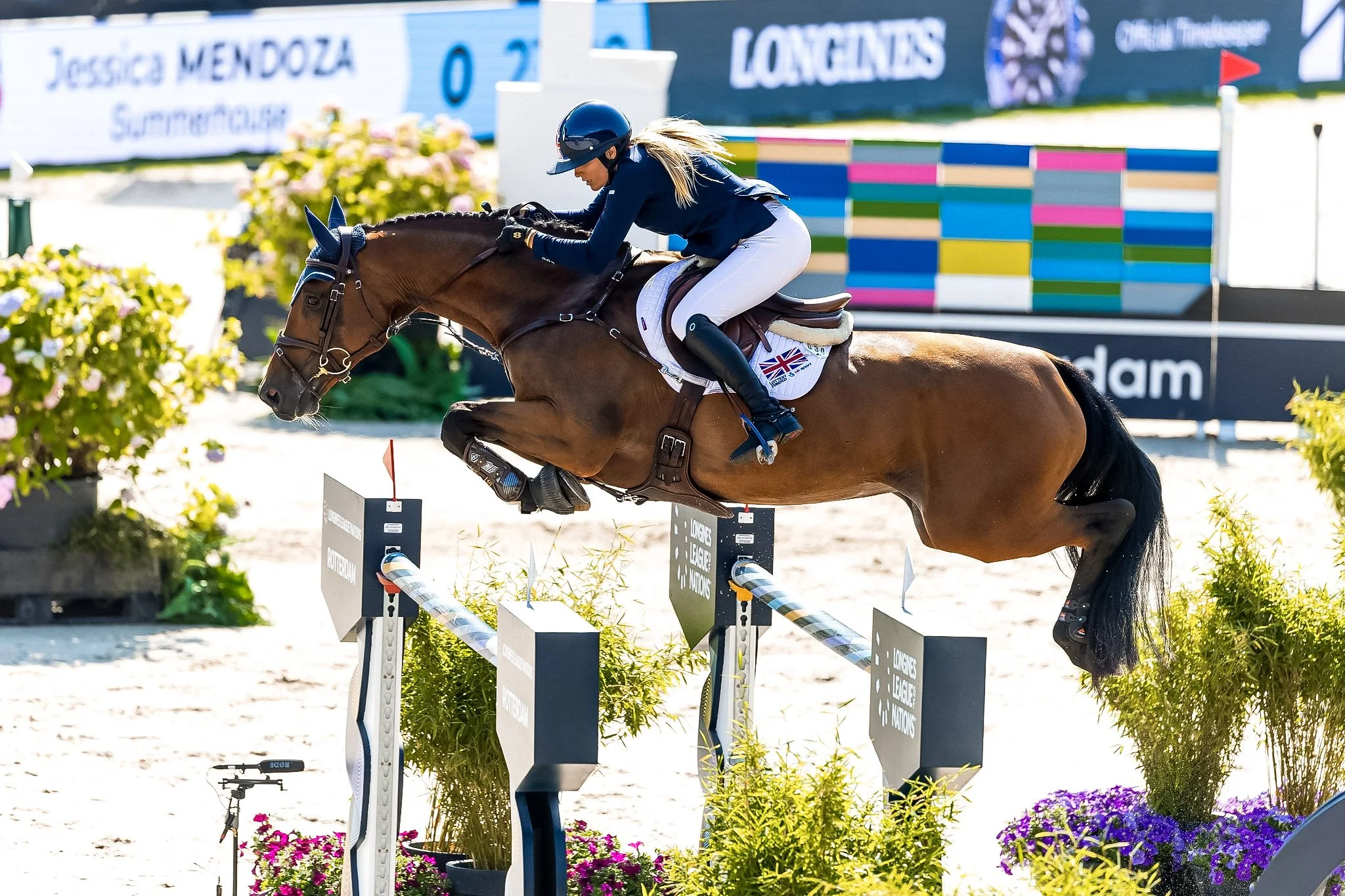
Jessica Mendoza (GBR) and Summerhouse during the Longines League of Nations™ in Rotterdam, 2026. Image: © FEI/Leanjo de Koster
Who Takes Part
Ten nations contest each season. They are not invited: they qualify through the League of Nations Qualification Ranking, which is calculated from the combined Longines Ranking points of each nation's six best riders, at least one of whom must be under 25.
The winner of the previous season's Final qualifies automatically. The remaining nine places go to the next nine best-ranked nations. A reserve list of three nations fills any places vacated by withdrawals, and a nation that withdraws without good reason faces a €100,000 fine and exclusion from the following season.
The under-25 requirement is worth noting. It means a nation cannot qualify purely on the strength of its established senior riders, and must have at least one young rider performing at ranking level.
The 2026 Qualifiers
The 2026 season has four qualifying legs, all at CSIO5* level:
Abu Dhabi, United Arab Emirates (13 February)
Ocala, Florida, United States (21 March)
Rotterdam, the Netherlands (19 June)
St Tropez-Gassin, France (20 September)
Each nation competes in the qualifiers, and the points it earns decide whether it reaches the Final.
How a Qualifier Is Jumped
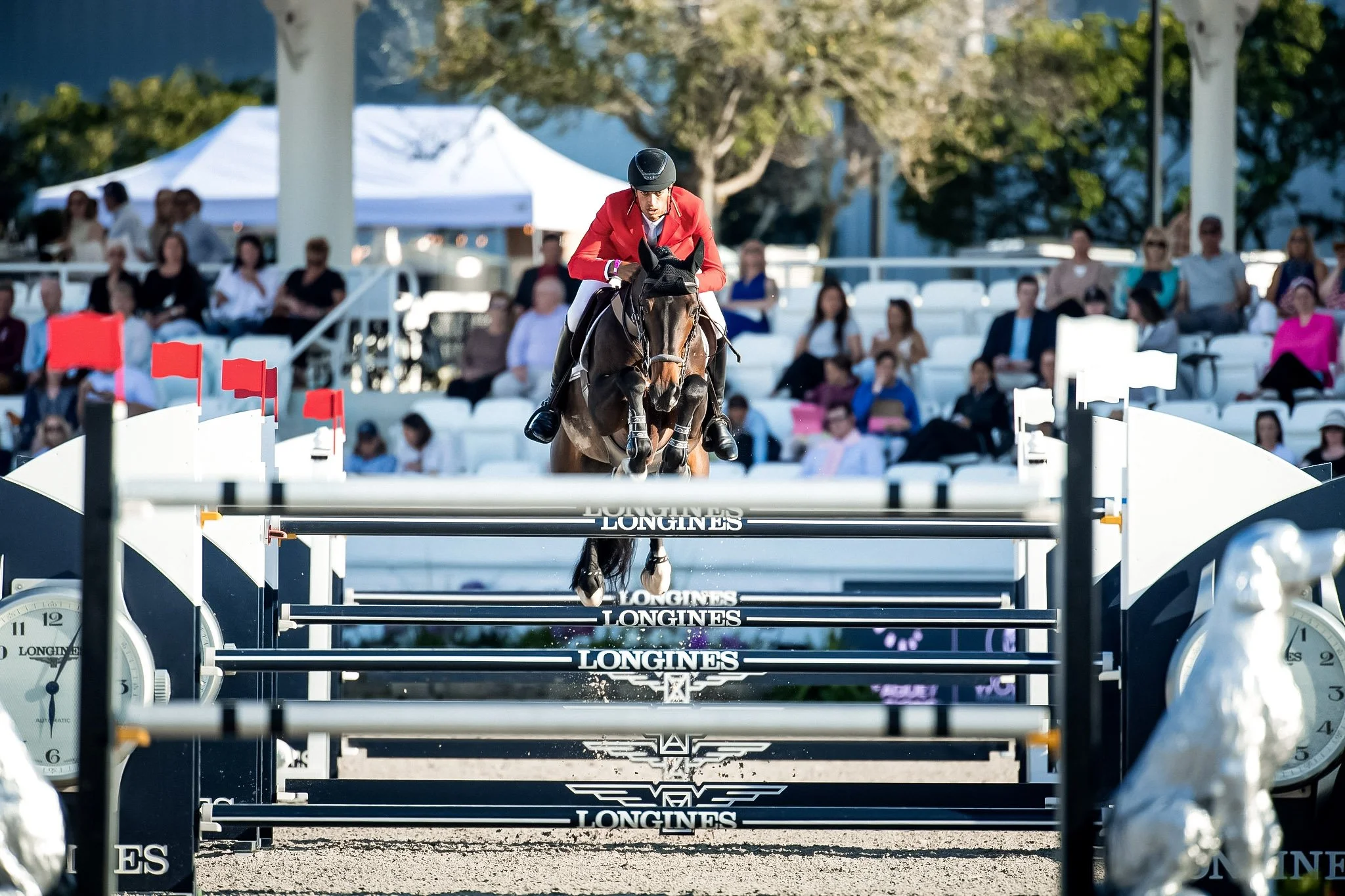
Rene Dittmer (GER) and Corsica X during the Longines League of Nations™ in Ocala, 2026. Image: © FEI/Shannon Brinkman
The format is the defining feature of the series, and it is designed to make every round count.
Two rounds are jumped on the same day, over identical courses, against the clock. In the first round, each team fields four riders, and the best three scores count. Only the best eight teams go through to the second round.
In the second round, each team fields only three riders, and there is no drop score. Every score counts. The second-round classification combines each team's three best first-round results with all three second-round results.
That is the crucial difference from a traditional Nations Cup. With no discard in round two, a team holding a comfortable lead after the first round can lose it with a single mistake. There is nowhere to hide a poor round, and the leaderboard can change completely in the final rotation.
If teams are level on penalties for first place after round two, a jump-off decides it, with one rider per team. Other placings are separated by second-round times.
The Points
Each qualifier awards points by finishing position:
1st: 100, 2nd: 90, 3rd: 80, 4th: 70, 5th: 60
6th: 55, 7th: 50, 8th: 45, 9th: 40, 10th: 35
A nation's points across the four qualifiers are added together to produce the standings, and the best eight go to the Final. If two nations are tied for eighth, the tie is broken by the number of qualifier wins, then the number of second places, then the League of Nations Ranking, and finally by an FEI draw.
The Final
The Final takes place on Sunday afternoon, again over two rounds on the same day, against the clock.
Teams nominate four or five riders, with up to two horses each. In the first round, four riders jump and the best three scores count. Unlike the qualifiers, every team goes through to the second round, unless eliminated or withdrawn. The second round, as in the qualifiers, has no drop score.
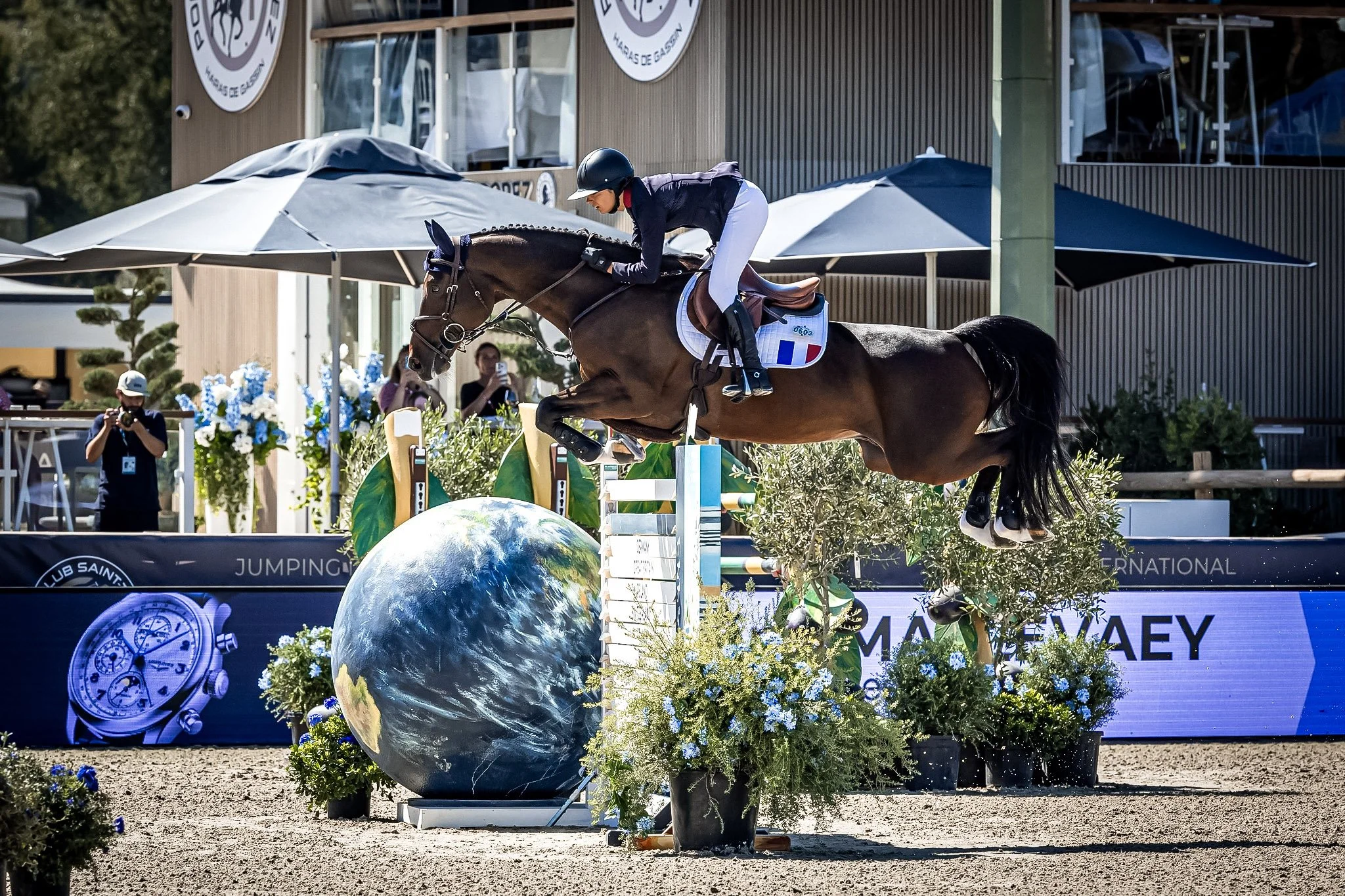
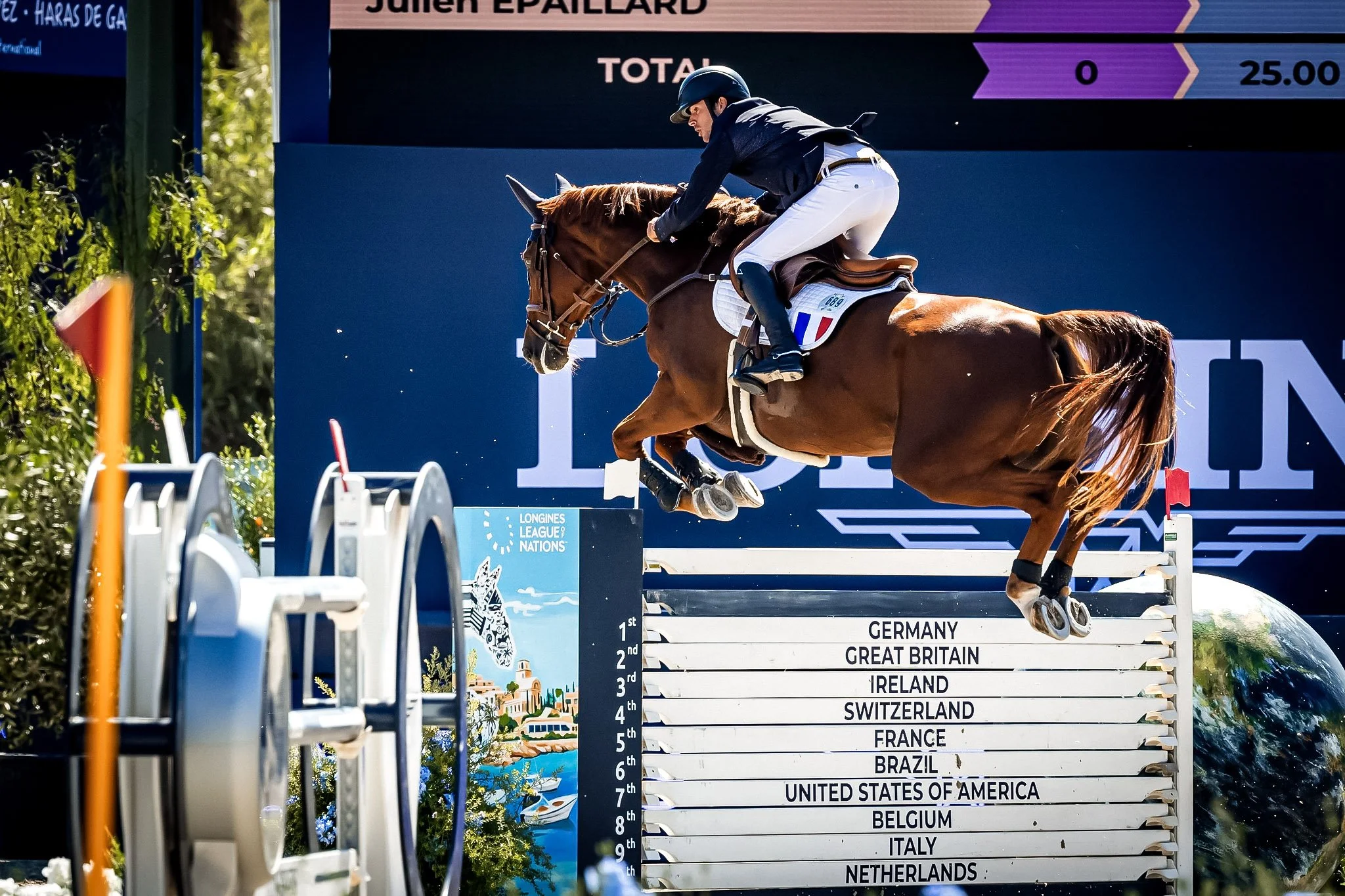
Nina Mallevaey (FRA) and Destine to Be during the Longines League of Nations™ in St. Tropez, 2026. Image: ©FEI/Massimo Argenziano
The starting order is the reverse of the final standings, so the nation that topped the qualifying table jumps last, with the knowledge of exactly what it needs.
A tie for first place is again decided by a jump-off.
The Prize Money
The Final carries €1.6 million. Of that, €1.4 million is distributed among the teams, with €490,000 to the winners. A further €200,000 bonus goes to the best individual performance in the Final.
Each qualifier carries €700,000, with €230,000 to the winning team. Additional awards recognise the best athlete, the best groom, the best chef d'équipe and the owner of the best horse.
The 2026 Season So Far
France opened the season by winning at Abu Dhabi in February. Germany won at Ocala in March and took the lead in the standings. Great Britain won at Rotterdam in June, after a three-way jump-off against the United States and Switzerland. France closed the qualifying season with a home win at St Tropez-Gassin on 20 September.
Switzerland and the Netherlands, two of the sport's most established team nations, did not qualify for Barcelona, finishing outside the top eight.
Great Britain go to Barcelona as defending champions, having won the 2025 Final in a jump-off against Ireland.
What to Watch on Sunday
Three things.
First, the second round. With no drop score and every team returning, the Final is not decided until the last rider has jumped, and the reverse starting order means the leading nation knows exactly what it needs.
Second, the fourth rider. The anchor in each team often jumps with the result already shaped by their teammates, and the format rewards chefs d'équipe who put their most reliable combination last.
Third, the jump-off. The League of Nations Final has a history of being decided against the clock, and a tie on penalties for first place is a realistic outcome given how closely matched the leading nations are.
The Final begins on Sunday 4 October.