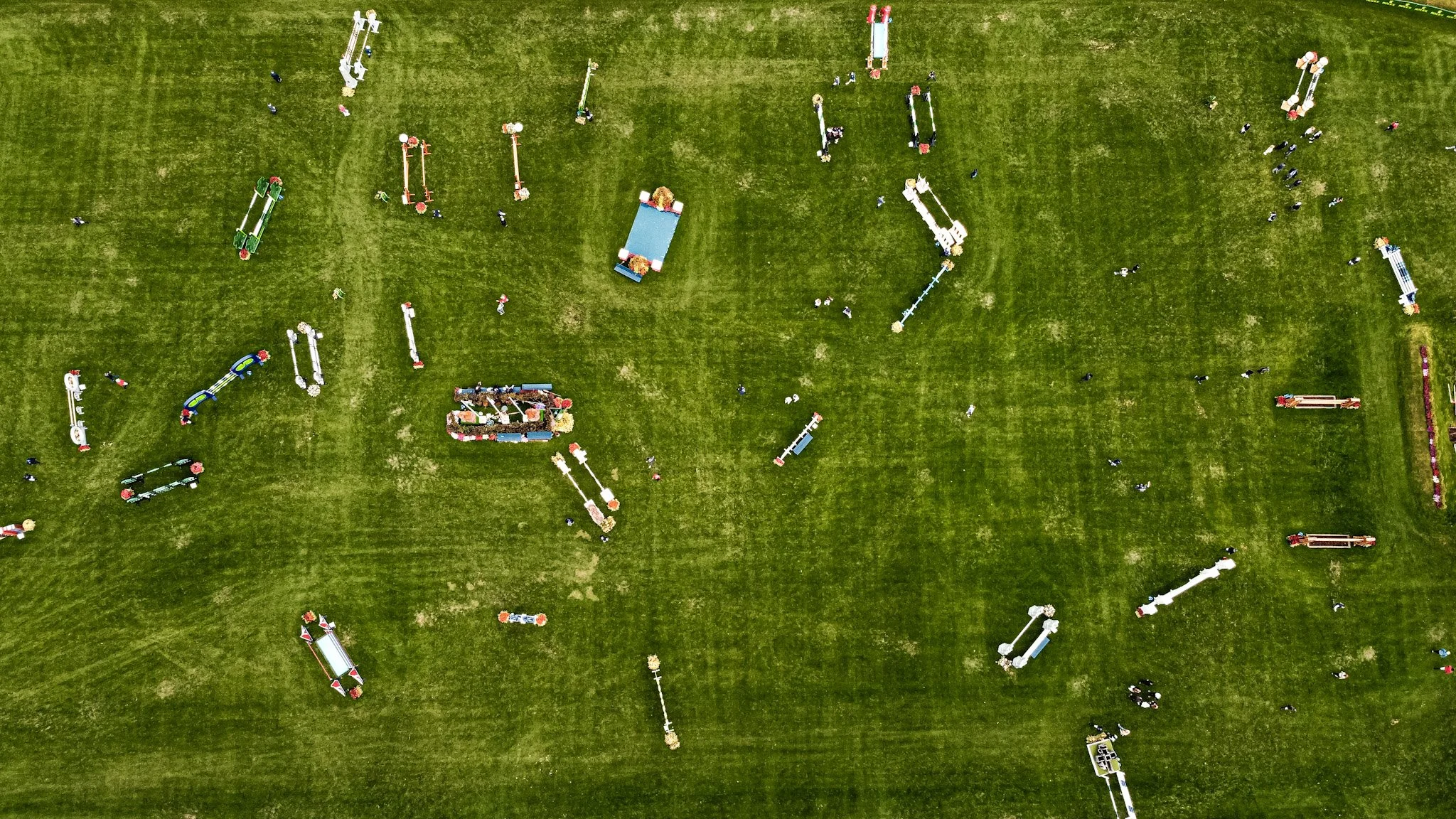
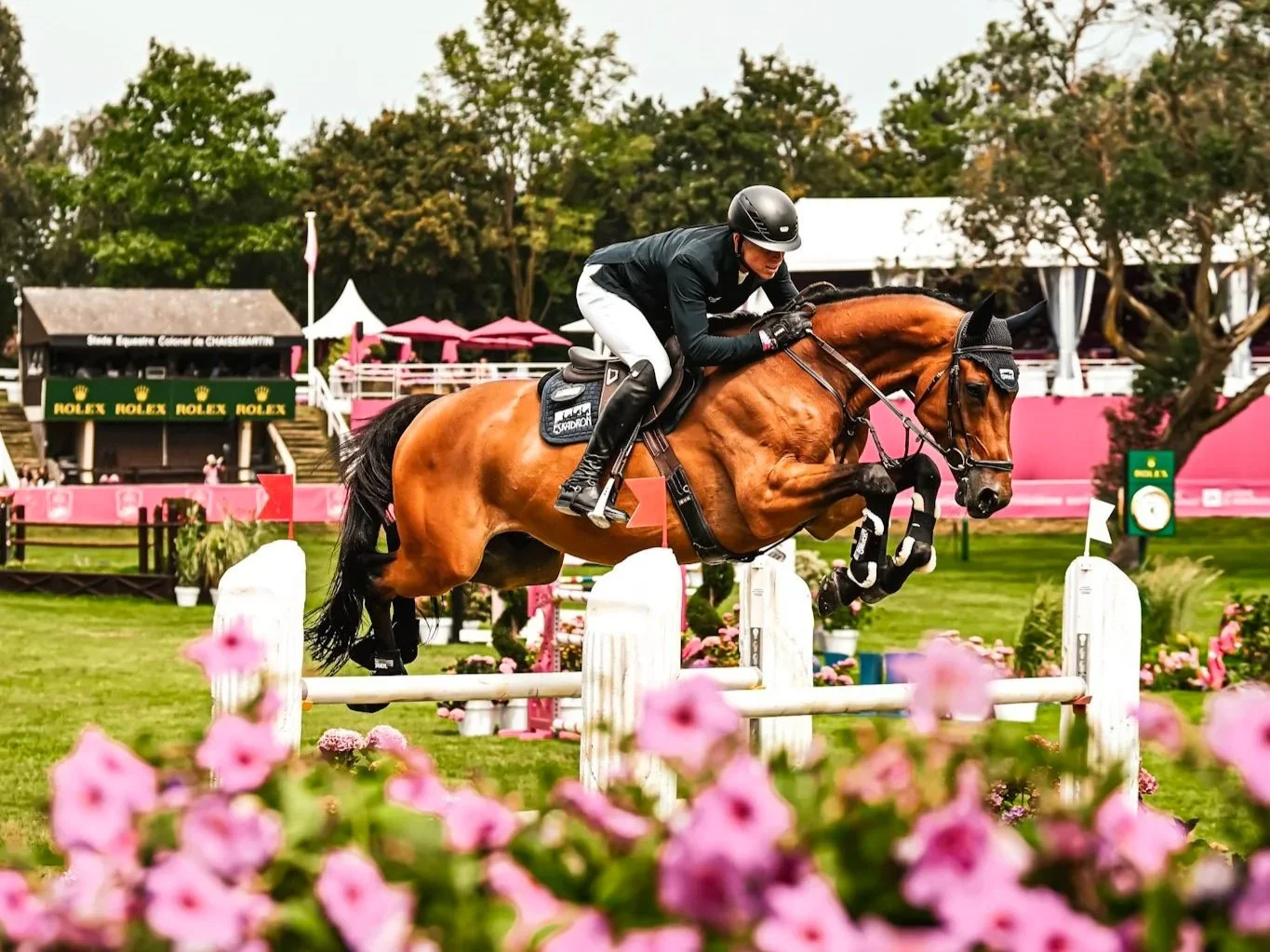
Every show jumping course begins as a drawing, and the drawing contains more information than most spectators would guess. A set of numbered symbols, a dotted line tracing the route, and four lines of figures underneath that between them determine who wins.
A representative five-star track might read like this. Distance: 565 metres. Speed: 400 metres per minute. Time allowed: 85 seconds. Jump-off order: 1, 2, 3b, 5, 14, 7b, 7c, 15, with a time allowed of 53 seconds.
Those numbers are not decoration. They are the competition.
What the Designer Is Trying to Do
A course designer's job is to test the partnership between horse and rider, and the operative word is partnership. The track has to ask questions of both, through a combination of technical difficulty, visual challenge and, at some venues, natural terrain.
The fences themselves are chosen for variety: verticals, oxers, combinations, water jumps and more besides. Each type asks something different. A vertical tests accuracy at the takeoff point. An oxer asks for scope across a spread. A combination demands that the horse arrives on a stride the rider has already committed to. A water jump requires boldness.
Taken together, the designer is examining precision, control and scope, and doing it while the horse maintains a rhythm. A track that can only be jumped by interrupting the rhythm is a badly built one, however impressive the fences look.
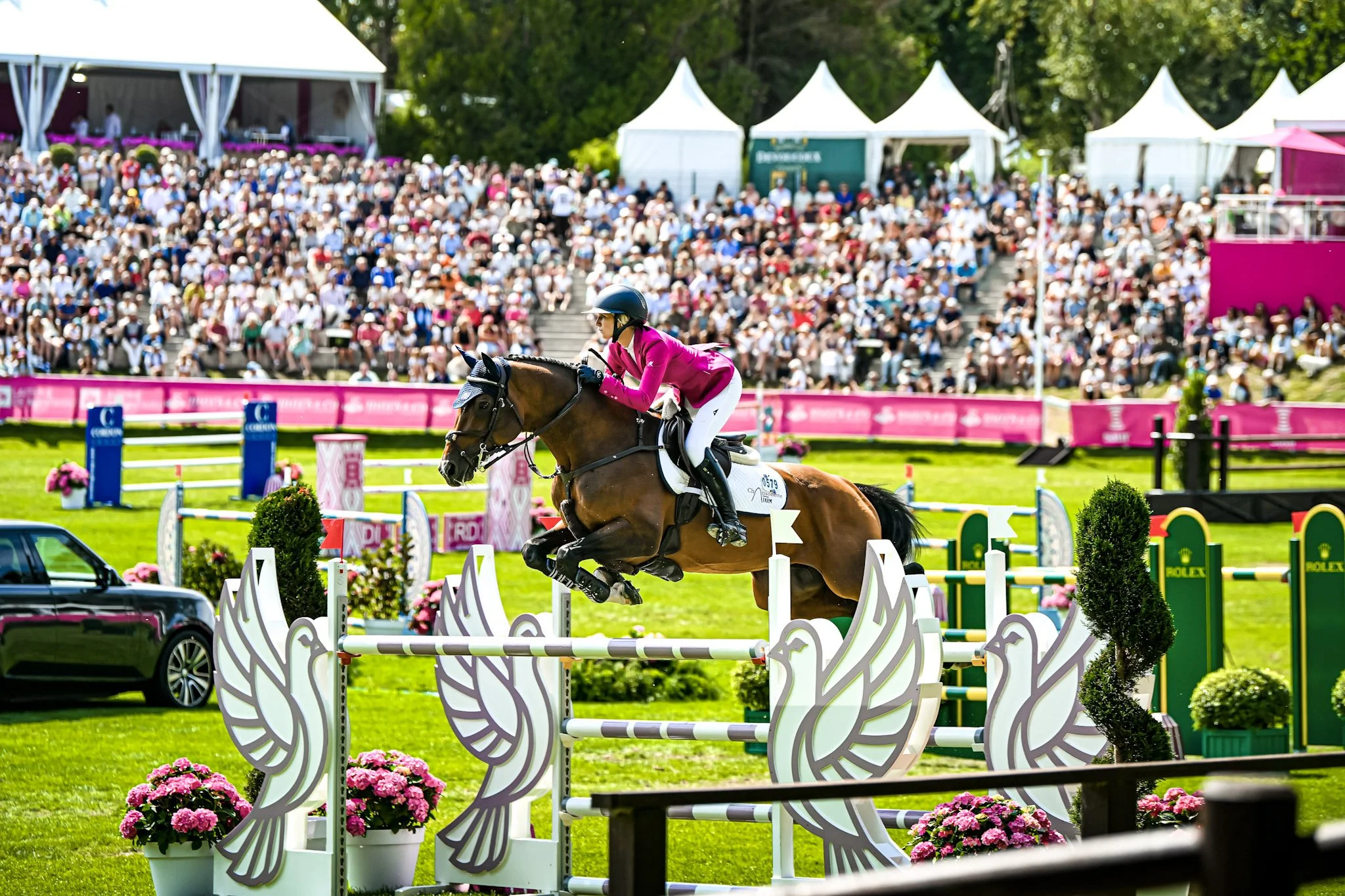
Lillie Keenan and Emerlon during the Jumping International de Dinard CSI5*, 2026. Image: ©M. Froment for EquerryCo
Colour as a Design Tool
Everybody knows that colour affects how a fence looks. Rather fewer appreciate how deliberately designers use it, or how precisely.
Bright, strongly contrasting colours draw a horse's eye, which can help or hinder depending on what the designer intends. A vividly painted fence attracts attention, which can sharpen a horse's focus or intimidate it. Natural tones do the opposite. A fence painted to blend into the background behind it becomes markedly harder to read on the approach, and horses that lose the top rail against the surroundings make mistakes.
Designers use colour to create visual interest for the audience, to highlight the elements where the real difficulty lies, and sometimes simply to reflect a theme the venue has chosen. All three of those purposes can operate on the same fence at once, and the choice is made at the planning stage rather than on the morning.
It is also why a photograph of a course rarely conveys how it rode. The thing that caught a horse out may have been a shade rather than a height.
Natural Obstacles and Permanent Fixtures
Some venues add an element that no amount of design can replicate on a flat sand arena, which is terrain.
Banks, ditches and water elements bring depth and unpredictability to a course, and at grass venues with permanent installations they are frequently built into the ground rather than brought in for the week. Spruce Meadows is the clearest example of a showground organised around that principle, and the demands it places on a combination are different in kind from a conventional track.
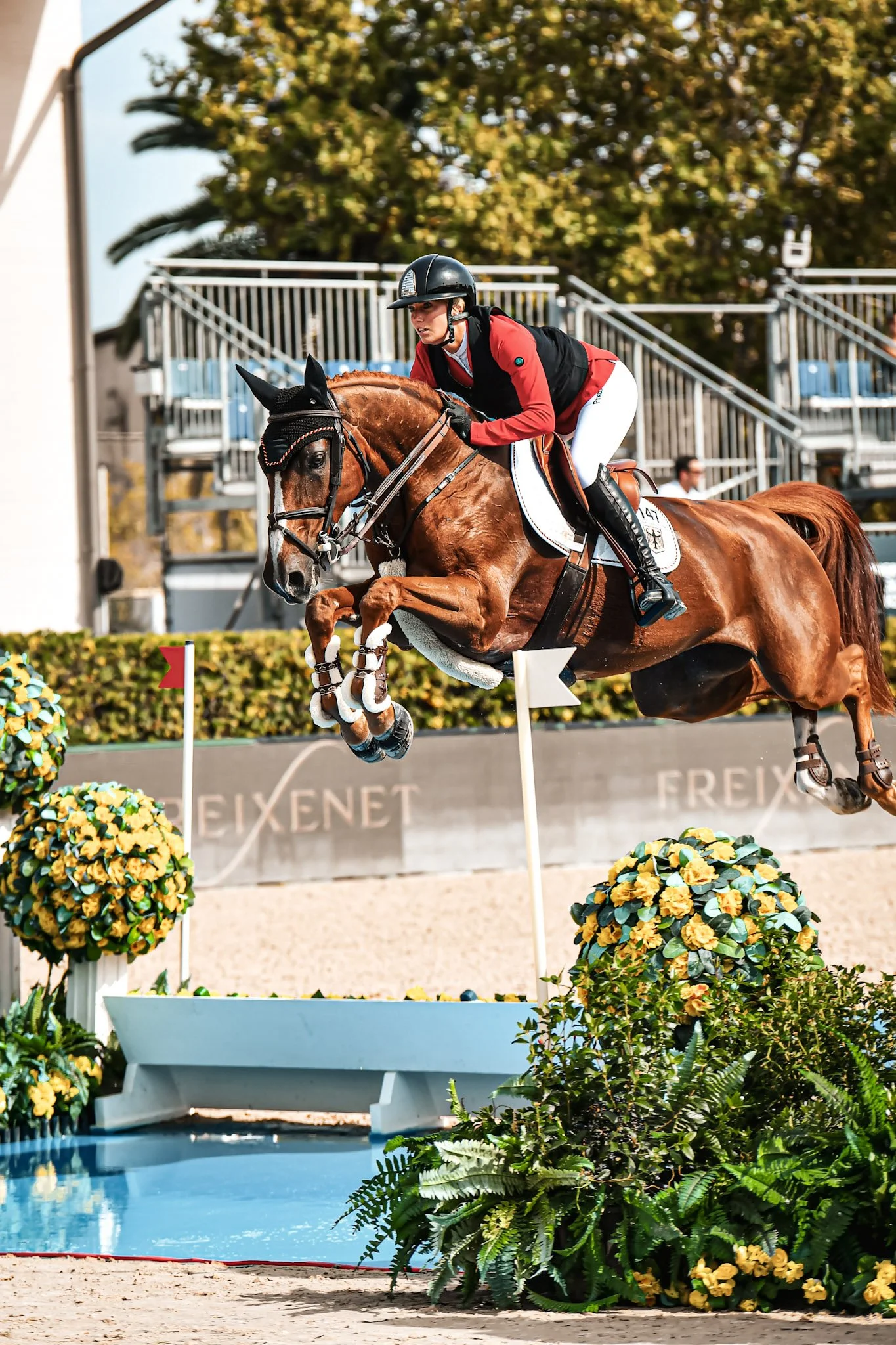
Jana Wargers and Dorette OLD during the CSIO 5* of Barcelona, 2024. Image: ©M. Froment for EquerryCo
A permanent bank cannot be lowered. A ditch cannot be moved. The horse either goes boldly or it does not, and the rider either adapts or does not, which is why these venues tend to reward experience rather than raw ability.
The Mental Half
What emerges from the measurements, the stride calculations and the choices about colour and terrain is a course that is as much a mental examination as a physical one.
The physical demands are obvious enough. The mental ones are not. A rider walking a 565-metre track at 400 metres per minute knows the time allowed is 85 seconds and knows precisely where they can afford to lose half a second and where they cannot. They have decided how many strides each distance will take before they sit on the horse. Then they have to execute all of it while the horse makes its own decisions underneath them.
Reading a Jump-Off Order
The jump-off order on a course plan is the detail that rewards closest attention, because it is where the designer's intentions become explicit.
Take the example above. The jump-off runs 1, 2, 3b, 5, 14, 7b, 7c, 15, which means it uses eight of the obstacles from the first round in an entirely new sequence, and the time allowed drops from 85 seconds to 53.
Notice what has happened. Fence 3b is jumped without 3a. Fences 7b and 7c are jumped as a pair, again without their first element. Fence 14 appears between 5 and 7b, which on a course plan almost always means a long diagonal gallop. The sequence has been chosen to create specific opportunities to turn inside, and the riders who win jump-offs are the ones who identified those opportunities while walking.
That is why a jump-off is not simply the same course ridden faster. It is a different problem, set by the same person, and solved in the twenty minutes between the end of the first round and the start of the second.
Reading a Class as It Unfolds
Once you can read the plan, a class stops being a sequence of rounds and becomes an argument between the designer and the field.
If nobody goes clear, the designer has overcooked it. If half the class goes clear, the track has not done its job. A good first round produces a jump-off of six to twelve combinations, which is roughly what a designer at the top level is aiming for, and getting there with a field of forty riders on forty different horses is considerably harder than it sounds.
Watch the first ten rounds of any class and you will see the designer's answer emerging in real time. So will the riders still waiting to go.
The vocabulary used throughout this piece is explained in full in our glossary, and the different competition formats a designer builds for are covered here.